
8 Best PartnerStack Alternatives: Smarter Picks for Growth

The invoice arrives and the platform fee outweighs what most of your partners earned that month. Sixty signed up through the marketplace, nine ever sent a click. When does the tooling start costing more than the channel returns?
That gap is what pushes SaaS teams to open a tab on the best PartnerStack alternatives instead of quietly renewing. Partner programs have split into very different shapes over the last few years, and a platform built around one shape rarely stretches to fit another.
AFFWeekly's Take: Swapping the software is the easy part. The harder question is who actually owns the partner relationship once it moves, and most teams only find that out midway through the migration.
Why Teams Start Looking Beyond PartnerStack
Teams usually begin comparing PartnerStack alternatives for one of three reasons: cost that scales faster than partner revenue, a product built for two jobs when they only need one, or gaps in how partner data reaches the CRM.
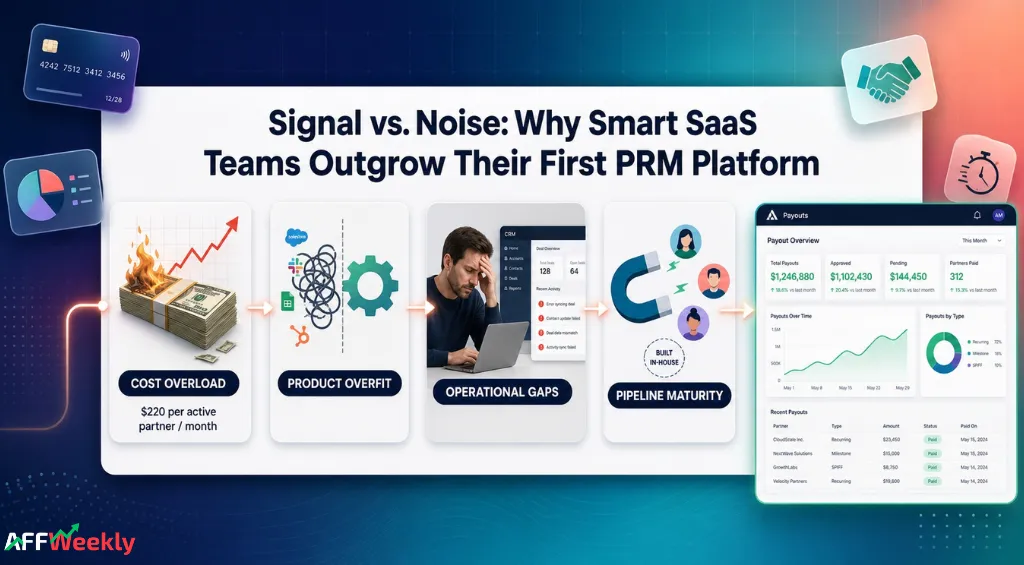
PartnerStack combines an affiliate tracking engine with a partner relationship management layer. Companies running a simple referral or affiliate motion often pay for reseller tooling they never open, while channel teams find the PRM side lighter than a dedicated platform.
Pricing is the second trigger. Fees tied to partner count and payout volume mean a program that succeeds gets more expensive, and marketplace-sourced partners carry their own commission cut on top.
The third driver is operational. Reviewers on G2 and Capterra repeatedly flag payout timing, approval delays, and reporting depth, especially once a program passes a few hundred active partners.
Recruitment is the quiet factor here too. Programs that build their own partner pipeline stop needing a marketplace, which removes the main reason they signed up.
That distinction shapes which platform actually fits, and it starts with knowing which job you are buying for.
How We Benchmarked Every PartnerStack Alternative in This Ranking
Each platform in this list was scored against the same seven signals, using vendor documentation, public pricing pages, and verified reviews on G2 and Capterra from the last 12 months.
The signals we scored:
Where pricing was gated behind a sales call, we said so rather than estimating. Feature claims came from the vendor's own docs and were cross-checked against reviewer complaints from the same period.
Scoring aside, the switch itself carries the real risk, which is where attribution history comes in.
8 Best PartnerStack Alternatives Compared at a Glance
| Best PartnerStack Alternatives | Primary Program Type | Data Export Control |
|---|---|---|
| impact.com | Multi-vertical partnerships | Scheduled bulk export |
| FirstPromoter | SaaS affiliate | CSV plus API |
| Rewardful | Subscription referral | CSV download |
| Partnero | Affiliate, referral, newsletter | CSV plus API |
| Tolt | Creator affiliate | CSV download |
| Kiflo | B2B referral, reseller | CSV plus API |
| Trackdesk | Affiliate, referral | CSV plus API |
| Impartner | Reseller, distributor | CRM-held records |
1. impact.com
impact.com handles affiliate, influencer, publisher, and B2B partnerships inside a single system, which is why enterprise teams reviewing PartnerStack alternatives keep landing on it. The platform started as Impact Radius and now sits among the largest partnership management platforms in the category.
Its strength is breadth of partner type. Where PartnerStack leans toward SaaS referral and reseller motions, impact.com supports commerce, media, and mobile programs on the same infrastructure.
For teams tracking partner-sourced revenue across regions and currencies, this becomes the practical choice when reporting depth and compliance controls matter more than fast setup.
impact.com Key features
Best for: Established brands and agencies running several partner types at once, particularly ecommerce and DTC programs that need granular attribution, multi-currency payouts, and audit-ready reporting.
2. FirstPromoter
Subscription businesses that outgrow PartnerStack often move to FirstPromoter, an affiliate management software built specifically around recurring revenue. It reads directly from your billing system rather than sitting beside it.
That distinction matters. Commissions follow the subscription lifecycle, so upgrades, downgrades, cancellations, and refunds adjust partner earnings automatically instead of requiring manual clawbacks.
Among PartnerStack alternatives aimed at SaaS, it covers the affiliate side thoroughly while leaving reseller and channel management to dedicated PRM tools. Teams running a straightforward referral program usually find that trade acceptable.
FirstPromoter Key features
Best for: B2B and B2C SaaS companies with subscription billing who want precise recurring commission tracking and are comfortable managing resellers elsewhere.
3. Rewardful
Speed to launch is the reason Rewardful appears on most PartnerStack alternatives shortlists. Connect a Stripe or Paddle account and the affiliate program is live in minutes, with no developer time required.
The platform tracks both referral links and coupon codes, which suits founders who recruit partners through discount offers rather than link placement.
Its scope stays deliberately narrow. Rewardful handles affiliate and referral tracking well and does not attempt deal registration, partner tiering, or channel enablement. For early-stage SaaS teams, that focus keeps the tool simple to operate.
Rewardful Key features
Best for: Bootstrapped and early-stage SaaS companies billing through Stripe or Paddle that want an affiliate program running this week without engineering involvement.
4. Partnero

Running affiliate, referral, and newsletter programs from separate tools creates reporting gaps, and Partnero exists to close them. It manages all three program types from one account.
The white-labelling goes deeper than most partner management software in this bracket. Portals, emails, and domains can carry your branding, so partners rarely encounter a third-party name.
Companies comparing PartnerStack alternatives across both SaaS and ecommerce tend to shortlist it for that flexibility, since the platform serves subscription products and physical goods equally well.
Partnero Key features
Best for: SaaS and ecommerce brands running more than one incentive program who want consistent branding and a single dashboard covering affiliates, customers, and subscribers.
5. Tolt
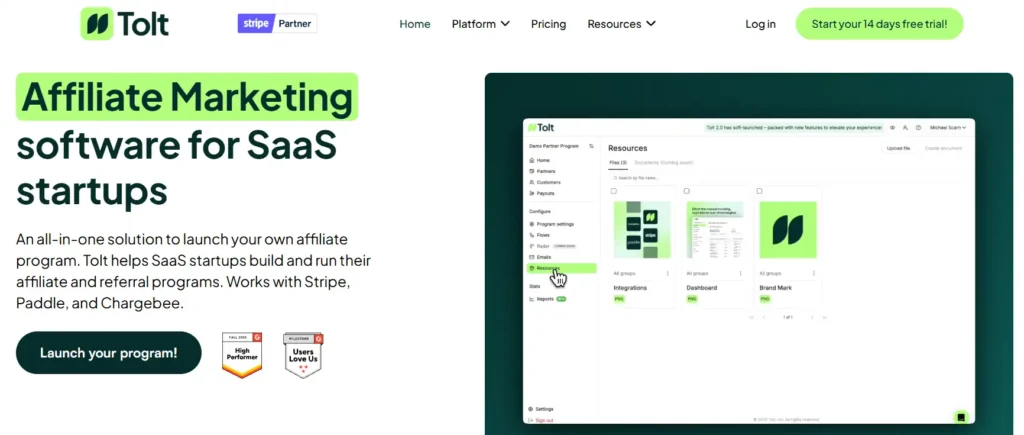
Founders who want an affiliate program live before the next launch cycle often pick Tolt. Setup runs in the range of fifteen minutes, and the partner-facing experience is built to reduce onboarding drop-off.
Passwordless login sits at the centre of that design. Affiliates access their dashboard through an emailed link instead of creating and remembering credentials, which lifts activation rates among casual partners.
As PartnerStack alternatives go, Tolt occupies the lighter end. Deal registration, MDF, and pipeline management are absent, making it a fit for affiliate motions rather than channel programs.
Tolt Key features
Best for: Seed-stage and small SaaS teams launching a first affiliate program, especially those recruiting creators and newsletter operators who will not tolerate clunky onboarding.
6. Kiflo

Kiflo takes the PRM route rather than the affiliate route. It is built for B2B companies tracking leads, deals, and revenue that partners bring in, not clicks they generate.
Referral partners, resellers, and affiliates each get their own program logic inside the platform, with separate onboarding paths and reward rules per type.
Teams weighing PartnerStack alternatives for a reseller or agency channel usually find it lighter to configure than enterprise PRM suites, though the analytics layer is less deep than what larger channel organisations expect.
Kiflo Key features
Best for: B2B SaaS companies building a reseller, agency, or referral channel who need pipeline visibility and are willing to trade advanced analytics for faster setup.
7. Trackdesk

Trackdesk entered the market positioning against revenue-share pricing, which puts it directly in the path of teams researching PartnerStack alternatives for cost reasons. A free tier covers programs in their early months.
The platform functions as full affiliate management software, covering tracking, commission logic, partner portals, and payout processing rather than a stripped-down subset.
Multi-currency support and a range of payout providers make it workable for programs recruiting internationally, which is a common gap in tools built primarily for US-based SaaS.
Trackdesk Key features
Best for: Cost-sensitive SaaS and ecommerce teams who want full affiliate infrastructure with predictable pricing, particularly those recruiting partners across multiple countries.
8. Impartner
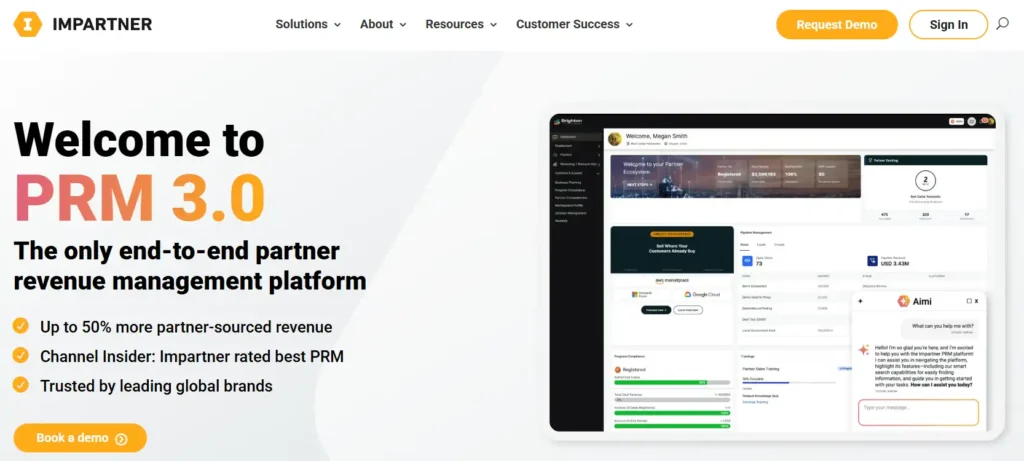
Impartner serves the opposite end of the spectrum from affiliate tools. It is enterprise PRM software built for organisations managing resellers, distributors, MSPs, and system integrators at scale.
The feature depth reflects that. Certification tracking, market development funds, partner business planning, and tiered portal access all ship as core capability rather than add-ons.
Teams evaluating PartnerStack alternatives for a mature indirect sales channel look here when the requirement is channel governance rather than link tracking. Implementation takes longer, and the platform assumes a dedicated partner operations function.
Impartner Key features
Best for: Mid-market and enterprise organisations running structured channel programs with dedicated partner managers, where compliance, enablement, and tiering matter more than launch speed.
Switching Platforms Without Losing Attribution Data
Attribution breaks during migration when historical conversions, active links, and pending commissions move at different times. The sequence below keeps that record intact.
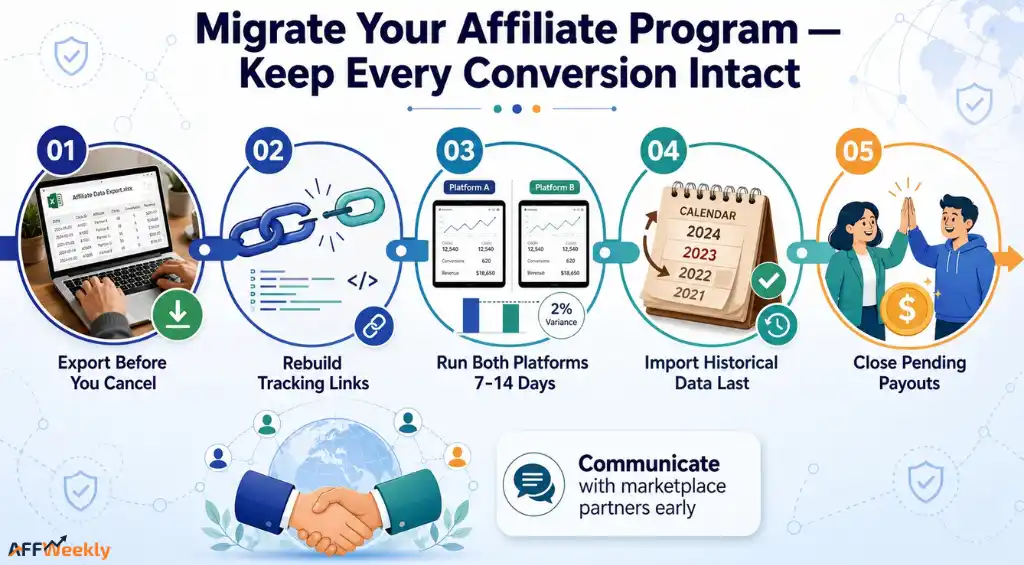
Communication matters as much as the technical work here, particularly for partners who came through the marketplace.
Where This Leaves Your Partner Stack
The eight platforms here solve different problems, and that is the useful part. A billing-linked affiliate tool and an enterprise PRM answer separate questions, so the shortlist narrows quickly once you know which one your program actually asks.
Cost matters, but exit terms and attribution history usually matter more a year in. Teams that export their data early tend to switch cleanly.
Run a short parallel test before committing to any PartnerStack alternative. Real traffic tells you more in two weeks than a demo will, and the answer tends to settle itself from there.