
7 Best Mediavine Alternatives Ranked by Revenue & RPM

A Mediavine rejection email lands harder than it should. So does the newer rule that approval depends on annual ad revenue rather than a session count. Plenty of bloggers sit just under that line, watching real traffic earn AdSense pennies.
Then the confusion starts. Every rival ad network quotes its own traffic minimum, revenue share, and RPM claims. Little of it compares cleanly. Advice in blogging groups contradicts itself week to week.
The 8 best Mediavine alternatives here are weighed on approval difficulty, payout terms, ad quality, and what publishers report earning. Some Mediavine alternatives accept sites at 1,000 sessions. Others pay more but ask for exclusivity. The trade-offs decide everything.
Why Bloggers Start Looking Beyond Mediavine
Mediavine has built a strong reputation among content creators, but its requirements and structure work well for only a specific type of publisher. Many site owners begin exploring other ad networks once their traffic, niche, or growth goals shift beyond what Mediavine supports.
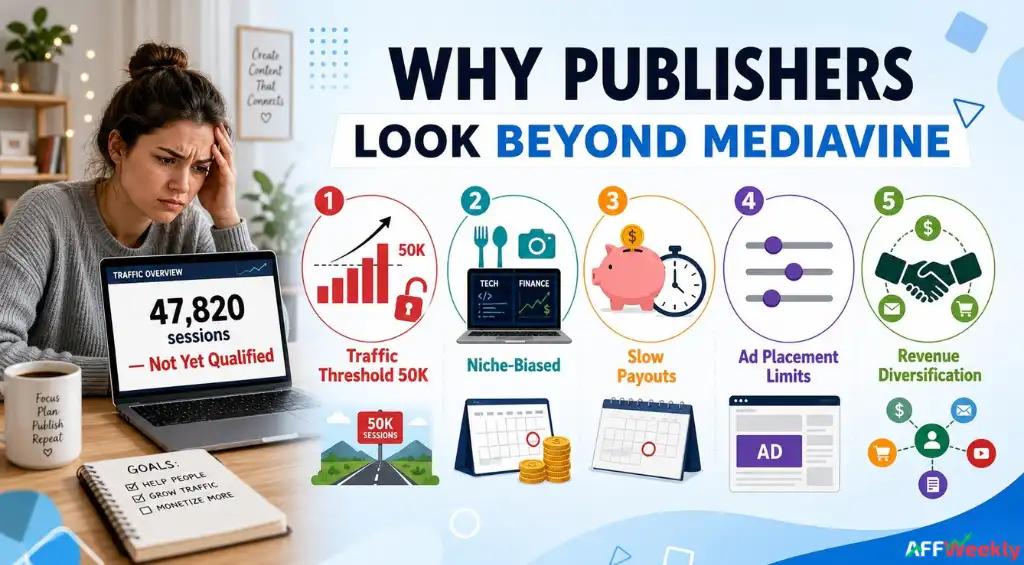
The most common trigger is the traffic threshold. Sites still building toward 50,000 sessions often need a monetization partner that accepts smaller audiences while they scale.
Content niche plays a role too. Mediavine favors lifestyle, food, and parenting blogs, so publishers in tech, finance, or news often find broader demand and better ad formats elsewhere.
Other reasons include:
Ultimately, the right ad network depends on where a publisher stands today and where they plan to grow. With these motivations in mind, it helps to look closely at how the leading Mediavine alternatives compare on traffic requirements, revenue share, and support.
8 Best Mediavine Alternatives for Publishers Compared
| Best Mediavine Alternatives | Known For | Additional Highlight |
|---|---|---|
| Raptive | Creator first company | Fortune 500 advertisers |
| Ezoic | AI powered testing | AdX exchange access |
| Monumetric | Formerly Blogger Network | WordPress site required |
| Freestar | Real time reporting | Multiple demand partners |
| Publift | AdX Premium access | Multivariate layout testing |
| MonetizeMore | Ad operations specialist | Detailed revenue reporting |
| Media.net | Founded in 2010 | Mobile ad support |
1. Raptive
Raptive is a premium managed ad network built for established content creators seeking a strong Mediavine alternative with higher revenue potential. The platform emerged in 2023 when CafeMedia and AdThrive combined their technology and publisher base under one brand.
Raptive uses header bidding and dedicated account management to connect publisher inventory with premium advertisers. Sites need at least 25,000 monthly pageviews to qualify, with a portion of that traffic required from top-tier countries such as the US, UK, Canada, and Australia.
Publishers on Raptive receive a flat 75% revenue share and are paid on a Net 45 schedule. The network works best for lifestyle, food, parenting, and home niche publishers who want a hands off, fully managed monetization partner rather than a self serve platform.
| Attribute | Details |
|---|---|
| Program Tier | Raptive Insider |
| Domain Age Requirement | 6+ months |
| Tier 1 Traffic Requirement | 50% under 100K pageviews, 40% above |
| GCPP Status | Premium Partner |
| Content Policy | Original, quality, brand safe content required |
Why Choose Raptive?
Best for established creators with strong Tier 1 traffic who want a fully managed, hands off Mediavine alternative with predictable revenue share.
2. Ezoic

Ezoic takes a different approach to ad monetization by relying on artificial intelligence rather than manual account management. Founded in 2010, the platform has grown into one of the most widely used AI driven ad networks for publishers evaluating a Mediavine alternative.
The system continuously tests ad placements, layouts, and formats across a site, using machine learning to identify combinations that improve both revenue and page experience.
As a Google Certified Publishing Partner, Ezoic also gives smaller publishers access to premium ad exchange demand that would otherwise be out of reach.
As of February 2026, new sites need 250,000 monthly active users to join the standard program, though smaller publishers can apply through Ezoic's selective Incubator route. Payouts run on a Net 30 schedule with a low $20 minimum threshold.
| Attribute | Details |
|---|---|
| Revenue Share | 82%+ of net revenue per terms |
| Site Speed Tool | Leap (Core Web Vitals optimization) |
| Legacy Publishers | Grandfathered under pre-February 2026 rules |
| Reporting | Page, device, and traffic source level analytics |
| Ad Formats | Display, video, native |
Why Choose Ezoic?
Ideal for publishers who prefer AI driven testing and platform control over a fully managed account relationship.
3. Monumetric
Monumetric has positioned itself as an accessible Mediavine alternative for bloggers who have not yet reached the larger networks traffic thresholds. The platform runs a pay per view model similar to Mediavine, meaning publishers earn on impressions rather than clicks.
Monumetric structures its service across four growth tiers: Propel for 10,000 to 80,000 monthly pageviews, Ascend for 80,000 to 500,000, Stratos for 500,000 to 10 million, and Apollo for sites above that. Each tier unlocks additional optimization tools and account support as traffic scales.
Setup uses header bidding to increase competition among advertisers for each ad unit. The onboarding process is largely hands off for the publisher, since Monumetric's team handles ad placement and ongoing adjustments directly through WordPress access.
| Attribute | Details |
|---|---|
| Setup Fee | $99 (Propel tier) |
| Approval Wait Time | Several weeks depending on tier |
| Account Support | Assigned rep for ad strategy adjustments |
| Niche Focus | Lifestyle and content blogs |
| Dashboard | RPM and pageview reporting |
Why Choose Monumetric?
Best for newer bloggers who fall short of Mediavine's traffic requirement but still want a managed, hands off ad setup.
4. Freestar
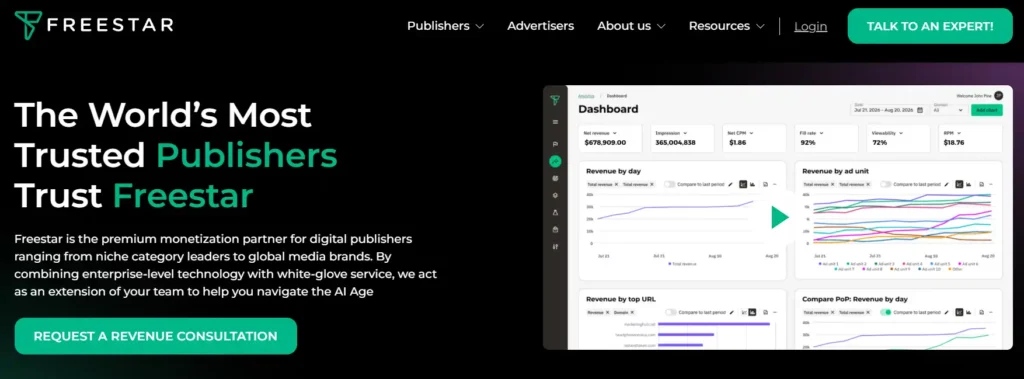
Freestar is built for large scale publishers whose traffic and format needs go beyond what typical lifestyle focused networks support. The platform takes a header bidding first approach, giving it deeper auction control than many creator oriented Mediavine alternatives.
Because Freestar targets high volume sites in news, sports, finance, automotive, gaming, and entertainment, its entry bar sits well above smaller networks. Applicants generally need at least 1 million monthly pageviews along with 12 months of verified traffic history before approval.
The network enforces strict ad quality rules, including a 30 second minimum refresh interval, a single active video player per page, and an ad density cap of 30%. These controls are designed to protect page experience even as ad volume scales with traffic.
| Attribute | Details |
|---|---|
| Content Policy | No made for advertising, arbitrage, or low quality AI content |
| Technical Requirement | Valid ads.txt implementation required |
| Payout Terms | Contract specific, negotiated per publisher |
| Support | Dedicated onboarding and yield specialists |
| Platform Focus | Enterprise level auction management |
Why Choose Freestar?
Suited for large, high traffic publishers needing enterprise level header bidding and strict ad quality controls.
5. Publift

Publift operates as a managed yield partner rather than a self serve ad network, positioning itself as a Mediavine alternative for publishers outside the typical lifestyle blog category. The company holds Premier status as a Google Certified Publishing Partner.
Its Fuse platform combines header bidding, hybrid bidding, identity tools, and multivariate layout testing into a single managed system. Each publisher account is paired with a dedicated ad management expert who oversees auction settings and ongoing yield experiments.
Publift accepts publishers earning at least $2,000 per month in ad revenue, or those reaching 500,000 monthly pageviews. Because the platform supports websites, tools, marketplaces, and mobile apps, it appeals to publishers whose content does not fit the creator blog mold that networks like Mediavine were originally built around.
| Attribute | Details |
|---|---|
| Revenue Share Model | Approximately 80/20 split |
| Payout Terms | Net 30 (Google), otherwise contract specific |
| Headquarters | Dublin, Sydney, and Virginia Beach offices |
| Case Study Result | 41% YoY Q3 revenue increase (Thingiverse) |
| Ad Formats Supported | Display, video, native, contextual |
Why Choose Publift?
Fits revenue qualified publishers outside lifestyle niches who want active testing and a dedicated account manager.
6. MonetizeMore
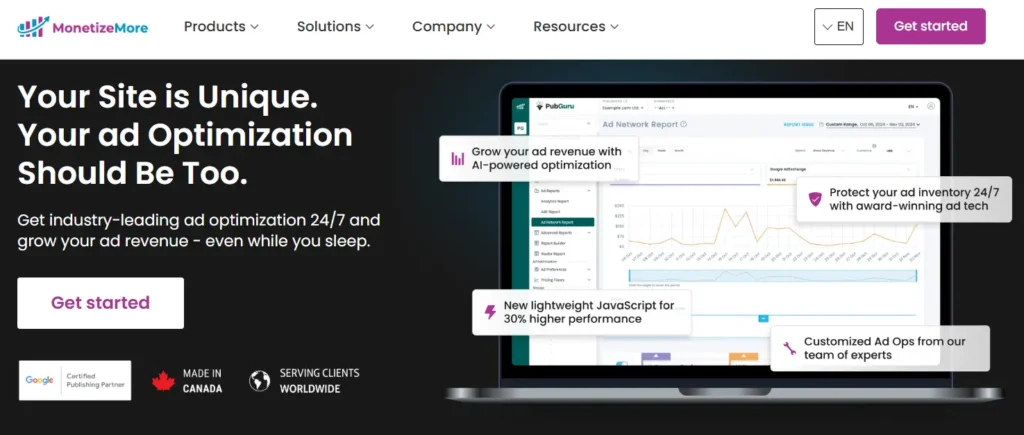
MonetizeMore differs from most entries on this list because it is not a direct creator network but a specialized ad operations provider. Publishers use it to strengthen an existing Google Ad Manager setup rather than fully replace their ad stack, which makes it a distinct type of Mediavine alternative.
The company runs two separate products. PubGuru is a header bidding wrapper and ad management layer built around Google Ad Manager integration, while Traffic Cop focuses on identifying and blocking invalid traffic using more than 140 detection signals.
PubGuru Premium targets publishers generating $5,000 or more per month, or reaching 2 million monthly pageviews, with reported average RPM gains between 30% and 150%. Traffic Cop Premium starts at $720 per month for sites above 1 million monthly pageviews.
| Attribute | Details |
|---|---|
| Product Tiers | Standard and Premium available for both PubGuru and Traffic Cop |
| Reporting | PubGuru fraud and ad revenue dashboards |
| Compatible Stack | Google Ad Manager and Prebid integration |
| Support | Dedicated ad ops team |
| Deployment Model | Added on top of an existing ad stack, not a replacement |
Why Choose MonetizeMore?
Best for publishers who already run their own ad stack and want stronger yield tools and bot traffic protection.
7. Media.net
Media.net takes a contextual advertising approach rather than the behavioral targeting used by most networks on this list, making it a useful supplementary Mediavine alternative. It exclusively manages the Yahoo Bing Network Contextual Ads program, giving publishers access to that demand pool.
Instead of relying on visitor data, Media.net's technology scans on page content and matches ads to the topic of each article. This makes it especially effective for finance, tech, education, and automotive content with strong English language, US, UK, or Canadian traffic.
Media.net has no strict minimum traffic requirement, which sets it apart from most managed networks in this comparison. Many publishers run it alongside AdSense or another primary network to add competing demand rather than using it as a sole monetization source.
| Attribute | Details |
|---|---|
| Payment Terms | Net 30, typical $100 minimum payout |
| Network Scale | Powers ads across 500,000+ websites globally |
| Headquarters | New York (US) and Dubai (global) |
| Application Process | Invite based, reviewed before approval |
| Restricted Content | Adult, gambling, violence, and similar categories not permitted |
Why Choose Media.net?
Good fit for publishers below other networks' traffic minimums who want contextual ads as a secondary revenue source.
When to Switch From Mediavine to an Alternative Ad Network
Switching ad networks is a big decision, and timing matters as much as the choice itself. Publishers who move too early or too late often leave revenue on the table.
A few clear signals point to the right time to make a change:
If two or more of these apply consistently over several months, it is worth evaluating alternatives rather than waiting indefinitely for improvement.
How to Change Ad Networks Without Sacrificing Earnings
A poorly planned switch can cause a temporary revenue dip. A structured approach keeps that gap small and short.
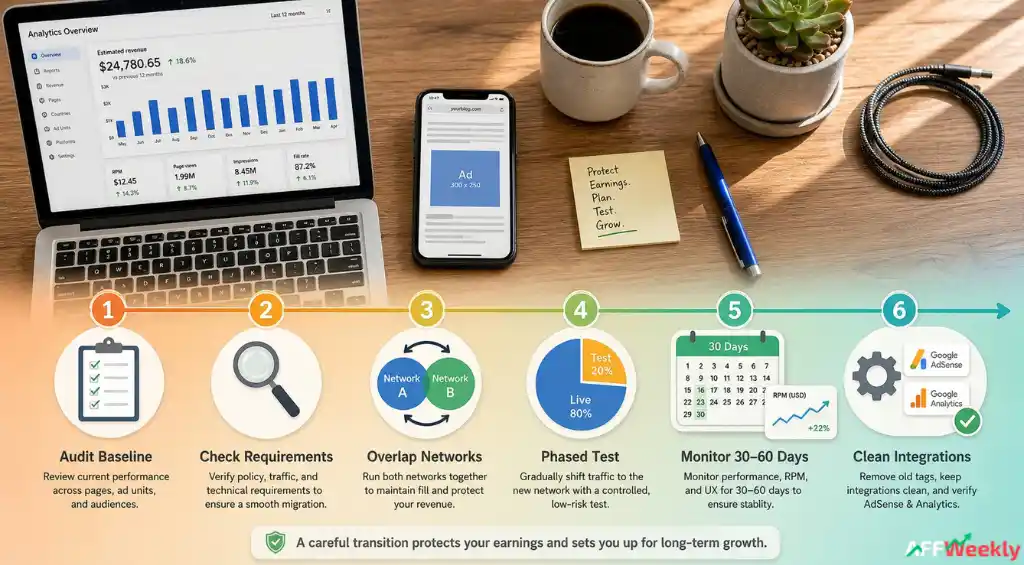
A careful transition protects your earnings while giving the new network time to optimize for your audience and content.
Wrapping Up
Every publisher's traffic, niche, and growth stage looks different, and that shapes which Mediavine alternatives make sense at any given time. What works for a large news site rarely fits a small parenting blog, and that's normal.
Revenue share numbers only tell part of the story. Support quality, payout speed, and how well a network fits your content often matter just as much over time.
Start with where your site stands today. A network that feels right now can always change later as your traffic and goals grow.