
5 Retail Media Networks Compared for Ad Performance
Ad budgets are shifting fast, and if you sell through major retailers, you've probably noticed the pressure to advertise exactly where your products are sold. The problem? Not every retail media network deserves your spend. Some offer granular first-party data and closed-loop reporting.
Others are still figuring things out. Knowing where to invest—and where to hold back—matters more than ever. So here's a closer look at 5 retail media networks worth paying attention to in 2026, what each one does well, and where they fall short for brands of different sizes.
❓ What Makes a Retail Media Network Worth Your Spend?
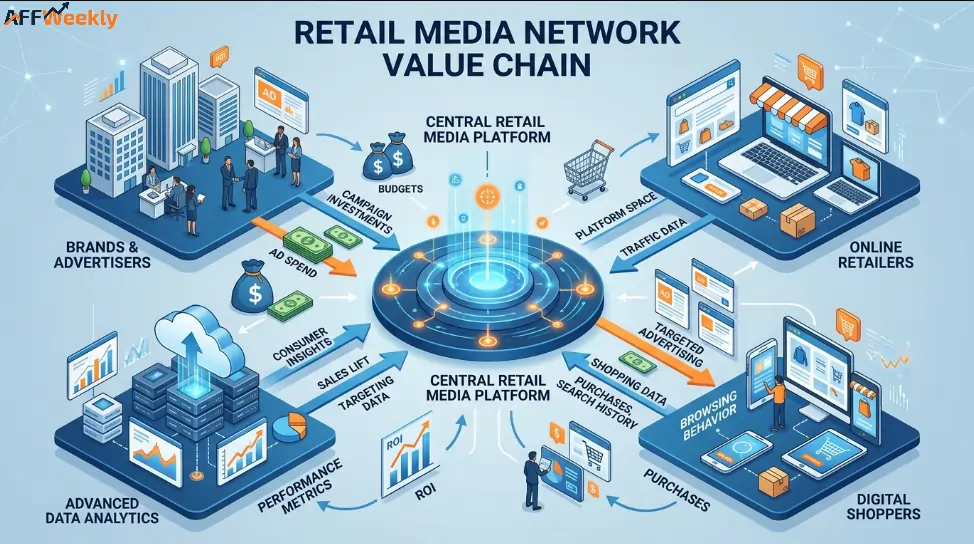
Not all retail media networks operate at the same level. The difference between a strong platform and a mediocre one usually comes down to three things: data quality, ad format flexibility, and measurement transparency.
A network worth investing in gives you access to verified first-party shopper data — not modeled audiences or loose demographic estimates. It lets you track whether an ad impression actually led to a purchase, both online and in-store.
Here's what separates the serious players:
If a platform can't show you exactly how your dollars converted into sales, it's not ready for serious ad investment.
⚡ Powerful Retail Media Networks Every Brand Should Know
| Top Retail Media Networks | Core Focus | Key Strength |
|---|---|---|
| Amazon Ads | Marketplace search ads | Deep purchase data |
| eBay Ads | Promoted listings search | Pay-per-sale model |
| Criteo | Multi-retailer media | Cross-retailer scaling |
| Walmart Connect | Omnichannel retail ads | In-store + digital |
| Instacart Ads | Grocery basket ads | High-intent shoppers |
1. Amazon Ads
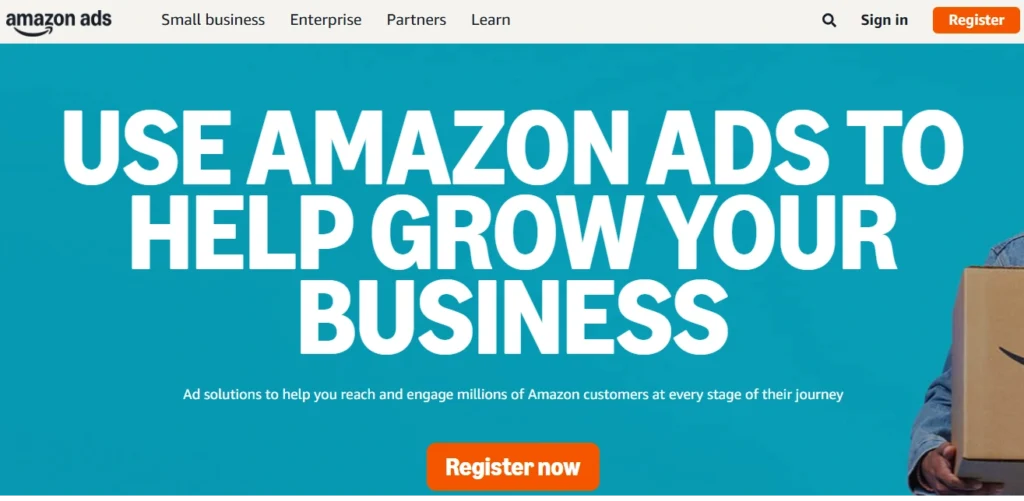
Amazon Ads helps sellers find visibility amongst millions of products, which is the primary challenge faced on the world's largest marketplace. By offering one of the most established retail media networks available, the platform provides sponsored product placements, display advertising, and video formats that reach shoppers actively looking to buy.
The tool utilises deep, first-party purchase data to help brands target consumers at every stage of the buying journey. Whether launching a new consumer packaged goods line or scaling electronics sales, advertisers can directly attribute their spend to actual conversions and measure genuine return on investment.
Limitations:
Best for: Brands of all sizes wanting direct access to high-intent global shoppers.
Why Choose Amazon Ads?
Amazon Ads provides unmatched purchase data reliability, making it essential for scalable, intent-driven commerce marketing.
2. eBay Ads
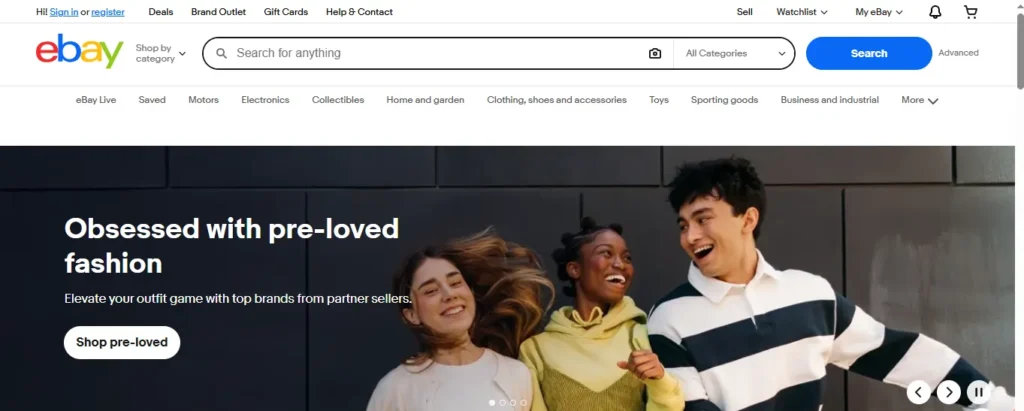
eBay Ads gives sellers targeted visibility, solving the problem of standing out in a highly fragmented marketplace against both established brands and independent merchants. Functioning as a streamlined retail media network, the tool offers Promoted Listings that allow sellers to boost their item's placement in search results and across the broader eBay ecosystem.
The platform operates predominantly on a performance basis, meaning advertisers often only pay when a sale occurs. This model is particularly effective for merchants dealing in niche categories, refurbished electronics, or collectables, giving them a lower-risk method to capture active buyer intent and increase conversion rates.
Limitations:
Best for: Independent sellers and brands moving niche, refurbished, or collectable inventory efficiently.
Why Choose eBay Ads?
It offers a low-risk, sales-driven advertising solution perfectly suited for merchants focused on direct product conversion.
3. Criteo
Criteo solves the fragmentation problem across multiple retailers that makes it difficult for brands to run cohesive campaigns. Powering the infrastructure behind numerous retail media networks, this tool acts as a unified commerce media platform that connects brands directly with retailer inventory across the open web and on-site.
Instead of logging into dozens of individual portals, advertisers use Criteo's Commerce Max to manage sponsored products and display ads across a broad network. It provides closed-loop measurement and relies on vast amounts of first-party commerce data, making it invaluable for agencies requiring multi-retailer scale without the operational friction.
Limitation:
Best for: Enterprise brands and agencies needing unified ad management across multiple retailers.
Why Choose Criteo?
Criteo delivers reliable cross-retailer scaling, making it the ideal infrastructure for brands managing complex media strategies.
4. Walmart Connect
Walmart Connect bridges the gap for omnichannel brands struggling to connect digital ad impressions to physical store purchases. Functioning as a highly integrated retail media network, the tool leverages the shopping habits of millions of weekly in-store and online customers to provide a true closed-loop view of performance.
The platform allows advertisers to deploy search, display, and in-store TV wall ads. By combining massive physical footprint data with digital browsing behaviour, it gives consumer packaged goods companies a precise way to target households and measure the real-world impact of their digital advertising spend.
Limitations:
Best for: Consumer packaged goods brands needing to connect online and in-store sales.
Why Choose Walmart Connect?
It provides uniquely accurate omnichannel attribution, making it essential for brands selling heavily through physical retail.
5. Instacart Ads
Instacart Ads helps fast-moving consumer goods reach consumers precisely when they are building their weekly shopping baskets. Operating as a highly contextual retail media network, the tool engages shoppers at the exact point of purchase across hundreds of different grocery and pharmacy banners simultaneously.
The platform features sponsored product placements, shoppable display formats, and promotions that appear right in the search grid. Because users are actively assembling a digital cart, the intent to purchase is exceptionally high, offering brands a direct mechanism to drive product trials, win market share, and measure immediate sales uplift.
Limitations:
Best for: Food, beverage, and household brands wanting immediate digital shelf visibility nationwide.
Why Choose Instacart Ads?
It intercepts high-intent buyers at the basket-building stage, making it highly useful for driving immediate sales.
👉 Common Mistakes Brands Make on Retail Media Networks
The biggest mistake? Treating every retail media network like Amazon. Each platform has different audience behaviors, ad formats, and measurement capabilities — copying the same campaign structure across all of them wastes budget fast.
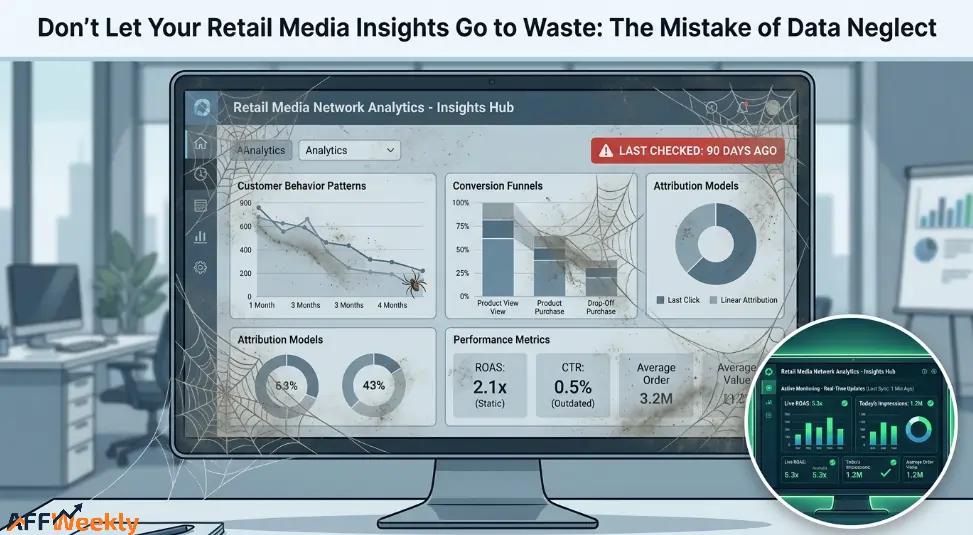
Another frequent error is focusing entirely on sponsored product ads while ignoring upper-funnel formats like display and video. Retail media networks increasingly support full-funnel strategies, and brands that only bid on search placements miss high-intent shoppers earlier in their journey.
A few costly patterns to watch for:
The brands seeing real returns treat each retail media network as its own channel — with dedicated creative, bidding logic, and performance benchmarks.
🎯 Making the Most of Retail Media Advertising
Throwing budget at every new platform won't guarantee a return on ad spend. The goal isn't to be everywhere—it's to be where your actual customers are actively shopping.
The retail media networks that matter most are the ones that align with your product category, your budget constraints, and your need for transparent, closed-loop reporting.
Focus on testing one or two channels that offer the clearest first-party data for your audience. Once you understand exactly how those impressions turn into sales, scaling your campaigns becomes a strategy rather than a gamble.