10 Best Affiliate Networks for Complete Beginners

Signup rejected. No reason given. It happens to new affiliates constantly, and nobody explains why.
Some networks quietly filter out applicants with no traffic history. Others approve almost anyone, then bury the good offers behind a manager who never replies. Payout rules differ too. One pays at $50, another holds commissions for sixty days.
That gap between what a network advertises and how it actually treats a beginner is where things get confusing.
Affiliate networks for complete beginners are not all built alike, and the differences show up fast once real clicks start moving.
The ten below are grouped by approval odds, payout terms, and support quality.
What an Affiliate Network Does (and Why Beginners Start There)
An affiliate network is a middleman platform that connects publishers with hundreds of merchants under one account. Instead of applying to brands one at a time, a beginner signs up once, then applies to individual programs inside the same dashboard.
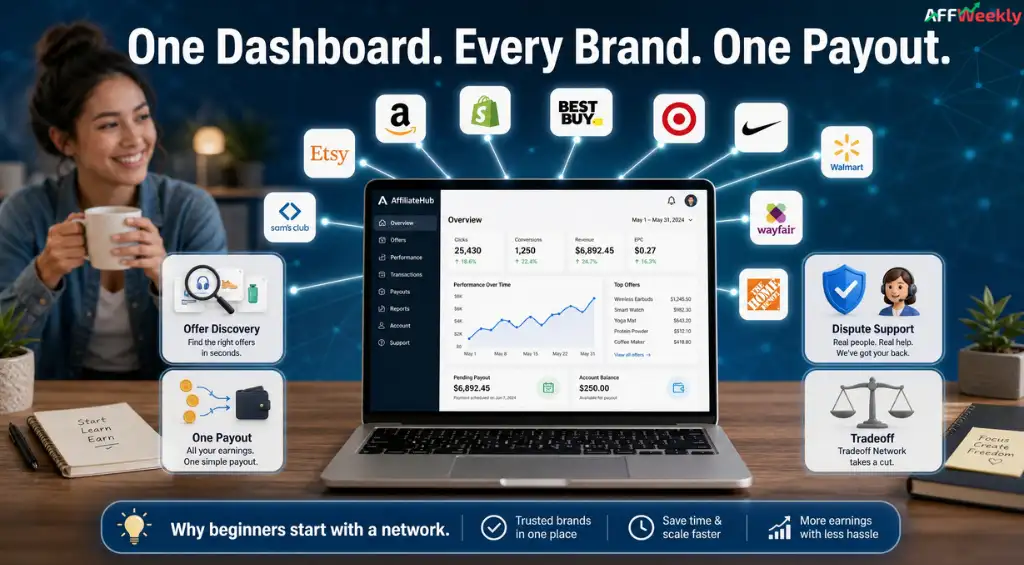
The network handles the parts new affiliates rarely want to manage alone: link tracking, commission validation, and consolidated payments. Earnings from twenty different merchants arrive as a single payout.
Most beginners start with a network rather than a direct affiliate program for three practical reasons:
The tradeoff is control. Networks take a cut, set their own approval standards, and can reject applications without explanation.
Direct programs, run through software like Tapfiliate or FirstPromoter, usually pay slightly more but require separate signups and separate payouts.
Approval difficulty is where these platforms differ most, which shapes the ranking that follows.
Why Beginner Affiliate Applications Get Rejected
Rejection emails skip the reason. These are the ones reviewers rarely spell out:
The URL does not match the pitch. A finance application pointing at a lifestyle domain looks recycled.
Free email, no contact page. A Gmail address with nowhere on the site to reach you reads as disposable.
Wrong traffic type for the advertiser. Coupon, cashback and incentive traffic are banned outright by some brands, regardless of quality.
Geography. Advertisers that ship to three countries decline everyone outside them, and nobody explains that.
Aiming too high, too early. Premium programs inside a network hold separate standards to the network itself.
A duplicate account. A forgotten signup from two years ago blocks the new one silently.
Reapplication is almost never blocked. Fix the visible gap, wait a few weeks, and try the same network again.
10 Best Affiliate Networks for Complete Beginners
| Beginner's Affiliate Networks | Common Payout Methods | Documentation Required |
|---|---|---|
| Digistore24 | Bank transfer, PayPal | Tax ID, invoice |
| ClickBank | Direct deposit, wire | W-9 or W-8BEN |
| Awin | Bank transfer only | Bank details, VAT status |
| Impact | PayPal, direct deposit | Tax form, banking info |
| FlexOffers | Direct deposit, PayPal | W-9 or W-8BEN |
| CJ Affiliate | Direct deposit, Payoneer | Tax form, verified site |
| PartnerStack | PayPal, Stripe transfer | Payment profile setup |
| eBay Partner Network | Direct deposit, PayPal | Tax form, channel proof |
| Rakuten Advertising | Direct deposit, cheque | Tax form, company details |
| vCommission | Tipalti, wire transfer | PAN card, invoice |
1. Digistore24
Digistore24 launched in 2012 out of Hildesheim, Germany, and now operates as one of Europe's largest digital product marketplaces. It acts as merchant of record, meaning the platform legally owns each transaction and handles tax compliance, billing, and refunds on behalf of vendors.
For anyone comparing affiliate networks for complete beginners, the appeal here is auto-approval. No application review sits between signup and the first promotion. Offers skew toward courses, memberships, ebooks, and supplements across roughly 44 verticals.
Payouts run weekly, up to four times a month, which shortens the gap between a sale and reinvestable cash. The tradeoff is vertical concentration. Publishers in retail or travel will find thin inventory here.
Digistore24 Key Features
Best For:
Suited to beginners in health, finance, or online education who want same-day access to offers and fast payment cycles rather than big retail brand names.
2. ClickBank
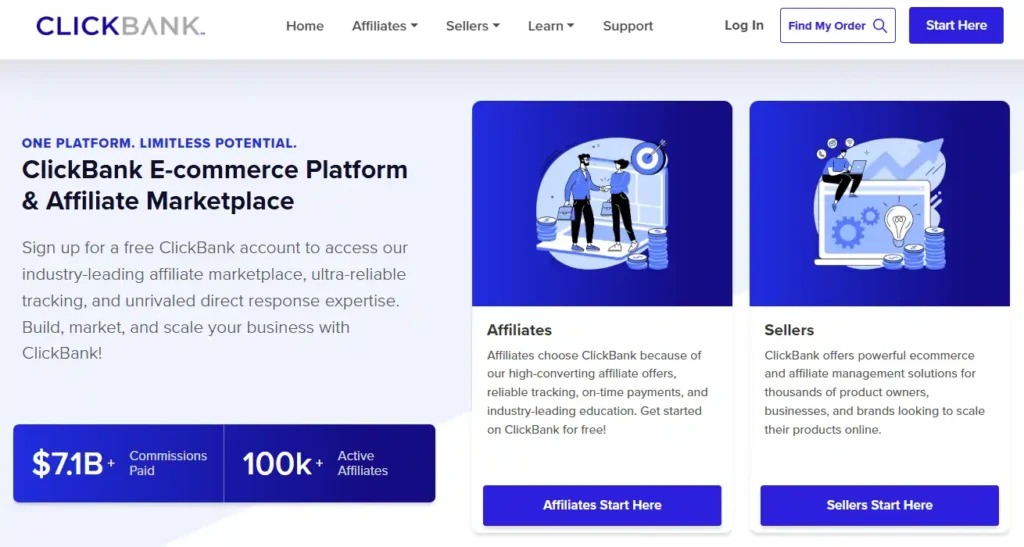
Founded in 1998, ClickBank predates most platforms on this list and built its model around digital commerce long before subscription software was common.
Signup requires no approval. That open door is why ClickBank lands on nearly every beginner's shortlist, and it is also the platform's main risk. Offer quality swings widely between vendors.
The Gravity Score exists to counter that. It measures how many separate affiliates recently earned a commission on a given offer, which separates proven products from untested ones. Health, self-help, and supplement offers dominate, with commissions frequently set between 50 and 75 percent.
ClickBank Key Features
Best For:
A practical starting point for beginners promoting digital products through email, YouTube, or paid social, provided offer vetting happens before any traffic is sent.
3. Awin
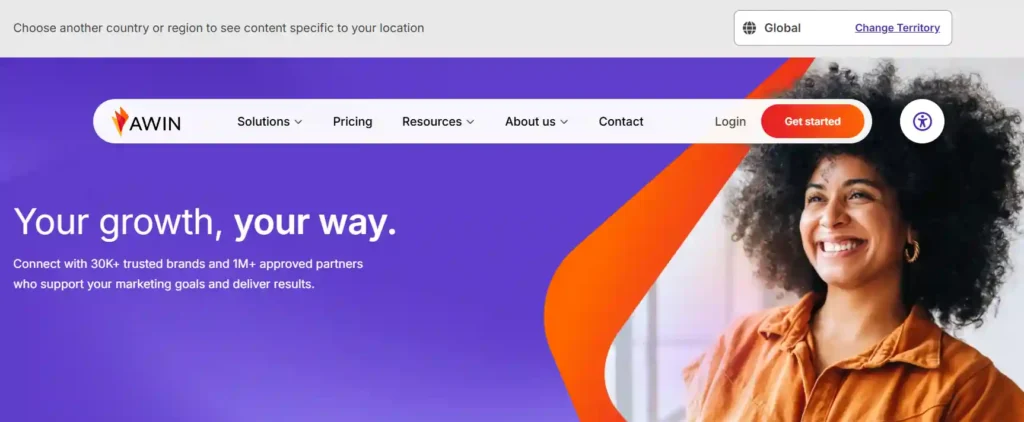
Awin formed in 2017 from the merger of Affiliate Window and Zanox, two of the earliest European affiliate businesses. It functions as a facilitator rather than a merchant, so brands run their own programs while Awin manages tracking, reporting, and payment consolidation.
Coverage leans toward established ecommerce, travel, telecom, and finance advertisers, particularly across the UK and Europe. Publishers gain access to consumer brands that convert on name recognition alone.
Approval is two-tier. Network entry comes first, then a separate application for each advertiser. That structure slows early testing, though payout reliability compensates.
Awin Key Features
Best For:
Beginners with UK or European traffic and at least a basic content site, especially those promoting mainstream retail, travel, or telecom brands.
4. Impact
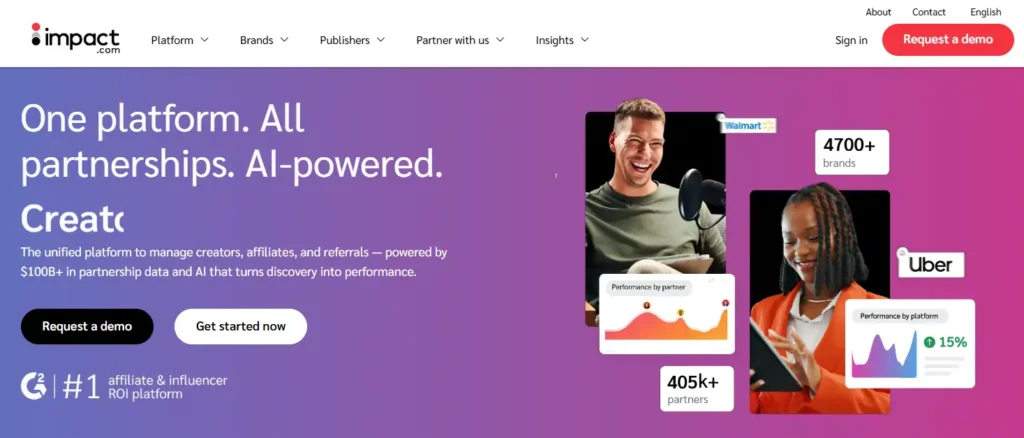
Impact started in 2008 in Santa Barbara as a partnership automation platform rather than a traditional network, and that origin still shapes the product.
Enterprise brands across ecommerce, SaaS, finance, and travel run programs here. Approval happens at two levels, the platform first and then each individual brand. New accounts do receive a set of pre-qualified programs in the dashboard, which gives beginners something to promote while larger applications sit pending.
Tracking combines cookies with server-to-server integration, so cross-device attribution holds up better than cookie-only setups. Expect a steeper interface, balanced against higher-trust advertisers.
Impact Key Features
Best For:
Beginners with a clean, professional site who want recognisable SaaS or retail brands, and who can wait through individual brand approval cycles.
5. FlexOffers

Unlike single-source networks, FlexOffers works as both a network and an aggregator. Launched in 2008, it pulls offers from CJ, Impact, and Awin through API integrations alongside its own direct advertiser relationships.
The practical result is breadth. Retail, finance, travel, subscriptions, and digital services sit inside one dashboard, which suits publishers covering several categories or still testing niches.
Signup is quick, though individual advertisers still approve separately. Content tooling is the real differentiator here. FlexLinks automates link generation, while coupon feeds and comparison widgets support deal pages without manual updating.
FlexOffers Key Features
Best For:
Multi-niche bloggers and coupon site owners who need wide category coverage and automated link tooling more than they need the highest commission rates.
6. CJ Affiliate
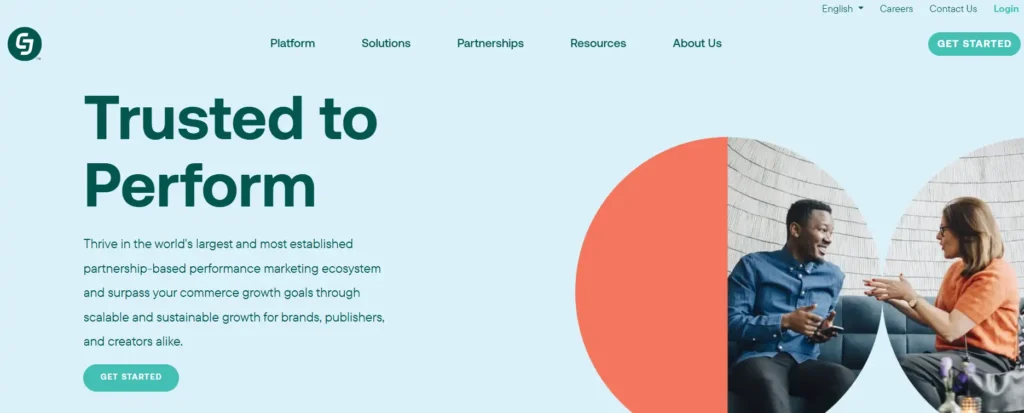
CJ Affiliate began as Commission Junction in 1998 and now sits within Publicis Groupe. It ranks among the largest networks by advertiser count, weighted heavily toward enterprise retail, travel, and financial services brands.
The reporting suite is why experienced affiliates stay. Granular performance data, deep link generation, and product feed access support genuine optimisation work rather than guesswork.
For beginners, the entry bar is real. Site quality is reviewed carefully, and dormant accounts with no activity risk closure. CJ works better as a second or third account, once some traffic history exists.
CJ Affiliate Key Features
Best For:
Beginners who already publish regularly and want established retail or finance advertisers, and who are comfortable with a stricter application review.
7. PartnerStack

PartnerStack takes a narrower path than the general networks here. Built in Toronto for B2B software companies, it hosts partner programs for SaaS brands rather than physical product retailers.
The commission model is the draw. Many programs pay recurring revenue share for the life of a referred subscription instead of a single payout, which compounds for publishers producing software reviews and comparison content.
Program approval varies by vendor, and some require a demonstrated software audience. For beginners writing in the SaaS category, PartnerStack often outperforms the broader networks here, because the commissions repeat monthly.
PartnerStack Key Features
Best For:
Beginners producing software reviews, tutorials, or B2B comparison content who prefer recurring monthly commissions over one-time retail payouts, even with a smaller offer catalogue.
8. eBay Partner Network
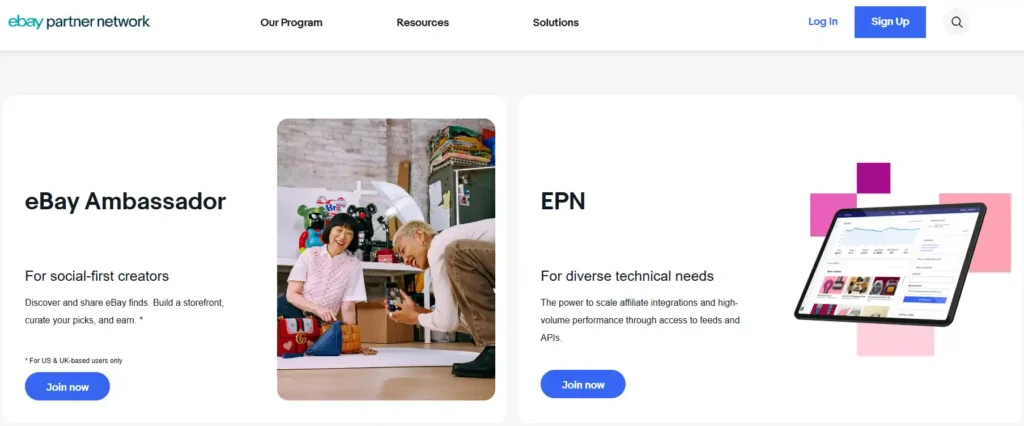
eBay ran its affiliate program through Commission Junction for years before bringing it in-house in 2008 as the eBay Partner Network.
What separates EPN from Amazon is inventory character. Collectibles, refurbished electronics, and constantly rotating auction listings create content angles that fixed-catalogue retailers cannot match, which suits deal sites and niche comparison pages.
Entry is moderate. A legitimate content channel is required and policy enforcement is strict. The 24-hour cookie is short, though a bid placed inside that window still earns commission if the auction closes within ten days.
eBay Partner Network Key Features
Best For:
Beginners running deal roundups, collectible niches, or refurbished tech content, where rotating marketplace inventory gives more publishing angles than a fixed product catalogue.
9. Rakuten Advertising

Tracing back to LinkShare in 1996, Rakuten Advertising is one of the oldest affiliate businesses still operating. Rakuten acquired it in 2005 and rebranded the platform in 2020.
Brand relationships define the network. Large consumer retailers dominate the advertiser list, and the platform connects into cashback and loyalty ecosystems that lift conversion on retail traffic.
Approval follows the familiar two-step pattern, network then advertiser, with standards varying by brand. Reporting can lag, which frustrates affiliates adjusting campaigns daily. Within a shortlist of affiliate networks for complete beginners, Rakuten fits publishers focused on physical products.
Rakuten Advertising Key Features
Best For:
Beginners with retail, fashion, or electronics content who value established brand trust and can accept longer validation and payment cycles.
10. vCommission

vCommission, founded in 2008 by Tarang and Parul Bhargava, was built to give Indian publishers direct access to advertiser budgets at a time when many western networks rejected applicants on geography alone.
The network now operates across India, Singapore, UAE, the UK, and the US, with inventory concentrated on CPL and CPA campaigns. Verticals span ecommerce, finance, travel, and mobile app installs.
Registration is open to any publisher with a legitimate traffic source and carries no joining fee. Payment runs Net-30 against a $100 threshold. For Indian traffic, local advertiser relationships matter more than raw network size.
vCommission Key Features
Best For:
Beginners sending India-based traffic who want local advertiser offers and lead-generation campaigns rather than pure ecommerce commission, ideally with some existing traffic volume.
Affiliate Networks vs Direct Programs: Which Suits a Beginner?
A network gives you hundreds of merchants behind one login, one payout threshold, and a manager to chase missing conversions. A direct program means applying to a single brand, tracking through its own software, and getting paid by that brand alone.
The money usually favours going direct. Brands running programs through tools like Tapfiliate, FirstPromoter, or Rewardful skip the network fee, and some pass part of that saving into a higher commission rate. A few also offer custom terms once you prove volume, which networks rarely negotiate on your behalf.
The admin favours the network. Ten direct programs means ten dashboards, ten payment thresholds, and ten small balances sitting unpaid because none of them reached the minimum. The same ten merchants inside Awin or Impact arrive as one transfer.
For a first year, a network is the simpler starting point. Direct programs make sense later, once one or two merchants are clearly outperforming the rest and the extra percentage is worth managing separately.
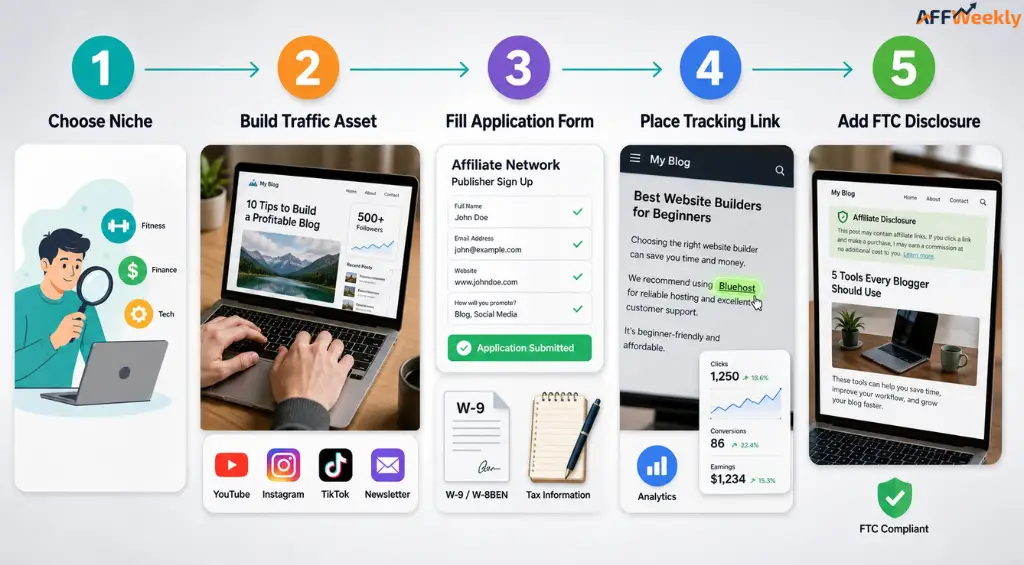
How to Join an Affiliate Network as a Complete Beginner (Step by Step)
Joining takes under an hour. Getting approved depends on what sits behind the application, which is where new affiliates usually lose the account.
AFFWeekly's Take
Most new affiliates apply everywhere at once, then wonder why approvals stall. Two accounts worked properly beat ten sitting empty. Approval odds, payout threshold, and offer fit for the niche already being written about should carry the decision.
Affiliate networks for complete beginners matter less for their reputation and more for how quickly a first commission becomes possible. The rest gets easier once real data starts arriving.
Start with one, publish honestly, and let the numbers point toward what comes next.