7 Best Keyword Research Tools for Affiliate SEO
Affiliate keywords look easy until the traffic never converts. A term ranks, clicks trickle in, and sales stay flat. The problem often hides in the tools themselves. Many pull the same bloated data, inflate competition scores, or bury real buyer intent under vanity metrics.
At AFFWeekly, we've tested these platforms across live affiliate sites, not demo dashboards. We've watched a “low difficulty” keyword drain hours and return nothing. We've also seen a quiet long-tail phrase quietly fund an entire niche site.
The gap between those two outcomes usually comes down to which tool sits behind the research.
Seven platforms handle affiliate SEO very differently. Some reward beginners. Some reward budget. A few surprised us in ways the marketing pages never mention.
Here's what our testing actually revealed.
Why Keyword Research Tools for Affiliate SEO Decide Your Commission Ceiling

Your keyword tool sets a ceiling on how much an affiliate site can earn. The reason is simple: revenue starts with the terms you target, and those terms come from the data your tool shows you.
A weak tool hides the keywords that matter. It reports inflated difficulty scores, misses buyer-intent phrases, and buries the low-competition terms that new sites can actually rank for. You end up writing content around traffic that never converts.
A stronger tool surfaces the opposite. It flags commercial and transactional keywords, shows accurate keyword difficulty, and reveals content gaps your competitors left open. Every article you publish then targets a term with real earning potential.
This gap compounds over time. Two affiliates can work equally hard, publish the same volume, and see very different income, purely because one researched with sharper data.
Three things separate a tool that lifts your ceiling from one that caps it:
The seven tools ahead were tested against exactly these signals.
How AFFWeekly Tested These Keyword Research Tools for Affiliate SEO

We didn't score these tools from their marketing pages. Every platform was run against live affiliate sites in our own portfolio, across niches like proxies, eSIMs, and AI tools.
The goal was simple: see which tools surface keywords that actually earn, not just keywords that look good in a dashboard.
Each tool was tested on the same five signals:
We also tracked one thing most reviews skip: how often a “low difficulty” keyword actually ranked after publishing. A score means nothing if the page still stalls on page three.
Every verdict ahead reflects hands-on testing, not vendor claims. That's the standard behind each rank.
The 7 Best Keyword Research Tools for Affiliate SEO at a Glance
| Best Keyword Research Tools for Affiliate | Core Data Source | Learning Curve | Ideal Affiliate Stage |
|---|---|---|---|
| Semrush | Google + Bing | Steep, feature-heavy | Scaling multi-site portfolios |
| Ahrefs | Own web crawler | Moderate to steep | Growing niche authority |
| KWFinder | Google-based volume | Beginner-friendly | New niche sites |
| Ubersuggest | Google Suggest data | Very easy | Beginners, side projects |
| LowFruits | Autocomplete + SERP | Slight, quick | Brand-new low-DA sites |
| Moz | Clickstream index | Gentle, guided | Early SEO learners |
| Google Keyword Planner | Direct Google data | Easy, familiar | Demand validation baseline |
1. Semrush
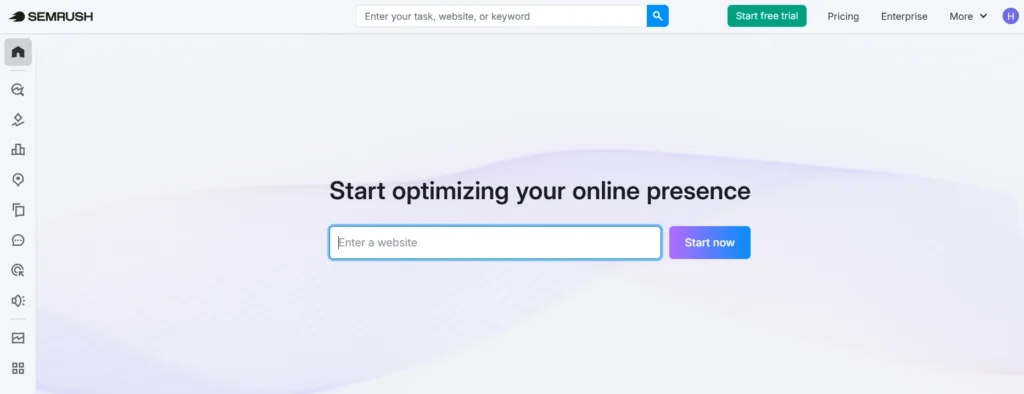
Semrush sits at the heavier end of keyword research tools for affiliate SEO, built for marketers who want competitor data and keyword data inside one platform. It pulls keyword ideas from Google and Bing, then layers on difficulty scores, intent labels, and SERP analysis.
The affiliate workflow is where it earns its place. You enter a competitor domain, see every term they rank for, and export the commercial and transactional keywords they already monetise. The Keyword Magic Tool then groups those terms by intent, so buyer-focused phrases surface fast.
Semrush suits publishers running several sites, agencies, and teams shipping content at volume. Solo bloggers on tight budgets may find it broad for early-stage niche work, though its depth pays off as a site scales.
| Field | Detail |
|---|---|
| Company | Semrush Holdings, Inc. |
| Founded | 2008 |
| Headquarters | Boston, Massachusetts, USA |
| Founders | Oleg Shchegolev and Dmitri Melnikov |
| Ownership note | Adobe acquisition approved by shareholders in February 2026 |
| Supported Platforms | Web-based (browser) |
| Free Trial | Yes (limited-time trial on paid plans) |
| Free Plan | Limited free account with capped daily lookups |
| Best For | Multi-site affiliates, agencies, competitive research at scale |
| Key Features | Keyword Magic Tool, intent filters, competitor keyword gap, SERP analysis, position tracking, site audit |
| Integrations | Google Analytics, Google Search Console, Looker Studio, Google Ads |
| API Availability | Yes |
| Security | Standard SaaS encryption; SSO on higher tiers |
| Customer Support | Email, chat, knowledge base, Semrush Academy |
| Languages | Multiple interface languages |
| Deployment | Cloud (SaaS) |
| Mobile Apps | Limited (select app-based tools) |
| Browser Extensions | Yes (SEO toolbar) |
| Latest AI Capabilities | AI-assisted content workflows, Copilot insights, AI writing tools |
Semrush Pros & Cons
- Intent labels make commercial and transactional keyword sorting quick.
- Competitor keyword gap reveals terms rivals monetise that you miss.
- Large keyword database across many regions and languages.
- Doubles as an all-in-one SEO suite beyond keyword research.
- Learning curve is steep for beginners doing simple research.
- Depth can feel excessive for a single small niche site.
Why Choose Semrush?
Best for affiliates managing multiple sites or teams publishing at volume who need intent-sorted keyword data and competitor gap analysis in one place, not casual solo research.
2. Ahrefs
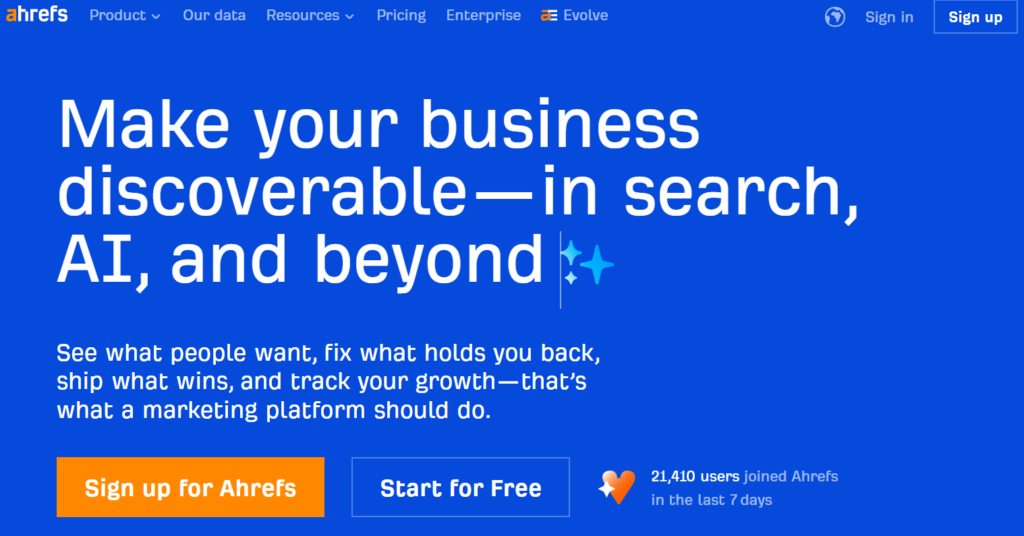
Ahrefs earned its reputation on backlink data, but for keyword research tools for affiliate SEO its Keywords Explorer and Content Gap features are the real draw. It runs on its own web crawler and index, refreshed at a heavy daily pace.
In practice, affiliates use the Content Gap report to see which profitable keywords competitors rank for that a site is missing. Every keyword also carries a Parent Topic, which helps group related terms into clusters and build topical authority around an offer.
Serious niche site builders, SEO professionals, and content teams lean on Ahrefs when link data and keyword data need to live together. Beginners can start with its free Webmaster Tools before committing to a paid plan.
| Field | Detail |
|---|---|
| Company | Ahrefs Pte. Ltd. |
| Founded | 2010 |
| Headquarters | Singapore |
| Founder | Dmytro Gerasymenko |
| Funding | Bootstrapped, no outside investment |
| Supported Platforms | Web-based (browser) |
| Free Trial | No traditional trial; free Ahrefs Webmaster Tools available |
| Free Plan | Free Webmaster Tools and free keyword generator tools |
| Best For | Niche site builders and SEOs needing keyword plus backlink depth |
| Key Features | Keywords Explorer, Content Gap, Parent Topic, Site Explorer, Rank Tracker, Site Audit |
| Integrations | Google Search Console, Looker Studio, and API-based connections |
| API Availability | Yes (including a real-time data API) |
| Security | Standard SaaS encryption; two-factor authentication |
| Customer Support | Email support, help centre, active YouTube education |
| Languages | Interface and data across multiple regions |
| Deployment | Cloud (SaaS) |
| Mobile Apps | Not publicly disclosed |
| Browser Extensions | Yes (Ahrefs SEO Toolbar) |
| Latest AI Capabilities | Agent A (AI SEO assistant), AI Content Helper, AI writing utilities |
Ahrefs Pros & Cons
- Content Gap surfaces competitor keywords a site can realistically target.
- Parent Topic simplifies clustering for topical authority.
- Own index refreshes link and keyword data quickly.
- Free Webmaster Tools give new affiliates a genuine entry point.
- No open-ended free trial on full paid features.
- Data depth can overwhelm users who only need basic keyword ideas.
Why Choose Ahrefs?
Ideal for affiliates who treat link building and keyword research as one workflow, and for niche builders wanting competitor gap data plus clustering signals in a single, accurate index.
3. KWFinder (by Mangools)
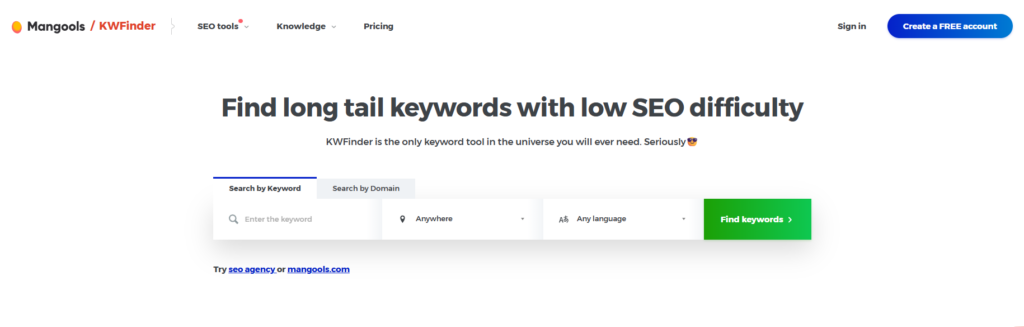
KWFinder, the flagship tool inside the Mangools suite, takes a lighter and friendlier approach to keyword research tools for affiliate SEO. It was built to make keyword difficulty readable at a glance, which is where newer affiliate sites gain the fastest wins.
The tool pulls long-tail suggestions, shows exact search volume with historical trends, and pairs each keyword with a difficulty score that many practitioners find dependable. SERPChecker then breaks down the top-ranking pages so you can judge whether an affiliate article stands a real chance.
Bloggers, solo affiliates, and small teams who want clean data without a heavy interface are the natural fit here. Large-scale operations may outgrow its feature set, but for low-competition discovery it stays approachable.
| Field | Detail |
|---|---|
| Company | Mangools s.r.o. |
| Founded | 2014 (Mangools brand established 2016) |
| Headquarters | Bratislava, Slovakia |
| Founder | Peter Hrbáčik |
| Funding | Bootstrapped |
| Supported Platforms | Web-based (browser) |
| Free Trial | Yes (free trial available) |
| Free Plan | Free SEO tools (SERP simulator, SERP volatility, extension) |
| Best For | Beginners, bloggers, and solo affiliates on niche sites |
| Key Features | KWFinder keyword research, SERPChecker, SERPWatcher, LinkMiner, SiteProfiler |
| Integrations | Browser extension; connects across the Mangools tool set |
| API Availability | Yes (Mangools API) |
| Security | Standard SaaS encryption |
| Customer Support | Email support, help resources, responsive support reputation |
| Languages | Localised results across many locations |
| Deployment | Cloud (SaaS) |
| Mobile Apps | Not publicly disclosed |
| Browser Extensions | Yes (Mangools SEO extension) |
| Latest AI Capabilities | Not publicly disclosed |
KWFinder (by Mangools) Pros & Cons
- Keyword difficulty score is clear and beginner-friendly.
- Clean interface reduces data fatigue for new affiliates.
- Strong long-tail discovery for low-competition terms.
- Bundles five SEO tools under one login.
- Feature depth is limited for large content operations.
- Data breadth trails heavier suites like Ahrefs and Semrush.
Why Choose KWFinder?
A strong pick for affiliates starting new niche sites who want readable difficulty scores and long-tail ideas without a complex, expensive platform slowing early research down.
4. Ubersuggest
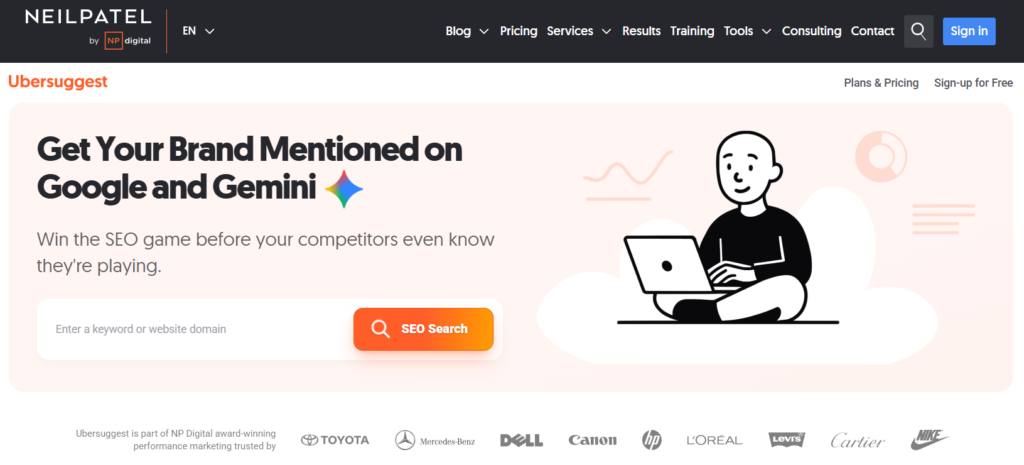
Ubersuggest began as a simple Google Suggest scraper and grew, after Neil Patel acquired it, into a broader entry point among keyword research tools for affiliate SEO. Its pitch is accessibility: core data at a low barrier for bloggers and small business owners.
Affiliates use it to generate keyword ideas, check search volume and an SEO difficulty score, and scan the SERP overview to gauge competition. The keyword type filters help separate informational terms from commercial ones, which matters when aligning content with offers.
The tool fits beginners, budget-conscious creators, and side-project affiliates who want quick direction. Data can differ from heavier platforms in niche markets, so many users treat it as a fast first pass rather than a sole source of truth.
| Field | Detail |
|---|---|
| Company | NP Digital (owned by Neil Patel) |
| Original Creator | Alessandro Martin |
| Acquired | By Neil Patel in 2017 |
| Headquarters | NP Digital (United States) |
| Supported Platforms | Web-based (browser) |
| Free Trial | Yes (trial on paid tiers) |
| Free Plan | Yes, with limited daily searches |
| Best For | Beginners, bloggers, budget-conscious affiliates |
| Key Features | Keyword Ideas, SEO difficulty, SERP overview, content ideas, rank tracking, site audit |
| Integrations | Google Search Console connection |
| API Availability | Not publicly disclosed |
| Security | Standard SaaS encryption |
| Customer Support | Email support, help centre, webinars |
| Languages | Multiple regions and languages |
| Deployment | Cloud (SaaS) |
| Mobile Apps | Yes (Ubersuggest mobile app) |
| Browser Extensions | Yes (Chrome extension) |
| Latest AI Capabilities | AI Writer for content drafting |
Ubersuggest Pros & Cons
- Low barrier to entry for new affiliates.
- Free daily searches let users test before committing.
- Keyword type filters aid intent-based content planning.
- Clean dashboard avoids data overload.
- Data accuracy can vary in niche markets versus larger tools.
- Feature depth is lighter than enterprise SEO suites.
Why Choose Ubersuggest?
Suited to beginners and budget-focused affiliates who want fast keyword ideas and difficulty scores at a low entry point, and treat it as a first pass alongside deeper checks.
5. LowFruits
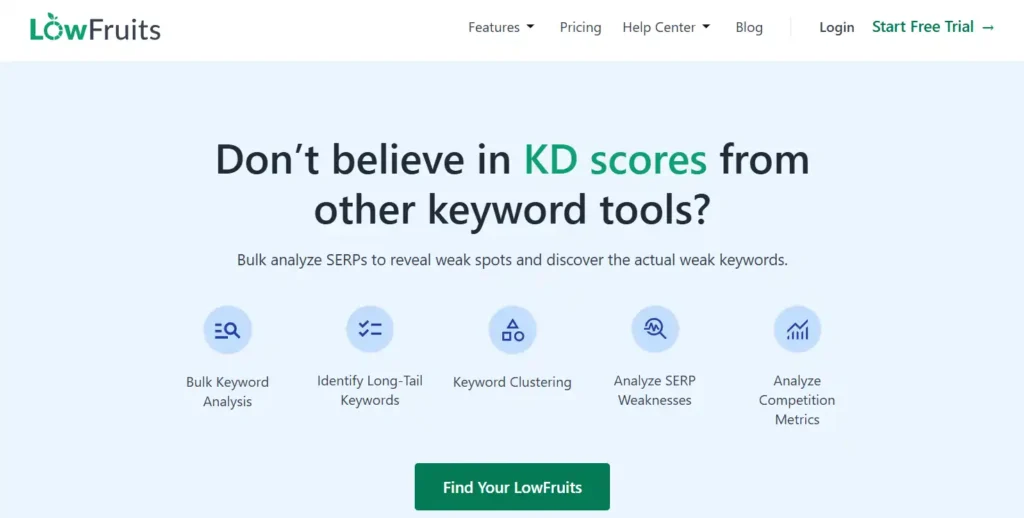
LowFruits takes a sharper, narrower angle than general keyword research tools for affiliate SEO: it hunts for weak spots in the SERPs. Instead of trusting a single difficulty number, it analyses who actually ranks and flags pages held by low-authority domains.
The workflow suits new sites directly. You feed a seed keyword or import a list, and the tool marks terms where forums, user-generated pages, or weak domains sit in the top results, signalling a realistic ranking chance even at low domain authority. Wildcard searches and intent filters help surface buyer-focused long-tail phrases.
Bootstrapped founders, niche site builders, and lean content teams gain from it. Sites with strong authority already, or large operations wanting a full suite, may find it deliberately focused.
| Field | Detail |
|---|---|
| Company | LowFruits (acquired by AIOSEO / All in One SEO in 2024) |
| Founded | 2020 |
| Founder | Paul Pilavachi |
| Headquarters | Not publicly disclosed |
| Supported Platforms | Web-based (browser) |
| Free Trial | Yes (free starter credits) |
| Free Plan | Free keyword idea generation; SERP analysis uses credits |
| Best For | New and low-authority sites hunting easy-win keywords |
| Key Features | SERP weakness analysis, weak-spot detection, wildcard search, bulk keyword import, rank tracker, Domain Explorer |
| Integrations | Keyword list import from external tools |
| API Availability | Not publicly disclosed |
| Security | Standard SaaS encryption |
| Customer Support | Email and contact-based support |
| Languages | Country and language filtering supported |
| Deployment | Cloud (SaaS) |
| Mobile Apps | Not publicly disclosed |
| Browser Extensions | Not publicly disclosed |
| Latest AI Capabilities | Not publicly disclosed |
LowFruits Pros & Cons
- SERP weak-spot analysis shows real ranking chances, not just a score.
- Excellent for new and low-authority affiliate domains.
- Credit option lets users research only when needed.
- Wildcard and intent filters surface buyer-focused long-tails.
- Credit-based usage can add up during bulk analysis.
- Interface takes a few sessions to feel comfortable with.
Why Choose LowFruits?
Built for new-site affiliates who need low-competition, easy-win keywords fast, and want SERP weakness evidence rather than a difficulty score they cannot fully trust.
6. Moz Keyword Explorer
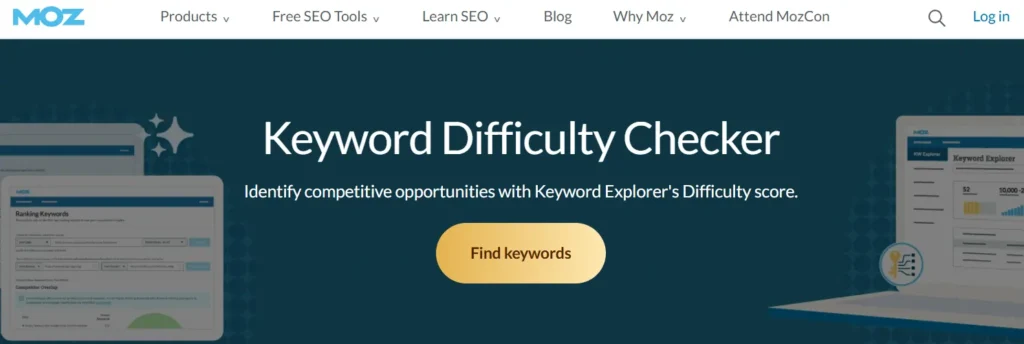
Moz Keyword Explorer brings an educational, approachable feel to keyword research tools for affiliate SEO, backed by one of the longest track records in the industry. Moz originated the Domain Authority metric that many affiliates still use to size up competition.
The tool reports search volume, a difficulty score, organic click-through rate, and a Priority Score that blends factors into one signal, helping affiliates spot terms that are both winnable and worth the effort. Keyword suggestions arrive grouped by relevance, which keeps list-building manageable.
Affiliates new to SEO, and those who value guided learning alongside their data, tend to appreciate it. Practitioners needing the deepest keyword database may pair it with a heavier tool, but for accessible research it holds up well.
| Field | Detail |
|---|---|
| Company | Moz, Inc. |
| Founded | 2004 (originally SEOmoz) |
| Headquarters | Seattle, Washington, USA |
| Founders | Rand Fishkin and Gillian Muessig |
| Current Owner | Not publicly disclosed here |
| Supported Platforms | Web-based (browser) |
| Free Trial | Yes (free trial on Moz Pro) |
| Free Plan | Limited free keyword queries; free MozBar extension |
| Best For | SEO beginners and affiliates who value guided, readable data |
| Key Features | Keyword Explorer, Priority Score, Domain Authority, rank tracking, site audit, link research |
| Integrations | Google Analytics, Google Search Console |
| API Availability | Yes (Moz Links API) |
| Security | Standard SaaS encryption |
| Customer Support | Email, help hub, extensive learning resources |
| Languages | Primarily English interface |
| Deployment | Cloud (SaaS) |
| Mobile Apps | Not publicly disclosed |
| Browser Extensions | Yes (MozBar) |
| Latest AI Capabilities | AI Overview visibility tracking in search results |
Moz Keyword Explorer Pros & Cons
- Priority Score combines signals into one easy decision metric.
- Domain Authority helps size up competitor strength quickly.
- Strong educational resources shorten the learning curve.
- CTR data helps predict clicks from a ranking position.
- Keyword database is smaller than Ahrefs or Semrush.
- Interface language support is limited compared with rivals.
Why Choose Moz Keyword Explorer?
A comfortable fit for affiliates newer to SEO who want readable metrics, Priority Score guidance, and Domain Authority context, plus learning resources built into the platform.
7. Google Keyword Planner
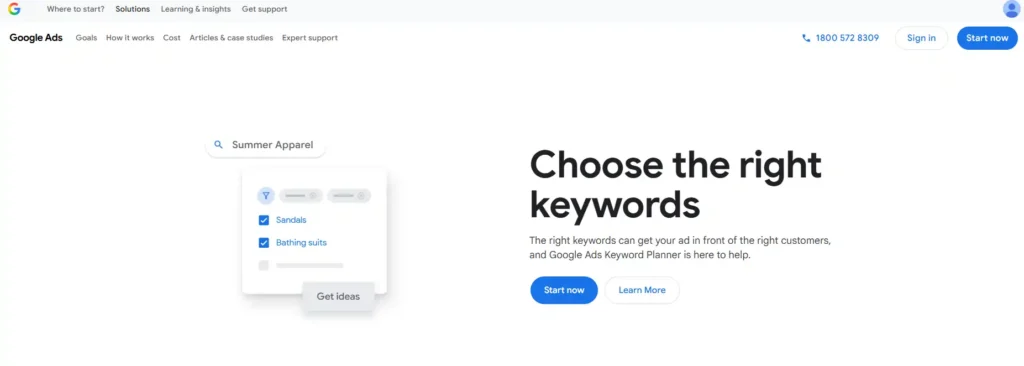
Google Keyword Planner remains the free baseline among keyword research tools for affiliate SEO, valued because its data comes straight from Google. Built into Google Ads, it was designed for advertisers, yet affiliates lean on it for demand validation.
The workflow is simple: enter a seed term or URL, and it returns keyword ideas, search volume ranges, competition indicators, and forecast data. Many affiliates use it to confirm a keyword has real demand before committing an article, then verify difficulty in a dedicated SEO tool.
New affiliates, budget-limited publishers, and anyone wanting official Google numbers benefit here. Its volume ranges and ad-focused competition scores mean it works best paired with a keyword difficulty tool rather than used alone.
| Field | Detail |
|---|---|
| Company | Google LLC |
| Part Of | Google Ads |
| Launched | 2013 (replacing earlier Keyword Tool and Traffic Estimator) |
| Headquarters | Mountain View, California, USA |
| Supported Platforms | Web-based (within Google Ads) |
| Free Trial | Not applicable |
| Free Plan | Free with an active Google Ads account |
| Best For | Demand validation and free baseline keyword research |
| Key Features | Keyword ideas, search volume ranges, competition indicators, forecasts, location and device filters |
| Integrations | Google Ads, Google Search, exportable to sheets |
| API Availability | Yes (via Google Ads API) |
| Security | Google account security and two-factor authentication |
| Customer Support | Google Ads help centre and support channels |
| Languages | Extensive language and region coverage |
| Deployment | Cloud (within Google Ads) |
| Mobile Apps | Accessible via the Google Ads mobile app |
| Browser Extensions | Not applicable |
| Latest AI Capabilities | AI-assisted features within the wider Google Ads platform |
Google Keyword Planner Pros & Cons
- Data comes directly from Google search behaviour.
- Free to use with a Google Ads account.
- Wide language and location coverage for global niches.
- Reliable for confirming real search demand.
- Shows volume as broad ranges rather than exact figures.
- Competition scores reflect paid ads, not organic difficulty.
Why Choose Google Keyword Planner?
Best as a free demand-validation baseline for every affiliate: confirm a keyword has real Google search interest, then check organic difficulty in a dedicated SEO tool.
How to Find Buyer-Intent Keywords That Convert on Affiliate Offers
High traffic doesn't pay commissions. Buyer intent does. This section breaks down how to spot the keywords that bring visitors who are ready to act, not just browse.

Buyer-intent keywords signal that a searcher is close to a purchase decision. They carry commercial or transactional meaning, and they convert far better than broad informational terms.
Look for these modifiers when researching:
A practical filter works like this:
That last check matters. If the results are all official product pages, the keyword may not reward an affiliate article, no matter how strong the intent looks.
Confirm each term in a keyword tool before committing content to it. Intent gets you the click. Matching the SERP gets you the ranking.
Final Thoughts from AFFWeekly
No single tool fits every affiliate site. What works for a brand-new blog often differs from what a scaled portfolio needs, and that gap is normal. The real value comes from matching a tool to your budget, your niche, and the stage you're at right now.
Across our testing, one pattern held steady: the right keyword research tools for affiliate SEO reward patience and honest data over shortcuts. Start with what fits today, learn how it thinks, and let your results guide the next step.
The rest tends to follow.