
8 Top Appointment Scheduling Software Affiliate Programs

Booking tools sell themselves. The affiliate programs behind them rarely do. One brand pays a flat bounty per signup, another pays revenue share for a year, and a third quietly caps commissions after the first upgrade. The payout pages read almost identical, which is why so many partners sign up for the wrong one.
Confusion deepens once cookie windows, approval rules, and payout thresholds enter the picture. A 30 day cookie on a tool with a 14 day trial behaves very differently from a 90 day cookie on an annual plan.
The eight appointment scheduling software affiliate programs below are compared on those terms: commission model, cookie length, network, and the type of audience each one converts. Content creators and experienced media buyers weigh these programs differently than beginners do.
How These Scheduling Affiliate Programs Were Ranked
Ranking came from live account data rather than the numbers printed on partner landing pages. Each scheduling software affiliate program was applied to, approved or rejected, then opened inside its own dashboard.
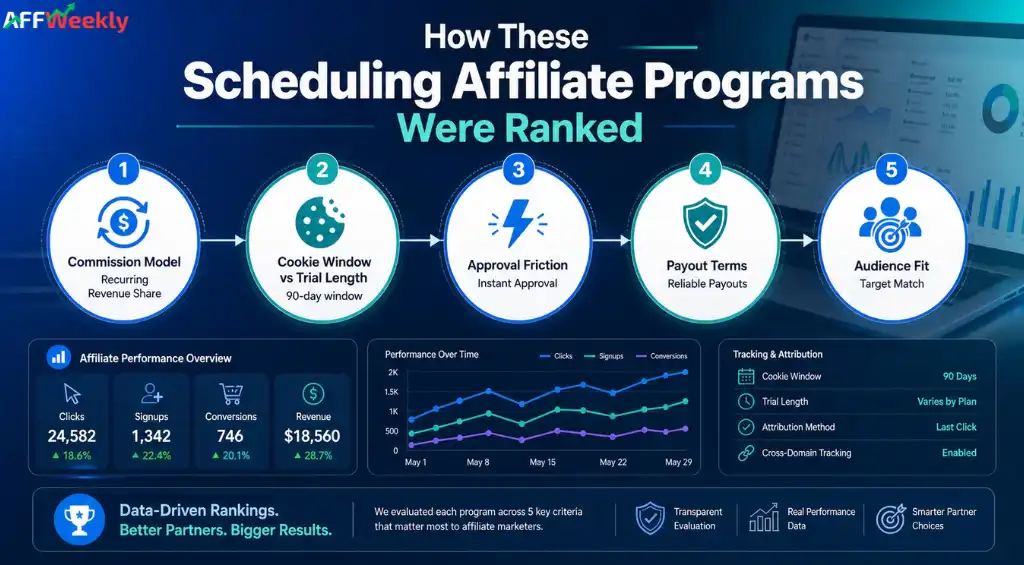
Five criteria decided the order:
Testing used tracked links placed inside existing booking software reviews and comparison posts. Clicks, trial signups, and paid conversions were pulled after 30 days, then matched against dashboard reporting to catch tracking gaps.
Payment reliability was cross-checked against affiliate forum threads and public partner feedback, since dashboards rarely reveal late payouts.
Commission structure carried the heaviest weight, so the comparison starts there.
8 Top Appointment Scheduling Software Affiliate Programs
| Scheduling Tools | Best Traffic Source | Keyword Cluster to Target |
|---|---|---|
| Calendly | LinkedIn B2B content | Meeting scheduling automation |
| SimplyBook.me | Local service blogs | Salon booking system |
| Setmore | YouTube software walkthroughs | Free scheduling software |
| Appointy | Industry email newsletters | Clinic booking software |
| Cal.com | Developer forums, GitHub | Open source scheduling |
| Vagaro | Salon owner communities | Spa management software |
| Zoho Bookings | SaaS comparison sites | Zoho suite pricing |
| Lunacal | Short form video | Calendly alternatives 2026 |
1. Calendly Affiliate Program
Calendly holds the strongest brand recall in scheduling, serving more than 20 million users from solo freelancers to enterprise sales teams. That recognition drives search demand few competing booking platforms can match.
Access is the complication. Publishers who searched the major affiliate networks reported being unable to locate an active Calendly program, and the company appeared to run none publicly. Directory listings describe a B2B partnership aimed at partners referring to professional users, using a single-tier cost-per-sale structure.
Worth applying for directly, with a verified backup offer named in the same review.
Why choose Calendly: Suits B2B blogs with sales, recruiting, or consulting readers. Brand demand converts well, though the offer needs confirming before a review depends on it.
2. SimplyBook.me Affiliate Program
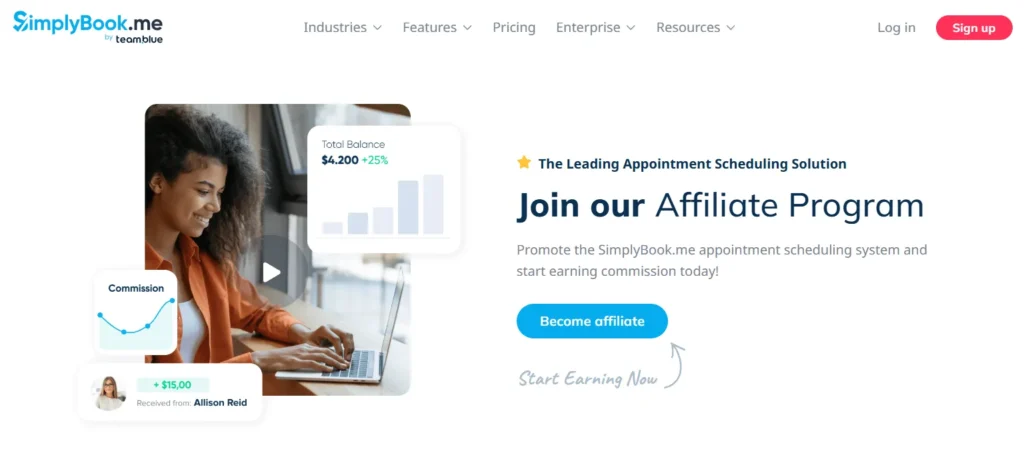
Salons, clinics, tutors, and studios form the bulk of the SimplyBook.me customer base, and its payout terms reflect how long those accounts stay subscribed. Affiliates receive 25% of a referred user's first payment, followed by 15% of subsequent payments for up to 24 months.
A two-year tail places this among the longest revenue-share windows in booking software affiliate programs. The generous free tier lowers hesitation on cold traffic, so review content converts readers who would stall at a paid-only signup.
Local service niches with strong commercial search intent suit this offer particularly well.
Why choose SimplyBook.me: Best for publishers covering salon, wellness, and clinic software. The renewal tail rewards evergreen reviews far more than a single bounty would.
3. Setmore Affiliate Program
Freemium positioning defines Setmore, which markets itself as free online scheduling software for service businesses and combines booking pages, automated reminders, video meetings, and payment processing. Affiliates earn a flat 30% on Premium plan sales across both monthly and annual purchases, tracked through Tapfiliate.
The free plan pulls signups with almost no friction, so the real work sits in driving upgrades. Revenue depends on referred accounts staying active long enough to clear the retention gate, which rules out throwaway traffic and rewards genuine recommendations.
Small-business bloggers and service-industry video creators tend to see the steadiest results here.
Why choose Setmore: Fits small-business bloggers and service-industry YouTubers. Easy free-plan conversions, balanced against a delayed payout cycle better suited to organic content than paid campaigns.
4. Appointy Affiliate Program
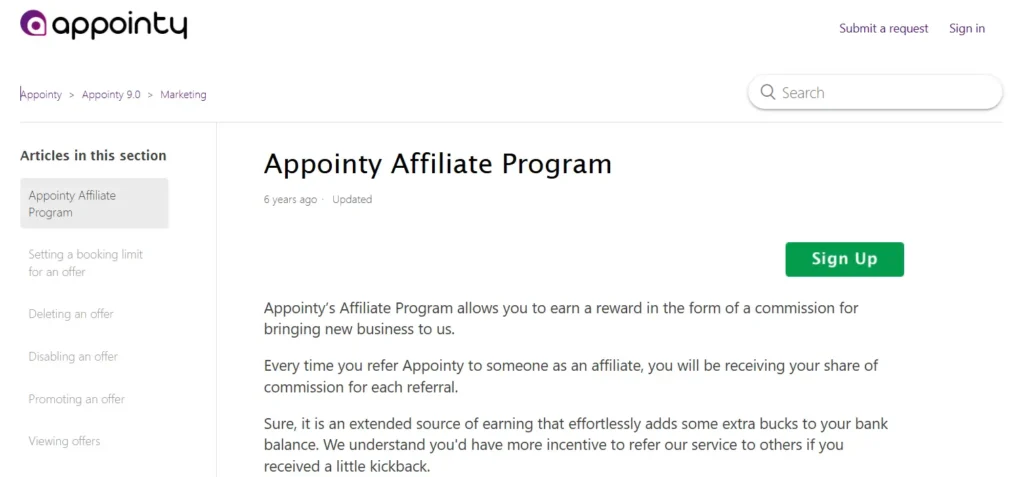
Appointy runs cloud-based scheduling for healthcare, wellness, education, beauty, and professional services, which gives one offer coverage across several review categories at once. Affiliates earn 30% for each paid customer referred.
Vertical breadth matters for content planning. A single program can support clinic booking guides, class scheduling roundups, and salon software comparisons without switching links mid-article.
Rate flexibility separates it from fixed-percentage competitors, giving established sites room to negotiate rather than accept the default terms.
Why choose Appointy: Strong pick for multi-vertical publishers. The negotiable rate rewards sites with existing scheduling traffic and gives leverage that fixed-rate programs deny.
5. Cal.com Affiliate Program
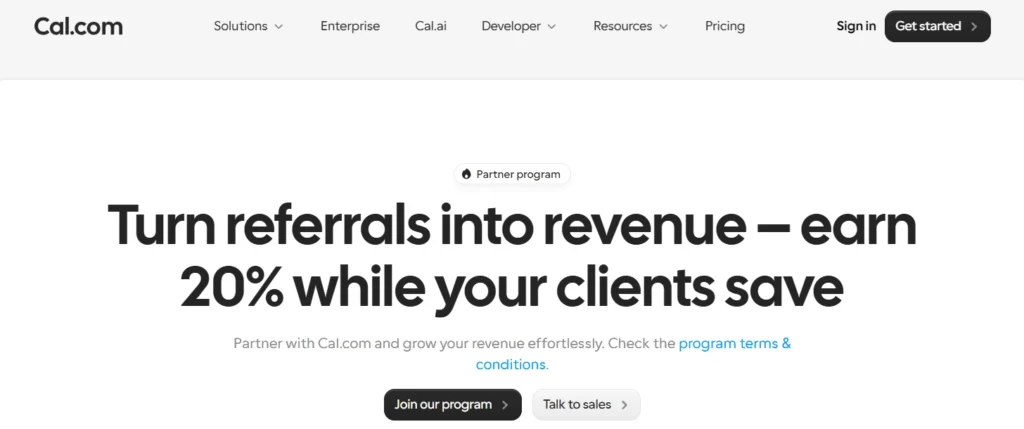
Cal.com serves developers and technical teams through an open-source, self-hostable scheduling platform with deep API access. It is the default recommendation in open-source roundups, a niche mainstream scheduling reviews rarely cover with any depth. Affiliates earn 20% recurring commission for 12 months.
Technical buyers research longer before subscribing, then churn far less once the tool sits inside a workflow. That retention pattern favours recurring terms over a flat bounty paid once.
Comparison content aimed at teams already evaluating Calendly tends to convert best.
Why choose Cal.com: Ideal for dev-focused newsletters and technical blogs. Sticky accounts and a built-in referral discount help convert readers already comparing Calendly alternatives.
6. Vagaro Affiliate Program
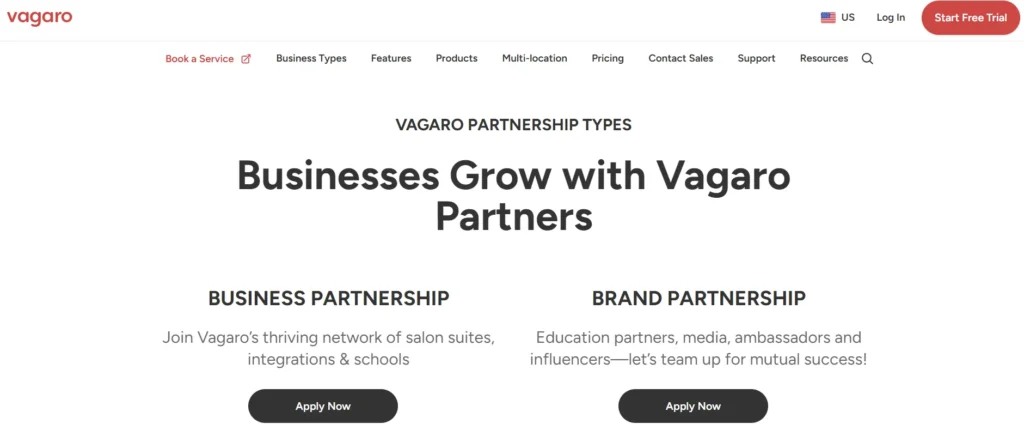
Vagaro dominates salon, spa, and fitness booking across the US, Canada, UK, and Australia, handling client management, scheduling, and card processing in one system. The reward mechanism, however, differs sharply from the rest of this list.
A review of major networks including CJ, Rakuten, Pepperjam, and ShareASale turned up no active affiliate program. What exists instead is a customer refer-a-friend scheme that pays in account credit. Affiliates chasing cash commission gain little value here, since the reward offsets a Vagaro subscription rather than landing in a bank account.
Coverage still makes sense for publishers whose readers already run on the platform.
Why choose Vagaro: Worth covering for salon owners already using it. Publishers seeking cash commission should route wellness traffic to SimplyBook.me or Appointy instead.
7. Zoho Bookings Affiliate Program
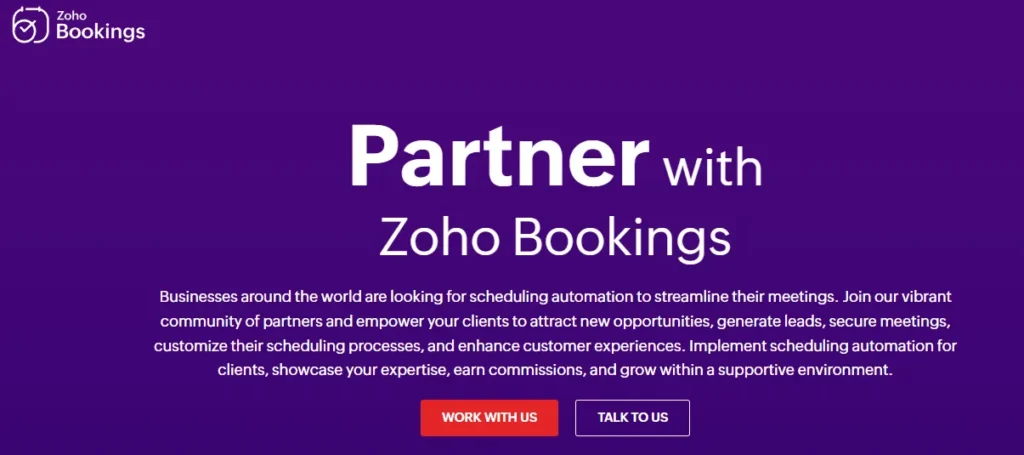
Zoho Bookings sits inside a suite of more than fifty business applications used by over 100 million people, which changes the earning maths. A referral that starts with scheduling frequently expands into CRM, Books, or the full Zoho One bundle. Affiliates earn 15% of the revenue Zoho collects across the following 12 months.
Suite-wide attribution rewards publishers who already review accounting, CRM, or project tools, since one approved account can capture commission from several products.
The program runs in-house rather than through an external affiliate network.
Why choose Zoho Bookings: Made for B2B SaaS publishers already reviewing CRM or accounting tools. Suite upsells lift order value well above standalone scheduling apps.
8. Lunacal Affiliate Program
Lunacal positions itself as a modern replacement for older scheduling tools, built for coaches, agencies, virtual assistants, clinics, studios, and small service businesses. Its visual booking pages demo well on video, which suits creators who show software on screen. Affiliates earn 30% of the subscription fee with no expiry date on the commission.
Lifetime revenue share is rare in this category, where most programs stop paying after 12 months. Paired with an exclusive discount code, review and comparison content gains two separate conversion paths.
Readers already searching for a Calendly alternative land here naturally.
Why choose Lunacal: Strongest fit for Calendly alternative roundups and comparison posts. Lifetime revenue share and instant approval lower the barrier for newer affiliate sites.
Cookie Windows vs Trial Length: What Affiliates Should Know
Cookie length carries weight only in relation to how long a booking tool takes to turn a signup into a paying account. Scheduling software sells through free trials and free tiers, so the delay between click and payment decides whether the referral gets credited at all.
Most programs in this niche run 30 to 90 day windows on last-click attribution. Tools with a permanent free plan create the longest lag, since an account can sit unpaid for months before hitting a booking limit and upgrading.
A worked example makes the risk clear. A reader clicks on day one, opens a 14 day trial on day three, and subscribes on day 17. A 30 day window pays out. The same reader who lets the trial lapse and returns in week six falls outside it.
Session-based tracking, common in travel booking offers, credits same-visit purchases alone and fits research-stage traffic poorly, since the buyer has to convert before leaving.
Three details worth confirming before promotion:
Windows of 90 days reward evergreen reviews and tutorials that keep earning impressions long after publication.
Recurring vs One-Time Payouts in Booking Affiliate Offers
Two payout shapes cover most of this category: a flat bounty triggered by an upgrade, or a share of subscription revenue paid across months.
Flat bounties settle fast. Acuity Scheduling has paid around $30 for a paid account and $1 for a trial signup, which clears in a single payout cycle and suits paid traffic where budget has to recycle quickly.
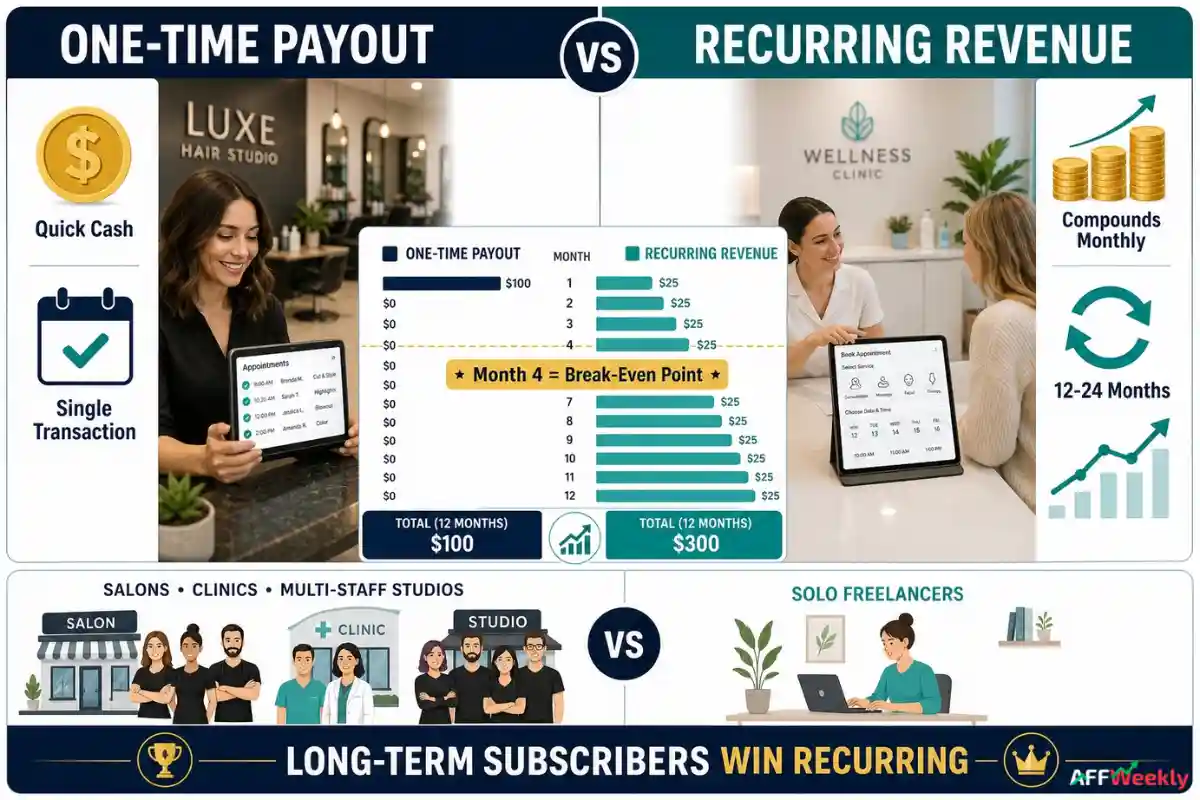
Revenue share compounds instead. SimplyBook.me pays 25% of a referral's first payment and 15% of later payments for up to 24 months. Lunacal runs 30% of the subscription fee with no expiry date attached, while Cal.com pays 20% recurring across 12 months.
The break-even math stays simple. On a $30 per month plan, a 25% share returns $7.50 monthly, so revenue share overtakes a $30 bounty in month four and keeps earning while the account stays active.
Churn settles the argument. Salons, clinics, and multi-staff studios hold subscriptions far longer than solo freelancers, which lifts the value of recurring terms on service-business traffic.
Cash-flow needs point the other way: bounties suit media buyers funding daily spend, recurring suits content sites building a base.
Final Verdict on Scheduling Software Affiliate Programs
The strongest results in this category rarely come from the highest headline rate. They come from matching a program's payout rhythm to the way traffic actually arrives. Content sites that build slowly do better with revenue share, while campaigns funded weekly need money back fast.
Terms shift often here, so a quick check before publishing saves awkward corrections later.
Scheduling software partnerships reward patience more than volume. A handful of accounts that stay subscribed for two years quietly outperforms a rush of signups that lapse by spring.