
7 Best Email Marketing Tools for Affiliate Marketers

Plenty of affiliate marketers set up an email list, load their offers, and then watch the account get flagged or shut down. The reason is rarely obvious. Some email platforms quietly ban affiliate links, while others allow them under strict rules that are easy to miss.
That gap creates real confusion. One tool blocks promotions, another welcomes them, and the pricing rarely tells the whole story.
This is where email marketing tools for affiliate marketers start to matter. The right autoresponder can protect deliverability, keep automated sequences alive, and turn a small list into steady commissions.
The seven options ahead each handle affiliate promotions differently — and the differences run deeper than they first seem.
Why Affiliate Marketers Need the Right Email Marketing Tools

Affiliate marketers depend on email to send offers, nurture subscribers, and earn commissions. But the platform behind those emails decides whether that system runs smoothly or collapses overnight. This section explains why tool choice matters so much for affiliate work.
The first reason is policy. Many email marketing platforms restrict or ban affiliate promotions, and a single flagged campaign can suspend an account and wipe out a list. Affiliate-friendly email marketing tools remove that risk by clearly allowing affiliate links.
The second reason is performance. Affiliate success relies on reaching the right subscriber at the right moment. Tools with strong automation, segmentation, and deliverability keep promotions landing in inboxes instead of spam folders.
Cost and scalability matter too. As a list grows, pricing, contact limits, and lead-generation features directly affect profit margins.
In short, the right email marketing software protects your account, improves conversions, and supports long-term growth. The next section breaks down exactly how AFFWeekly tested each tool against these standards.
How to Build an Email List for Affiliate Marketing — AFFWeekly Playbook
An email list is the foundation of affiliate income. Without subscribers, even the best email marketing tools have no one to send offers to. This section covers practical ways to grow a list that actually converts.
Start with a lead magnet. Offer something your audience wants in exchange for their email, such as:
Next, capture signups where attention already exists. Add opt-in forms to high-traffic blog posts, product reviews, and landing pages built inside your email platform.
Then keep the list engaged. Send useful content consistently, not just promotions. A mix of tips, honest reviews, and occasional affiliate offers builds trust and lifts click-through rates.
Finally, protect quality over size. Remove inactive subscribers and use double opt-in to keep deliverability high.
A focused, permission-based list earns more than a large, unengaged one. But growth means little if your account gets banned — which the next section explains how to prevent.
The 7 Best Email Marketing Tools for Affiliate Marketers
| Email Marketing Tools | Automation Depth | Ease of Use |
|---|---|---|
| GetResponse | Advanced workflow editor | Moderate learning curve |
| Kit | Simple visual automations | Very beginner-friendly |
| SendX | Behaviour-based drips | Easy, minimal setup |
| EmailOctopus | Basic time-based | Very simple interface |
| Moosend | Advanced conditional logic | Intuitive drag-and-drop |
| Brevo | Visual, A/B testing | Fairly easy setup |
| AWeber | Basic, limited triggers | Very easy start |
1. GetResponse
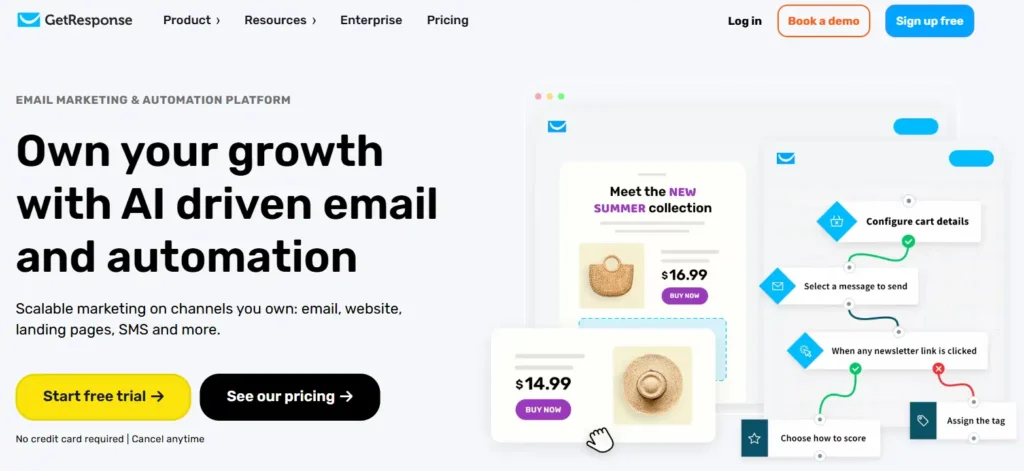
GetResponse stands out as one of the few email marketing tools for affiliate marketers that openly welcomes affiliate promotions. It combines email campaigns, automation, and a dedicated affiliate website builder, so marketers can run their entire funnel — landing pages, lead magnets, and sequences inside one platform.
The platform suits affiliates who want room to scale. Its visual workflow editor lets you tag subscribers by the links they click, then trigger targeted follow-ups. This makes it well suited to review sites, webinar funnels, and product-comparison campaigns where behaviour-based personalisation drives conversions.
GetResponse Key Features
Best for: Growing affiliate marketers who want automation, funnels, and landing pages combined in a single scalable platform.
2. Kit

Kit (formerly ConvertKit) is a creator-focused email platform built around simple automation and selling digital products. It allows affiliate links, but with a clear condition: affiliate promotion cannot be your entire business. Roughly 70–80% of what you send should relate to your own content or products.
Because of this, Kit works best for bloggers, course creators, and newsletter writers who add affiliate offers alongside their main work. Features like the Sparkloop referral integration and in-email product sales help creators monetise an engaged audience without leaving the tool.
Kit Key Features
Best for: Content creators and bloggers who promote affiliate links alongside their own products, courses, or newsletters.
3. SendX
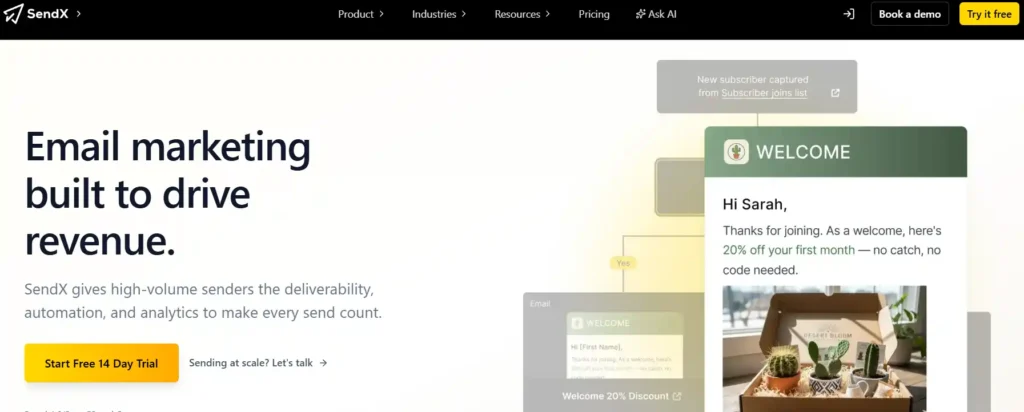
SendX takes a firmer pro-affiliate stance than most rivals, publicly stating it will not ban or block accounts for being affiliate marketers. That clarity makes it a low-risk choice for anyone whose income comes mainly from affiliate promotions rather than a separate product.
Beyond policy, SendX keeps things straightforward. Every plan includes unlimited emails, behaviour-based drip campaigns, and segmentation for sending different offers to different audiences. It appeals to affiliate marketers who want reliable sending and fair pricing without a steep learning curve.
SendX Key Features
Best for: Full-time affiliate marketers who want a clearly affiliate-friendly tool with unlimited sends and low pricing.
4. EmailOctopus
EmailOctopus is a lightweight, budget-focused email marketing tool that appeals strongly to affiliate marketers on tight margins. Unlike stricter providers, it keeps a relaxed policy toward affiliate content, though it does review new accounts to confirm subscribers have genuinely opted in.
This tool fits bloggers, newsletter owners, and side-hustle affiliates who need essentials rather than advanced features. Its generous free tier and unlimited landing pages let you build a list and send affiliate offers affordably before committing to a paid plan.
EmailOctopus Key Features
Best for: Budget-conscious affiliate marketers and bloggers who need affordable, no-frills email sending for growing lists.
5. Moosend

Moosend earns its place among email marketing tools for affiliate marketers through the depth of its automation rather than loud affiliate messaging. Its own guides to affiliate marketing signal that promotions are welcome, and its workflow builder supports the complex, multi-path funnels affiliates often need.
Where Moosend excels is conditional logic. You can create separate sequences for each subscriber based on the exact links they click, then serve product recommendations powered by AI. This precision makes it a practical option for affiliates juggling several offers at once.
Moosend Key Features
Best for: Affiliate marketers running multiple offers who need advanced, condition-based automation at an affordable monthly price.
6. Brevo
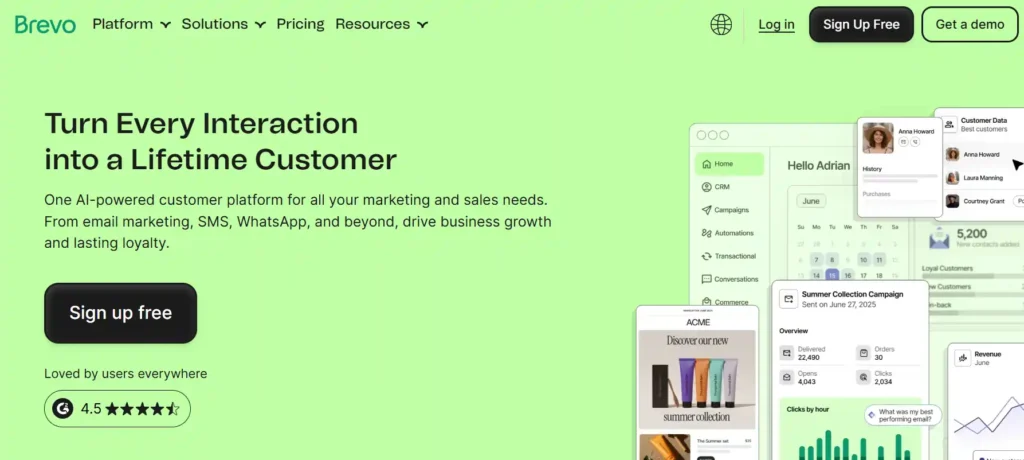
Brevo (formerly Sendinblue) is best known for value, offering one of the most comprehensive free plans among email marketing tools for affiliate marketers. It does not openly ban affiliate promotions, though certain regulated niches such as loans or gambling may need manual approval before sending.
Its built-in CRM sets it apart. Storing subscriber data alongside your campaigns makes it easier to send personalised affiliate links to specific contacts. This suits affiliates who want to combine list management, automation, and customer tracking without paying for separate systems.
Brevo Key Features
Best for: Cost-focused affiliate marketers who want a strong free plan with CRM and multi-channel messaging built in.
7. AWeber

AWeber rounds out this list as a beginner-friendly email marketing tool with a long track record. It has not published a firm policy on pure affiliate marketing, but its native integrations with affiliate networks like ClickBank and JVZoo suggest affiliate links are accepted — so proceed with reasonable care.
The platform is easiest to recommend to newcomers. A large template library, straightforward editor, and click-tracking through your own domain make it simple to launch and measure affiliate newsletters without technical setup.
AWeber Key Features
Best for: Beginner affiliate marketers who want an easy, reliable tool for building and sending affiliate newsletters.
How to Avoid Getting Your Affiliate Email Account Banned
Getting suspended is one of the biggest risks in affiliate email marketing. A single policy breach can freeze your account and delete your list. This section explains how to stay compliant and keep your emails delivering.

The first rule is to read the platform's terms. Some tools allow affiliate links but ban “pure” affiliate marketing, where promotions are your only content. Knowing this before you send prevents most bans.
Beyond policy, most suspensions come from spam signals and poor list hygiene. Follow these core practices:
Deliverability also depends on setup. Authenticate your domain with SPF, DKIM, and DMARC to prove you're a legitimate sender.
Staying compliant protects both your account and your commissions. Up next, AFFWeekly shares its final verdict on the best tool overall.
Final Thoughts from AFFWeekly
The truth about email marketing tools for affiliate marketers is that no single platform wins for everyone. What works depends on your niche, your list size, and how central affiliate offers are to your content.
The safest approach is to match a tool's rules and features to how you actually work, then test it with a small list before committing.
Get the fit right, and email quietly becomes one of the steadiest income channels in affiliate marketing. That reliability, more than any feature, is what keeps subscribers and commissions coming back.