8 Best Affiliate Networks for YouTube and Video Traffic

A video hits 50,000 views, the comments fill up with buying questions, and the affiliate link in the description earns almost nothing. That gap frustrates creators every day.
Part of the problem is approval. Plenty of networks quietly reject video traffic, or accept it and then void commissions later. The rules are rarely written down anywhere obvious.
Then comes the harder question: which programs actually pay well for views that convert slowly, over weeks rather than minutes? Cookie windows, payout thresholds, and creator terms all shift the math.
AFFWeekly went through the 8 best affiliate networks for YouTube and video traffic to see how each one treats creators in practice. What surfaced was not what the sign-up pages promise.
Why Video Traffic Converts Differently From Blogs
Affiliate networks treat video traffic and blog traffic as two different quality signals, and that difference shows up in earnings.
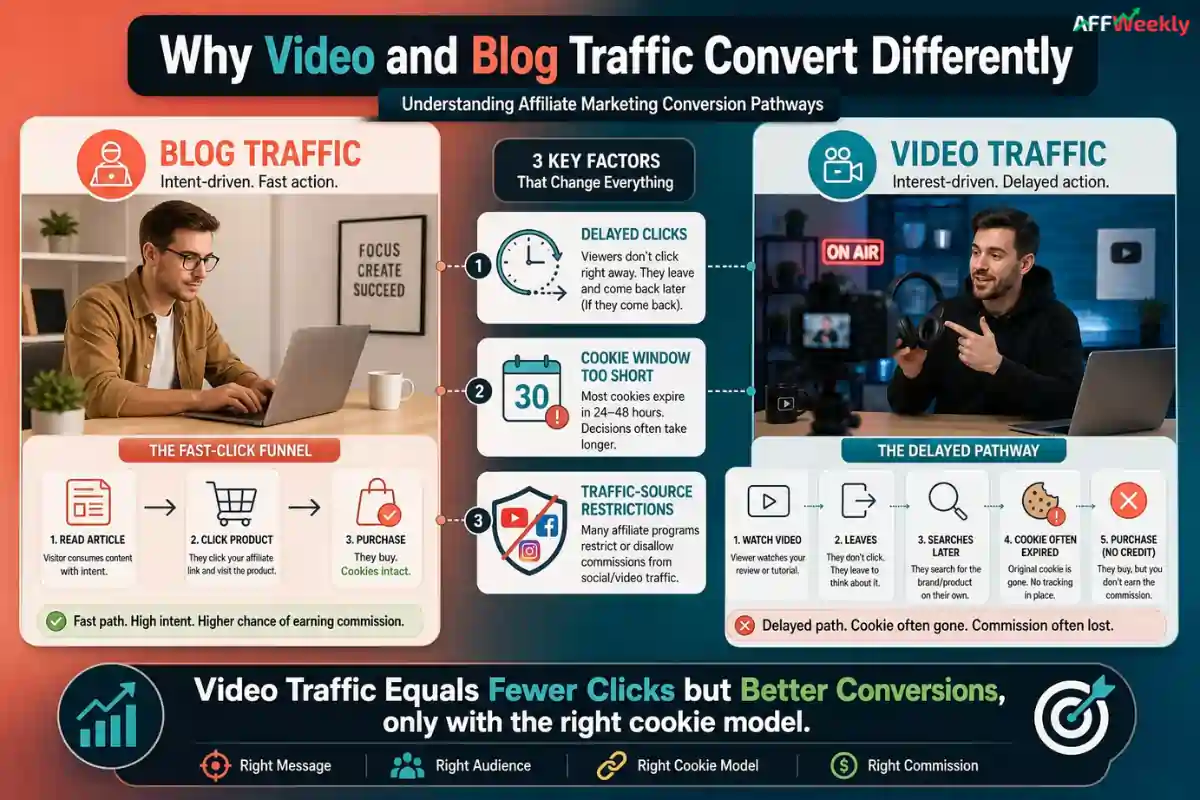
Blog visitors usually arrive mid-decision, click a link within seconds, and convert inside the same session. Video viewers behave differently, which changes how commissions land.
Three factors drive the gap:
Conversion rates also skew higher per click on video traffic, since viewers self-qualify before clicking. Fewer clicks, better clicks. That trade works only when the network pays on a model and cookie window built for it.
Understanding those mechanics makes the testing criteria in the next section far easier to read.
The 8 Best Affiliate Networks for YouTube and Video Traffic
| Best Affiliate Networks for YouTube and Video Traffic | Ideal Video Format | Key Weak Spot |
|---|---|---|
| Impact | Long-form brand reviews | Slow partner onboarding |
| Awin | Multi-country buying guides | Cluttered merchant search |
| CJ Affiliate | Unboxing and comparisons | Strict publisher vetting |
| ClickBank | Problem-solution explainers | Uneven offer quality |
| PartnerStack | Software walkthrough tutorials | No physical products |
| Rakuten Advertising | Fashion and haul videos | Narrow vertical coverage |
| FlexOffers | Broad listicle roundups | Dated reporting dashboard |
| Digistore24 | High-ticket course reviews | Weak US brand recall |
How We Tested YouTube Affiliate Networks

This section explains the testing method behind the rankings so the results can be judged on evidence, not opinion. Each network was assessed against the same five criteria, weighted toward what video traffic actually needs.
This section explains the testing method behind the rankings so the results can be judged on evidence, not opinion. Each network was assessed against the same five criteria, weighted toward what video traffic actually needs.
Data came from live network dashboards, published program terms, payout records, and creator feedback collected across affiliate forums during 2025 and 2026. Where a network's public terms and its account manager guidance disagreed, the written terms were used.
Traffic policy carried the heaviest weight, and it deserves a closer look.
1. Impact
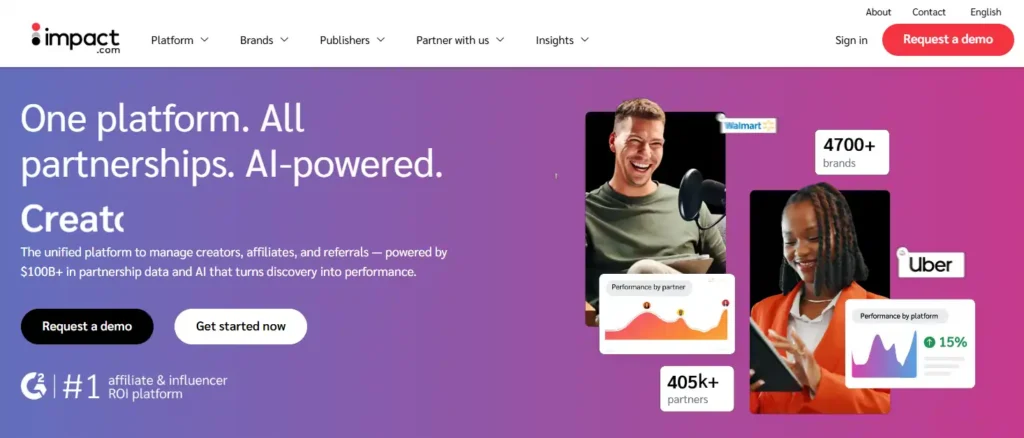
Impact operates as a partnership management platform rather than a conventional affiliate marketplace, which is why it behaves differently from most affiliate networks for YouTube and video traffic. Brands run their own programs inside the platform, set their own terms, and approve partners individually.
For a creator, that means the relationship is direct. Contracts, commission tiers, and traffic rules come from the advertiser, not a middle layer, so a channel with proven audience data can often negotiate terms that a standard network would never offer. The platform also supports promotion through apps, podcasts, and offline placements alongside websites.
The trade is administrative. Each brand approval is separate, and rejection at program level says nothing about account standing. Best suited to review and comparison channels with consistent output.
| Attribute | Detail |
|---|---|
| Platform type | Partnership management platform (formerly Impact Radius) |
| Program access | Advertiser-managed, individual approval per brand |
| Promotion channels | Website, social, video, mobile apps, podcasts, offline |
| Commission models | Set by each advertiser (CPS, CPL, hybrid, bounty) |
| Cost to join | Free for partners |
Why Choose Impact:
Best for established creators who want direct brand relationships and negotiated rates. Strong tracking and contract control, though per-program approval slows down early setup considerably.
2. Awin
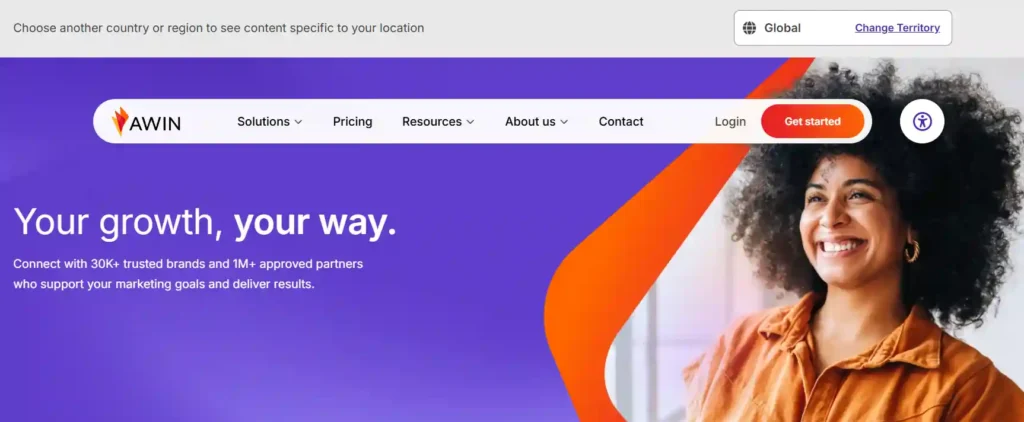
Awin brings global advertiser coverage to the mix, and among affiliate networks for YouTube and video traffic it is one of the few with genuine depth outside the US market. The network connects publishers with more than 21,000 advertisers and permits affiliate links on YouTube.
Its structure suits channels with international viewers. Retail, travel, telecom, and finance advertisers are well represented across UK, EU, and APAC regions, which matters when a video pulls traffic from a dozen countries at once.
Signup carries a $5 fee, refunded once earnings reach $20. Awin also owns ShareASale, so publishers occasionally encounter overlapping merchant catalogues across the two platforms.
| Attribute | Detail |
|---|---|
| Advertiser base | 21,000+ across retail, travel, finance, telecom |
| Geographic strength | UK, Europe, APAC, plus US coverage |
| Signup | $5 deposit, refunded at $20 in earnings |
| Payment methods | International wire, BACS, ACH |
| Related platform | ShareASale (Awin-owned) |
Why Choose Awin:
A sensible pick for creators with international audiences and retail or travel content. Broad merchant depth, straightforward video policy, and a modern interface offset the small entry fee.
3. CJ Affiliate
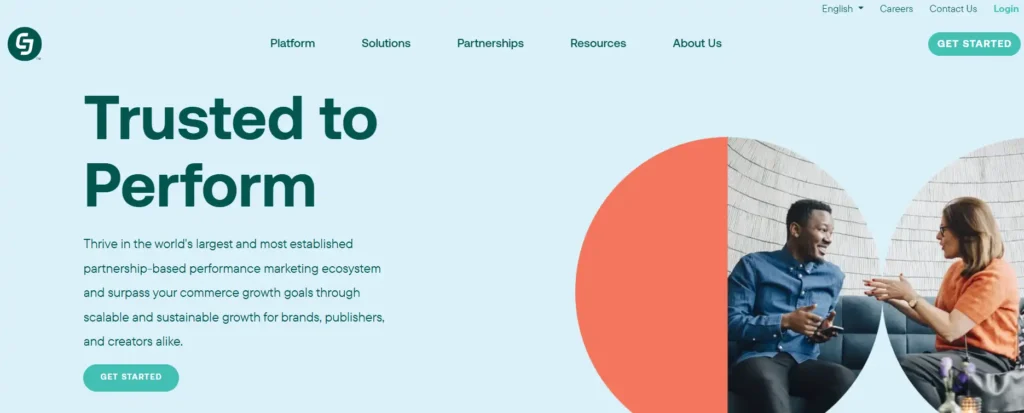
Longevity is the argument for CJ Affiliate. Founded as Commission Junction and now part of Publicis Groupe, it remains one of the oldest names in the category and a default entry on most lists of affiliate networks for YouTube and video traffic.
The network gives publishers access to thousands of brands, with detailed reporting and mature tracking technology. Enterprise retail and consumer electronics advertisers are heavily represented, which fits unboxing, tech review, and buyer-guide channels.
Approval is the friction point. CJ applies traffic-quality standards to new publishers and individual advertisers can decline applications independently, so a fresh account with little history often faces a slow first month.
| Attribute | Detail |
|---|---|
| Founded | 1998, as Commission Junction |
| Ownership | Publicis Groupe |
| Advertiser mix | Enterprise retail, electronics, travel, finance |
| Publisher tools | Deep link generator, product feeds, real-time reporting |
| Payment schedule | Monthly, Net-20 basis |
Why Choose CJ Affiliate:
Suited to tech and retail review channels with steady traffic. Reliable tracking and blue-chip advertisers, but approval standards make it a poor first network for new creators.
4. ClickBank
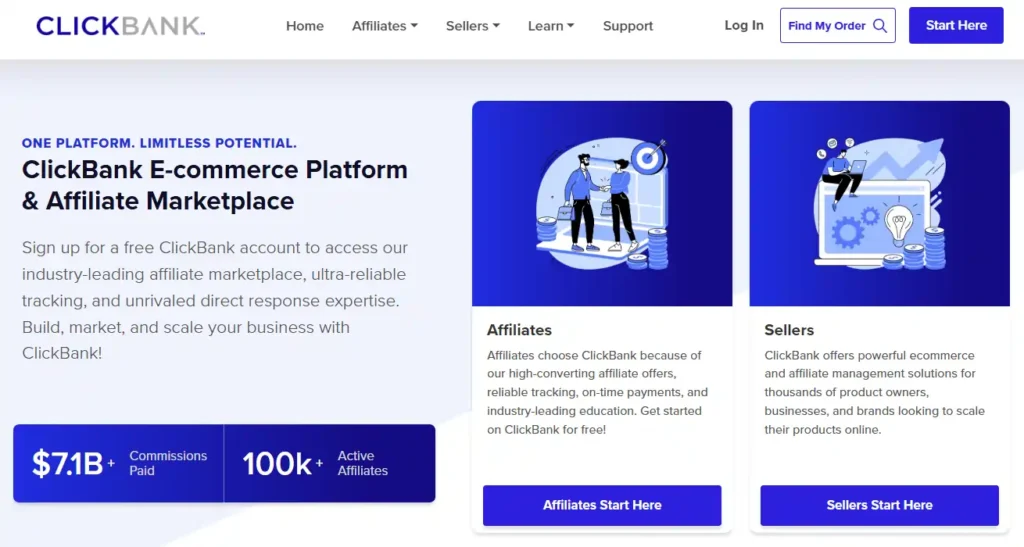
Digital products define ClickBank, and that changes the economics for video creators. Commission rates on the marketplace commonly sit far above physical-goods rates, since there is no manufacturing cost to absorb.
Approval friction is minimal. Account creation is open, offers can be promoted without individual advertiser sign-off in most cases, and payouts run on a weekly or biweekly cycle rather than monthly. For a creator testing which offer types convert from video, that feedback loop is genuinely useful.
The catalogue demands vetting. Refund rates vary widely between vendors, and gravity scores measure recent affiliate activity rather than product quality. Among affiliate networks for YouTube and video traffic, it rewards creators who check refund data before recording.
| Attribute | Detail |
|---|---|
| Product type | Digital: courses, software, memberships, ebooks |
| Approval | Open signup, most offers self-serve |
| Payout frequency | Weekly or biweekly options |
| Commission range | Frequently 50% and above, set by vendor |
| Key metrics | Gravity score, average earnings per sale, refund rate |
Why Choose ClickBank:
Good for creators in health, finance, and self-improvement niches who want fast approval and high percentages. Requires careful vendor vetting to avoid refund-heavy offers.
5. PartnerStack
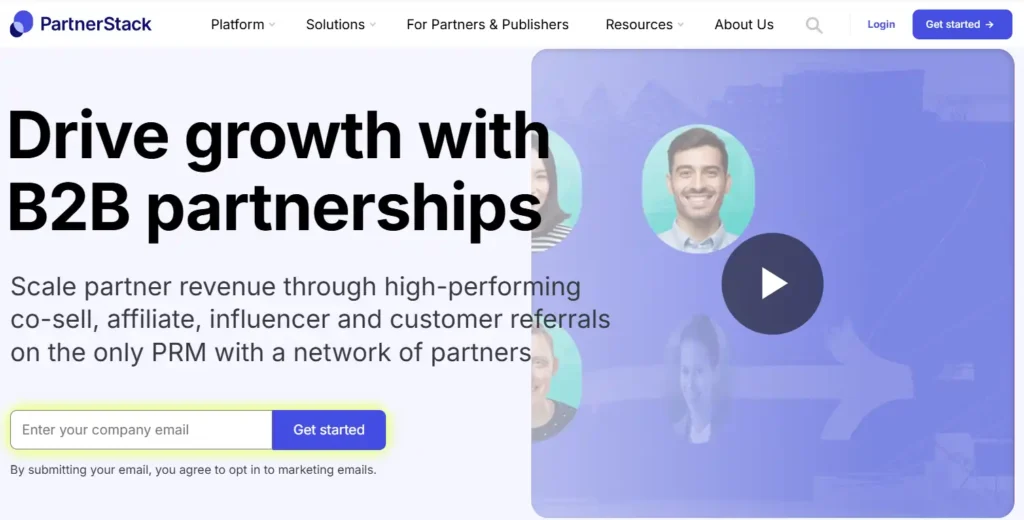
PartnerStack was built specifically for B2B software companies, which gives it a narrower catalogue and a very different payout profile from general affiliate networks for YouTube and video traffic. Recurring commission is the norm rather than the exception.
That structure suits tutorial and workflow channels. A single referral to a subscription tool can pay monthly for as long as the customer stays, so evergreen software walkthroughs compound in a way one-time bounties never do. Vendors can run flat-rate, percentage, milestone, and multi-step revenue share models.
Commissions are calculated at month end and withdrawn through PayPal, Stripe, or direct deposit via Airwallex. Program applications are handled per brand.
| Attribute | Detail |
|---|---|
| Vertical focus | B2B SaaS and software |
| Commission style | Recurring revenue share, bounties, hybrid models |
| Commission currencies | USD and EUR, withdrawn in local currency |
| Withdrawal methods | PayPal, Stripe, direct deposit (Airwallex) |
| Payout cycle | Calculated at month end, withdrawable thereafter |
Why Choose PartnerStack:
Ideal for SaaS tutorial and productivity channels. Recurring payouts build compounding income, though the software-only catalogue rules it out for physical product reviewers.
6. Rakuten Advertising
Backed by the Rakuten Group, Rakuten Advertising serves established retail and lifestyle brands, several of which run exclusive programs unavailable elsewhere. Publisher standards are higher than average as a result.
Payments reach publishers after advertisers review, approve, and settle their invoices, with several payment runs per month depending on advertiser status, returns, and threshold. The platform rewards publishers who already hold a focused audience, and some advertisers apply selective approval, so quality content and steady traffic help before applications go out.
Within a shortlist of affiliate networks for YouTube and video traffic, it earns a place for brand quality rather than volume. Fashion, home, and department-store advertisers dominate the roster.
| Attribute | Detail |
|---|---|
| Parent company | Rakuten Group |
| Advertiser mix | Retail, fashion, home, lifestyle, department stores |
| Program access | Advertiser-approved, selective |
| Payment timing | Multiple runs per month, tied to advertiser settlement |
| Best content fit | Product reviews, hauls, buyer guides |
Why Choose Rakuten Advertising:
Worth applying to once a channel has a defined niche and consistent viewership. Premium brand access and clean reporting, offset by slower advertiser-dependent payment cycles.
7. FlexOffers
Breadth is the FlexOffers proposition. The network launched in 2008, is headquartered in Florida, and links over 12,000 advertisers with more than 75,000 publishers across retail, lifestyle, finance, and health.
Two features stand out for creators. The catalogue aggregates programs from other networks alongside direct advertisers, so one login covers a wide spread of merchants. A two-tier sub-affiliate structure also pays passive commission on referred publishers' sales.
Cash flow is the constraint. Standard payments run on NET 60 terms with a $25 minimum for most methods, and an advance payment service releases funds earlier for a fee of roughly 3% to 6%. Among affiliate networks for YouTube and video traffic, it works better as a secondary account than a primary one.
| Attribute | Detail |
|---|---|
| Founded | 2008, Florida |
| Network size | 12,000+ advertisers, 75,000+ publishers |
| Minimum payout | $25 for most methods |
| Advance payments | Available for a fee of approximately 3% to 6% |
| Extra income | Two-tier sub-affiliate commission |
Why Choose FlexOffers:
Fits publishers who want one dashboard covering many verticals and free entry. The 60-day payment lag makes it unsuitable as a sole income source for new creators.
8. Digistore24
Digistore24 combines an affiliate marketplace with a payment processor, handling checkout, refunds, and commission distribution inside one system. That hybrid design explains several of its unusual terms.
Cookie duration runs to 180 days, commission rates commonly fall between 50% and 85%, and both CPA and revenue share structures are available. A long attribution window is exactly what delayed video clicks need, which is why it deserves a spot among affiliate networks for YouTube and video traffic despite lower name recognition than ClickBank.
Payouts run on four regular dates per month, with 10% of earnings held for 60 days as a refund buffer. Payouts are made to companies rather than private individuals, so a tax number or VAT ID is required.
| Attribute | Detail |
|---|---|
| Platform type | Affiliate marketplace and payment processor |
| Cookie duration | 180 days |
| Typical commission | 50% to 85%, some front-end offers higher |
| Commission models | CPA and revenue share |
| Payout dates | Four per month, thresholds vary by date |
| Account requirement | Business entity with tax number or VAT ID |
Why Choose Digistore24:
Strong option for European creators and high-ticket course promoters. The 180-day cookie suits evergreen video, though the business-entity requirement blocks casual affiliates.
Affiliate Network Traffic Policies: Which Ones Actually Allow YouTube Links
Traffic policy decides whether a commission holds or gets clawed back weeks later. Every affiliate network publishes an allowed-traffic list, and video sits in one of three buckets.
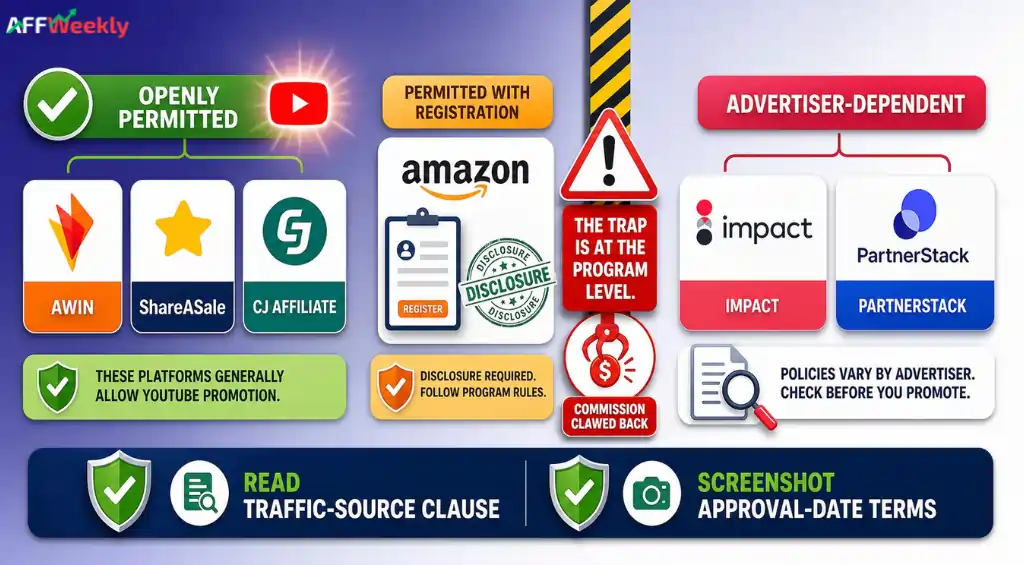
The trap sits at the program level, not the network level. Joining a network says little about whether a specific merchant allows video traffic, and merchant terms override network defaults.
Two habits prevent most reversals: read the traffic-source clause inside each program agreement before the first upload, and keep a screenshot of the terms on the approval date.
AFFWeekly's Final Take
Video traffic behaves on its own timeline. Viewers watch, think, and buy days later, so the network's attribution window and traffic policy matter more than the headline commission rate. That single detail separates creators who get paid from creators who watch commissions vanish.
Start with two accounts, not eight. Track which offers actually convert from a description link, then expand once the data says something useful.
AFFWeekly keeps testing affiliate networks for YouTube and video traffic as terms shift, because these programs change quietly. Steady output and clean tracking still do most of the work.