
9 Best Affiliate Networks for Bloggers and Content Sites

Bloggers earn traffic but struggle to turn it into real income. Ad revenue alone barely covers hosting costs, and random affiliate programs rarely convert on content-heavy sites.
The gap between traffic and earnings often comes down to one thing: the affiliate network behind the links.
Not every network works well with blog content. Some are built for media buyers. Others reject publishers without massive volume. A few actually reward editorial traffic with strong payouts and fair terms.
At AFFWeekly, we tested and compared affiliate networks for bloggers and content sites that genuinely fit how publishers monetize. These 9 stood out, but the reasons why might surprise even experienced content creators.
What Makes an Affiliate Network Actually Work for Content Sites?
Most affiliate networks are built for media buyers and paid traffic operators. Bloggers and content publishers operate differently. They send organic readers, editorial clicks, and search-driven visitors. The network has to recognize that traffic pattern and reward it fairly.

Three things separate a strong affiliate network from a waste of time for content sites. First, the commission model needs to match how blog audiences convert. Readers rarely buy on the first click. Longer cookie windows and recurring commissions account for that delay.
Second, the approval process matters more than bloggers realize. Some networks reject low-traffic publishers automatically, while others evaluate content quality over raw numbers. That distinction determines whether a newer site can even get started.
Third, the reporting dashboard needs to show which pages and links actually drive revenue. Without that visibility, optimizing content around affiliate performance becomes guesswork.
An affiliate network works for content sites when it treats editorial traffic as a real acquisition channel, with payouts and attribution to match. The sections below break down each of these factors in detail.
How We Ranked Affiliate Networks for Bloggers
Ranking affiliate networks without a clear methodology leads to biased recommendations. AFFWeekly tested each network on this list against criteria that matter specifically to bloggers and content-driven publishers.
Each network on this list earned its position through performance across all four areas, weighted toward what content sites actually need.
AFFWeekly's 9 Best Affiliate Networks for Bloggers and Content Sites
| Best Affiliate Networks for Bloggers and Content Sites | Minimum Payout | Best Blog Niche |
|---|---|---|
| Awin | $20 threshold | Multi-niche retail |
| CJ Affiliate | $50 direct deposit | Enterprise brand reviews |
| Impact | $25 minimum | SaaS and DTC |
| FlexOffers | $25 default | Multi-vertical coverage |
| Rakuten Advertising | $50 threshold | Lifestyle and fashion |
| Skimlinks | $10 minimum | High-volume editorial |
| PartnerStack | $25 payout floor | B2B software reviews |
| ClickBank | $10 weekly | Digital product niches |
| Travelpayouts | $50 threshold | Travel and destinations |
1. Awin

Awin connects bloggers and content publishers with over 16,500 advertisers across retail, travel, finance, and technology verticals. Originally founded in Germany as Zanox, the platform merged with Affiliate Window in 2017 and now operates as one of the largest affiliate networks for bloggers and content sites globally.
Publishers can browse merchant programs, generate deep links for editorial content, and track conversions through a centralized dashboard. Awin also absorbed ShareASale, expanding its catalog to include WordPress, SaaS, and digital product offers alongside physical goods.
The platform charges a $5 application deposit, refunded upon approval. Bloggers with organic traffic benefit from Awin's cross-device tracking and flexible commission models, including CPA, CPL, and revenue share structures.
Awin Key Features
Why Choose Awin:
Ideal for bloggers covering multiple niches who need a single network with broad merchant variety, reliable payouts, and strong European and global brand representation.
2. CJ Affiliate

CJ Affiliate, formerly Commission Junction, has operated as a performance marketing platform since 1998. It ranks among the oldest and most established affiliate networks for content sites, connecting publishers with enterprise-level brands like Barnes & Noble, Priceline, J.Crew, and Office Depot.
The network organizes merchant programs by category and ranks them using an EPC (Earnings Per Click) metric, helping bloggers identify which offers convert best for editorial traffic. CJ also provides cookieless tracking through its Affiliate Personalization technology, which adapts to evolving browser privacy restrictions.
Content publishers benefit from CJ's robust reporting suite, which breaks down performance by link, page, and device. Approval is free, though individual merchants review applications separately based on content quality and traffic relevance.
CJ Affiliate Key Features
Why Choose CJ Affiliate:
Best suited for established content sites targeting premium brand partnerships, where detailed performance analytics and enterprise-level advertiser access drive consistent affiliate revenue.
3. Impact

Impact operates as a partnership automation platform rather than a traditional affiliate network. Founded in 2008 by former Commission Junction leadership, it powers affiliate programs for brands like Shopify, Uber, Canva, Hostinger, and Semrush through a modern SaaS interface.
Bloggers and content publishers apply directly to individual brand programs hosted on Impact's marketplace. The platform handles tracking, attribution, and payments while giving publishers granular control over which offers to promote. Its reporting dashboard is noticeably more intuitive than legacy networks, with real-time conversion data and partner discovery tools.
Impact supports multiple commission models including CPA, CPC, and recurring revenue share. For content sites focused on SaaS, technology, and DTC brand reviews, Impact consistently surfaces higher-payout programs than most competing affiliate networks for bloggers.
Impact Key Features
Why Choose Impact:
Perfect for bloggers reviewing SaaS tools, tech products, and DTC brands who want direct brand relationships, higher commission rates, and a cleaner platform experience.
4. FlexOffers

FlexOffers aggregates over 10,000 advertiser programs into a single publisher dashboard, covering verticals from finance and insurance to retail, education, and lifestyle. The network functions as a sub-affiliate platform, meaning bloggers can access merchant programs from other networks like ShareASale, CJ, and ClickBank through one login.
This setup reduces the friction of managing accounts across multiple affiliate networks for content sites. Publishers get a unified reporting view, consolidated payments, and a single approval process instead of applying to each network independently.
FlexOffers supports standard CPA and CPL models with a net-60 payout cycle by default, though faster payment options exist for a fee. Content publishers working across multiple niches benefit from the sheer volume and variety available through a single integration point.
FlexOffers Key Features
Why Choose FlexOffers:
Strong fit for multi-niche bloggers who want access to thousands of programs without managing separate accounts across several affiliate networks simultaneously.
5. Rakuten Advertising

Rakuten Advertising positions itself as a premium affiliate network built around curated brand partnerships rather than high-volume merchant catalogs. The platform connects publishers with household names like Walmart, Virgin Holidays, Best Buy, and Wells Fargo across retail, travel, and financial services.
The network is particularly strong in the lifestyle, fashion, and luxury segments where content sites produce editorial reviews and buying guides. Rakuten uses an AI-powered matchmaking system that recommends brand programs based on a publisher's audience profile and content category.
Bloggers should note that Rakuten's interface carries a steeper learning curve compared to newer platforms. However, the quality of available advertisers and commission reliability make it a worthwhile affiliate network for content sites targeting high-consideration purchase categories.
Rakuten Advertising Key Features
Why Choose Rakuten Advertising:
Best for content sites covering travel, fashion, finance, and lifestyle where premium brand alignment and high average order values directly increase affiliate commissions.
6. Skimlinks
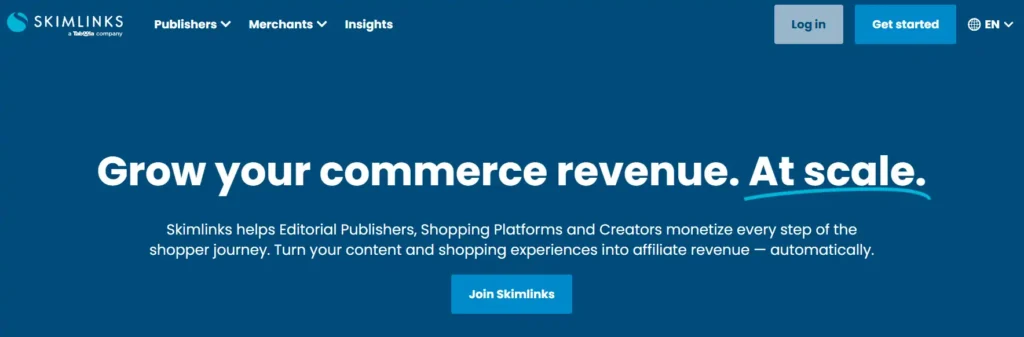
Skimlinks automates affiliate link monetization for bloggers and content publishers without requiring manual program signups. The platform scans existing editorial content and converts regular product links into affiliate links automatically, pulling from a network of over 48,500 merchant programs.
This passive approach makes Skimlinks uniquely suited to high-volume content sites that mention products and brands frequently across hundreds of articles. Instead of applying to individual affiliate networks for bloggers, publishers install a single JavaScript snippet and Skimlinks handles program enrollment, link conversion, and commission tracking.
The tradeoff is a 25% revenue share that Skimlinks retains from publisher earnings. For content operations producing large volumes of product-related editorial content, the time saved on manual link management often justifies that cost.
Skimlinks Key Features
Why Choose Skimlinks:
Ideal for high-volume content publishers and editorial teams who need hands-off affiliate monetization across large article libraries without managing individual network accounts.
7. PartnerStack

PartnerStack focuses exclusively on B2B SaaS affiliate programs, making it one of the more specialized affiliate networks for bloggers covering software, marketing tools, and business technology. The platform hosts programs from brands like Monday.com, Unbounce, Keap CRM, and SocialBee.
Publishers browse the PartnerStack marketplace, enroll in individual programs, and promote SaaS products through unique referral links. Many programs on the platform offer recurring monthly commissions, which compounds revenue for bloggers who drive long-term subscribers rather than one-time buyers.
Commission rates vary by merchant but can reach up to 50% per sale or flat payouts exceeding $2,000 for enterprise-tier referrals. Content sites producing SaaS reviews, tool comparisons, and workflow tutorials find PartnerStack's catalog significantly more relevant than general-purpose affiliate networks.
PartnerStack Key Features
Why Choose PartnerStack:
Built for bloggers and content creators reviewing SaaS tools, productivity software, and marketing platforms where recurring commissions generate compounding affiliate income over time.
8. ClickBank
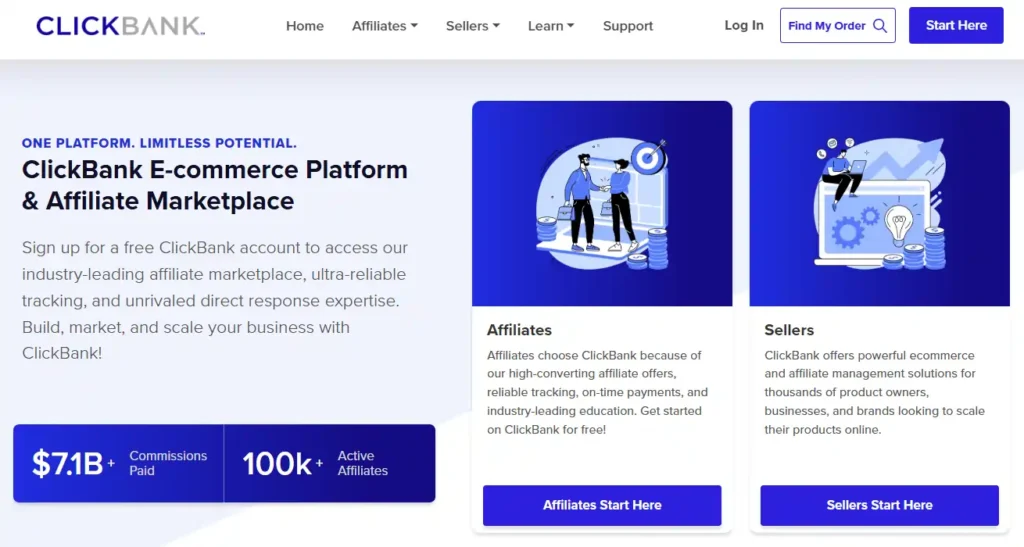
ClickBank has operated as a digital product marketplace since 1998, specializing in information products, online courses, eBooks, and membership programs. The platform connects content publishers with vendors selling digital goods across health, fitness, self-improvement, finance, and education niches.
Commission rates on ClickBank often reach 50% to 75%, significantly higher than physical product affiliate networks. This makes it attractive for bloggers and content sites reviewing digital products where margins allow generous publisher payouts.
The platform is open to new affiliates with no approval barriers, though product quality varies considerably across listings. Bloggers need to evaluate individual vendors carefully before promoting. ClickBank pays weekly with a $10 minimum threshold, which benefits smaller content sites building initial affiliate revenue.
ClickBank Key Features
Why Choose ClickBank:
Best for bloggers in health, finance, self-improvement, and education niches who want high commission digital product offers with fast weekly payouts and zero entry barriers.
9. Travelpayouts

Travelpayouts is the largest travel-focused affiliate network for bloggers and content sites covering destinations, flights, hotels, tours, and travel insurance. The platform aggregates over 100 travel brand programs including Booking.com, TripAdvisor, Kiwi.com, GetYourGuide, and Viator into a single publisher dashboard.
Travel bloggers benefit from Travelpayouts' White Label tools, which allow publishers to embed branded flight and hotel search widgets directly into their content. This turns editorial destination guides into functional booking engines without redirecting readers away from the site.
The network supports CPA, CPC, and revenue share models depending on the merchant. Cookie durations range from 30 to 90 days across programs. For content sites dedicated to travel editorial, Travelpayouts replaces the need to juggle accounts across multiple general-purpose affiliate networks.
Travelpayouts Key Features
Why Choose Travelpayouts:
The go-to affiliate network for travel bloggers and destination content sites who need centralized access to flights, hotels, tours, and insurance programs through one platform.
How Bloggers Can Monetize Content Without Losing Trust
Affiliate revenue and reader trust break down the moment content starts reading like a sales pitch. The goal is integration that feels natural, where affiliate links support the content instead of replacing it.

Sustainable affiliate income comes from content that serves the reader first and monetizes second.
AFFWeekly's Verdict
Every affiliate network on this list serves a different type of content operation. Some reward high-volume editorial traffic passively. Others work best when bloggers build focused review content around specific merchant programs. The right fit depends on how a site creates content and where its readers are in the buying cycle.
At AFFWeekly, we believe affiliate revenue should grow alongside content quality. Networks that align with editorial workflows and respect organic traffic patterns tend to deliver steadier, more sustainable earnings over time.
Start with one or two networks. Test performance across real content. Let the data shape what comes next.