6 Best Baking Affiliate Programs for Recipe Bloggers
A baking blog can pull thousands of readers a month and still earn almost nothing. The traffic is there. The commissions are not.
Part of the problem is that baking affiliate programs pay wildly different rates. Some flour and ingredient brands hand out 5%. Some online cake courses pay six times that. Cookie windows range from 24 hours to 30 days, which quietly decides whether a click ever converts.
For bakers, food bloggers, recipe creators and affiliate marketers, that gap matters more than traffic volume does.
The best baking affiliate programs below were compared on commission rate, cookie length, payout terms and how well each one fits real baking content.
What Counts as a Strong Baking Affiliate Program in 2026
Four numbers decide whether a baking affiliate program pays you anything real: commission rate, cookie duration, average order value, and how closely the catalog matches what your readers already bake with. Rate alone is misleading, which is why the programs below were scored on all four.
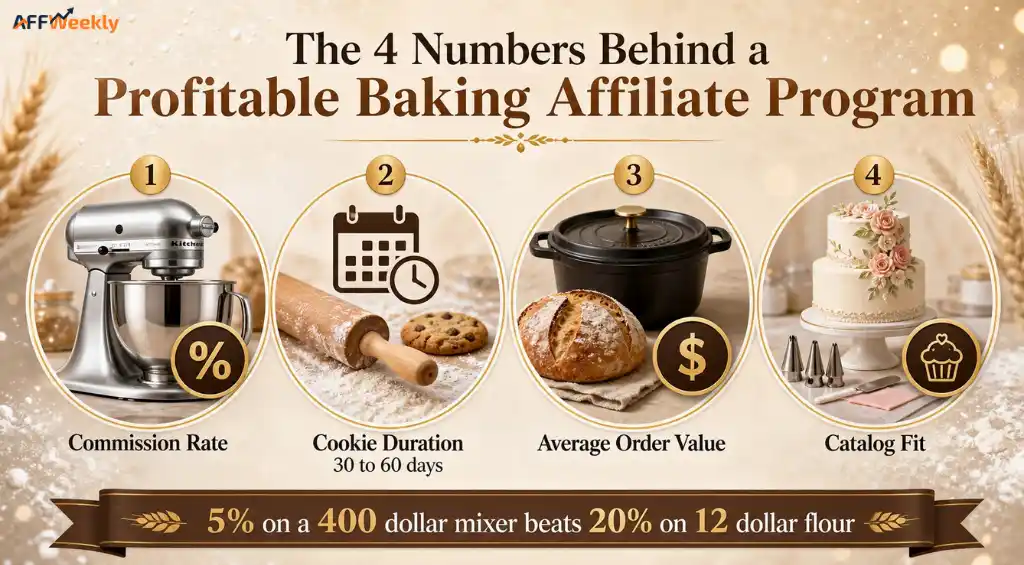
Here is how each factor plays out in the baking niche:
Commission structure also shifts by traffic type. King Arthur, for instance, drops coupon and loyalty partners to 2%, half the standard 5%.
Scored against those four, seven programs stood out.
The 6 Best Baking Affiliate Programs, Reviewed
| Best Baking Affiliate Programs | Content That Converts | Earning Profile |
|---|---|---|
| King Arthur Baking | Recipe cards, sourdough guides | Steady, cart-driven |
| CakeFlix | Technique tutorials, course reviews | Rate-led, digital margin |
| KitchenAid | Mixer comparisons, registry posts | High AOV, slow cycle |
| Ghirardelli | Cookie roundups, gift guides | Seasonal, Q4 heavy |
| Amazon Associates | Method-step tool links | Volume, low ticket |
| Le Creuset | Dutch oven pillar posts | Highest per sale |
1. King Arthur Baking Affiliate Program
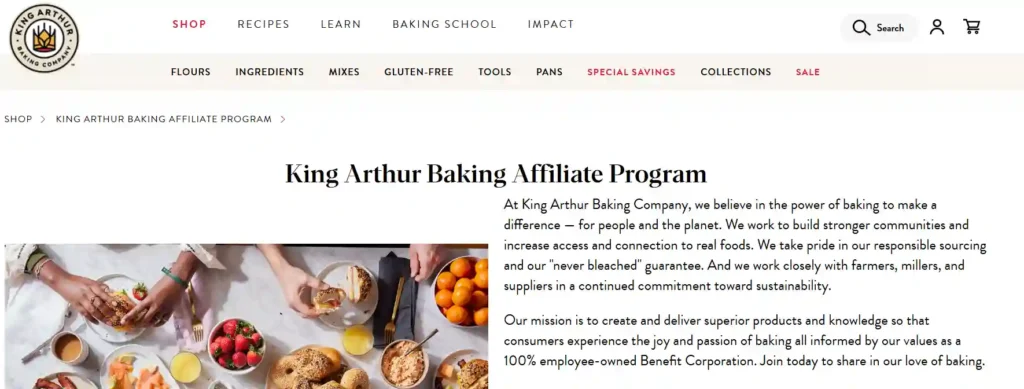
King Arthur Baking runs one of the most widely joined baking affiliate programs in the United States, managed through Awin. The catalog covers specialty flours, mixes, bakeware, cookbooks, and online baking school content, so a single referral often turns into a multi-item cart.
Payouts sit at 5% on customer orders, dropping to 2% for coupon and loyalty partners. Tracking lasts 30 days, and partners receive banners, text links, and a full product datafeed for deeplinking individual SKUs.
The fit is strongest for recipe blogs, sourdough creators, and bread-focused YouTube channels where readers already ask which flour to buy. It solves the credibility gap most food bloggers hit when recommending a generic pantry staple.
| Detail | Information |
|---|---|
| Program type | Ingredient and supply |
| Company status | Employee-owned B Corp |
| Brand heritage | Oldest flour company in the United States |
| Cost to join | Free, via the Awin merchant profile |
Why choose King Arthur Baking: Best for recipe and bread bloggers who need a trusted ingredient anchor. The brand converts on authority alone, though the 5% rate rewards volume over single sales.
2. CakeFlix Affiliate Program
CakeFlix teaches cake decorating through a video tutorial library, and its affiliate program carries one of the highest commission rates in the entire baking niche. Digital subscriptions hold margins that flour and bakeware simply cannot reach.
Partners earn up to 30% on referred sales, with 20% paid across CakeFlix Master courses. The tracking cookie runs 30 days from a visitor's first click and covers both one-off tutorial purchases and recurring membership signups.
Reach here is narrower than an ingredient program, which is the tradeoff for the rate. Course reviewers, cake decorating instructors, and creators who already publish technique content will convert far better than a general recipe site.
| Detail | Information |
|---|---|
| Program type | Digital course and membership |
| Cost to join | Free |
| Earnings cap | None |
| Partner support | Banners, promotion assets, dedicated affiliate contact |
Why choose CakeFlix: Suited to cake decorating creators and course reviewers. The rate leads the niche, but the audience is specific and the content needs more explanation than a product link.
3. KitchenAid Affiliate Program
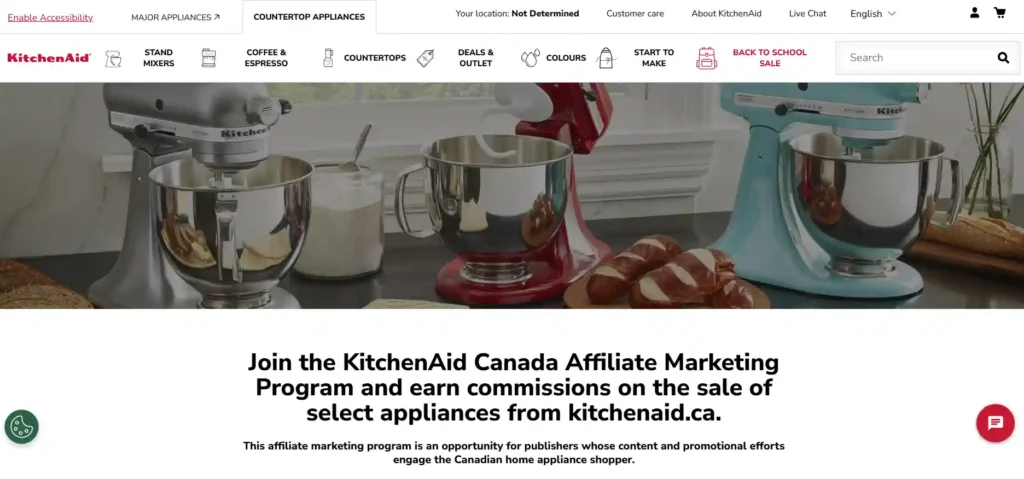
KitchenAid shifts the baking affiliate conversation from percentages to actual dollars. Stand mixers, attachments, and countertop appliances carry order values far above any ingredient program, which changes the math on every single sale.
The US program at kitchenaid.com pays 5% CPA on all orders with a 30-day cookie and a stated average order value of $103. European affiliates running through Awin see a different structure: 6% on content, cashback, and comparison traffic, and 4% on promo code and deal sites.
Appliance reviews, wedding registry roundups, and head-to-head comparison posts perform best. Buyers research mixers for weeks, so the 30-day window matters more here than almost anywhere else.
| Detail | Information |
|---|---|
| Program type | High-ticket appliance |
| Partner extras | Exclusive payouts, vanity codes, curated collections |
| Customer returns | 30-day no-hassle return policy |
| Voucher rule | Only program-issued codes allowed; unauthorised codes can zero commission or trigger a ban |
Why choose KitchenAid: Ideal for appliance reviewers and comparison-post publishers. High order values offset the modest rate, and the brand needs no introduction to a baking audience.
4. Ghirardelli Affiliate Program
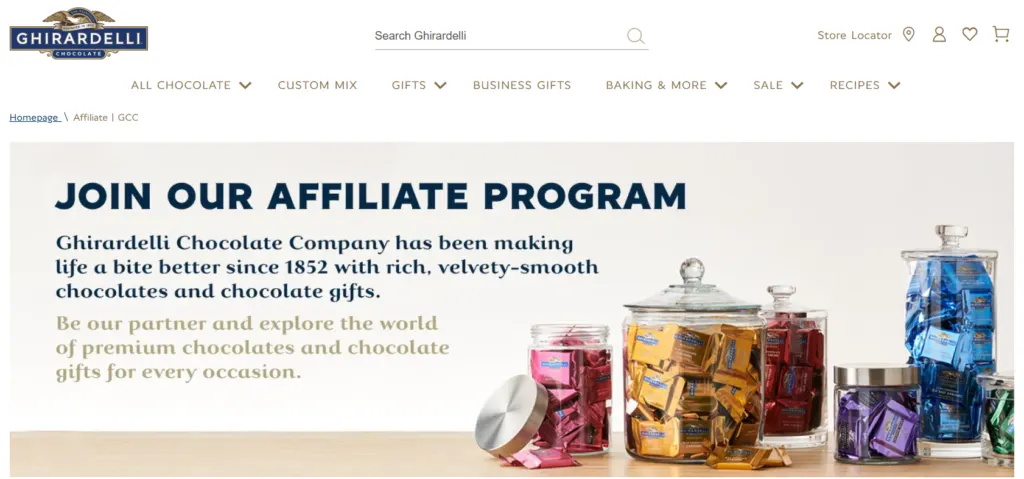
Ghirardelli offers baking affiliates something uncommon: a chocolate brand readers already trust before they click. The program is administered through Commission Junction and covers baking bars, chips, cocoa, and seasonal assortments.
Because the recognition is prebuilt, roundup content converts without persuasion. A post on the best chocolate chips for cookies does most of its selling through the brand name itself. Affiliate directories report rates in the 4% to 6% band, though the live figure is confirmed inside the CJ dashboard on approval.
Q4 carries this program. Peppermint bark and holiday gift assortments spike from October into February, making seasonal recipe content the natural placement.
| Detail | Information |
|---|---|
| Program type | Premium ingredient and gifting |
| Cost to join | Free, through CJ signup |
| Approval | Publisher site reviewed before acceptance |
| Known drawback | Wide retail availability can divert buyers in store |
Why choose Ghirardelli: A strong fit for seasonal recipe roundups and holiday gift guides. Brand trust does the persuading, so short product mentions still convert.
5. Amazon Associates
Amazon Associates functions as the fill-in layer of a baking affiliate stack rather than its foundation. Parchment paper, oven thermometers, silicone mats, and piping tips are items nobody comparison shops, and Amazon closes those purchases at a rate no direct program matches.
Published category rates place Kitchen near 4.5% and Home near 3%. The tracking window is 24 hours, extending to 90 days once an item lands in the cart, and commissions pay cart-wide instead of on the linked product alone.
Broad recipe blogs benefit most, since almost anything mentioned in a method step is purchasable. Compliance rules are enforced strictly, so disclosure placement and link handling need real attention.
| Detail | Information |
|---|---|
| Program type | Marketplace catch-all |
| Bounty payouts | Fixed fees on sign-ups such as the Prime free trial |
| Entry requirement | Website, blog, YouTube channel, or social presence |
| Cost to join | Free |
Why choose Amazon Associates: Right for broad recipe blogs needing coverage on small kitchen items. Conversion is exceptional, but the 24-hour window makes it a support layer, never the main earner.
6. Le Creuset Affiliate Program
Le Creuset carries the largest ticket sizes on this list. Enameled cast iron Dutch ovens sit at the heart of no-knead and sourdough baking, and the range now extends through stoneware, bakeware, and kitchen utensils.
In the US, the program pays referral fees of up to 10% and is administered on the Pepperjam network. The UK program runs via Rakuten with a 10% rate, a 30-day cookie, and a stated applicant minimum of 1,000 followers.
A single Dutch oven review can out-earn a month of ingredient links. The tradeoff is patience: consideration cycles are long and the search results are competitive.
| Detail | Information |
|---|---|
| Program type | High-ticket cookware and bakeware |
| Partner perks | Product data feed access, social feature opportunities |
| Approval | Brand reviews socials, blog, or site before acceptance |
| Cost to join | Free |
Why choose Le Creuset: Built for sourdough and no-knead bread audiences. Order values are the highest here, though approval standards and long buying cycles make it a patience play.
Payout Terms and Thresholds in Baking Affiliate Programs
Commission rate decides what you earn. Payout terms decide when the money actually lands, and that gap catches out plenty of new affiliates.
Most baking brands run through Impact, ShareASale, CJ Affiliate, Awin, or Pepperjam, so the terms follow the network rather than the brand.
What to check before you apply:
Amazon Associates works differently, paying roughly 60 days after month end with a $10 threshold for direct deposit.
Plan cash flow around the slowest program in your stack, then treat anything faster as a bonus.
5 Mistakes That Sink Baking Affiliate Program Earnings
Failed baking affiliate income rarely comes from a bad program choice. It comes from a handful of habits that quietly drain conversions over months.
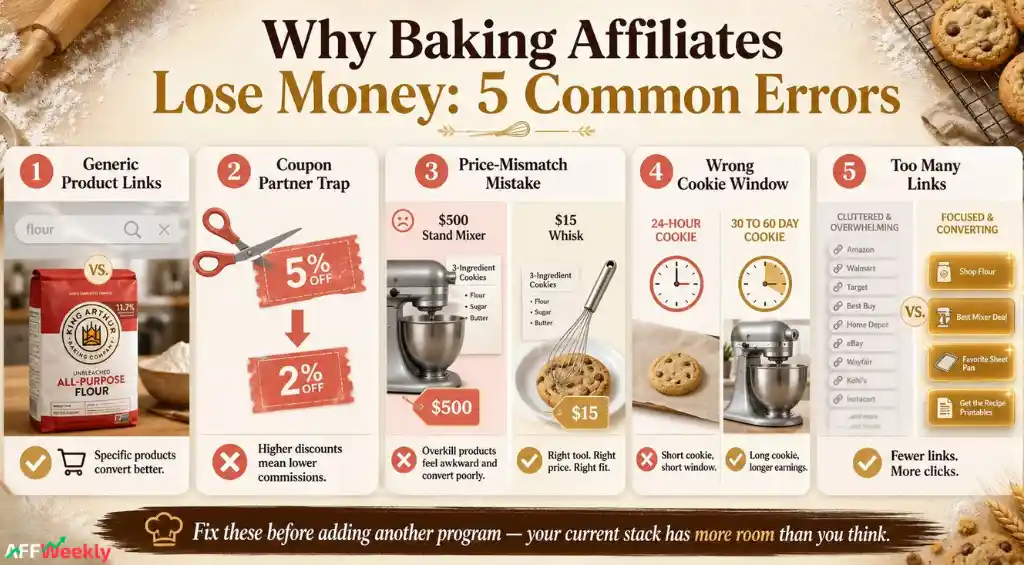
1. Linking generic products. “Flour” sends readers into a search results page. “King Arthur Unbleached All-Purpose Flour” sends them to a cart.
2. Ignoring the coupon partner rate. Publishing discount codes can demote you to a lower tier. King Arthur pays coupon and loyalty partners 2% against the standard 5%.
3. Mismatching price to recipe intent. A $500 stand mixer wedged into a three-ingredient cookie post converts poorly. Readers there want speed, so pair the recipe with a $15 tool instead.
4. Leaning on a 24-hour cookie. Amazon suits impulse items like parchment paper and thermometers. High-ticket bakeware belongs with a 30 to 60-day program.
5. Stacking too many links. Fifteen affiliate links per post splits attention across all of them. Three or four placed inside the recipe steps outperform a sidebar full of banners.
Fix these before adding another program, since the stack you already run has more room in it than you think.
Final Verdict on Baking Affiliate Programs
Rates matter less than fit. A 30% course commission earns nothing if your readers bake bread, and a 5% mixer payout can outpace it on a single sale. Most food blogs already have the traffic. What they lack is a small stack of baking affiliate programs matched to the recipes they publish most.
Start with three. Watch which links move over a full season, then adjust. Terms shift, so verify inside the dashboard before you write.
The kitchen content you already have is usually where the earnings are hiding.