8 Best Affiliate Recruitment Tools: Features & Pricing Guide
Growing an affiliate program sounds simple until the sign-ups stall. A new program launches, waits, and barely a handful of partners ever join. The offer looks solid. The commissions seem fair. So why does recruitment feel this slow?
Part of the trouble is guesswork. Marketers reach out by hand, track replies in messy sheets, and lose good partners along the way. There has to be a smarter path.
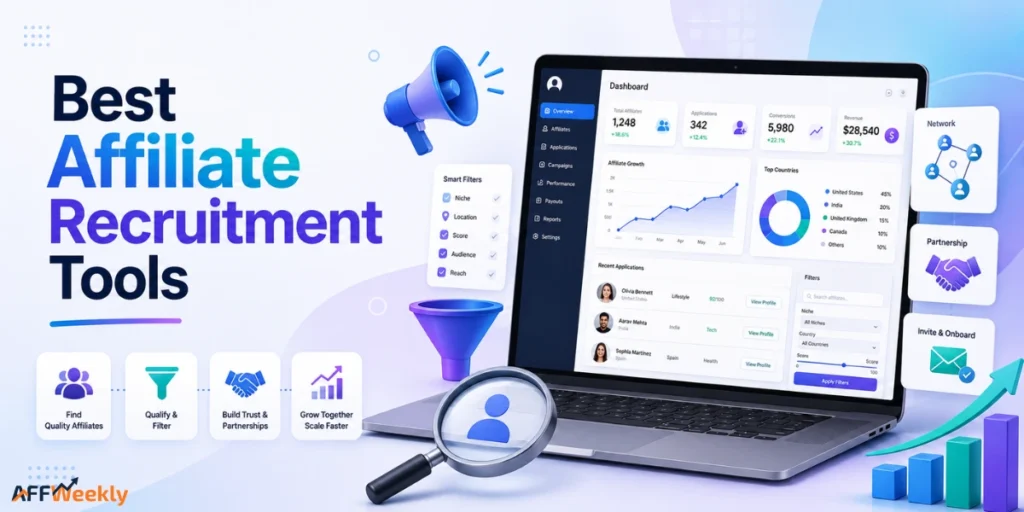
That gap is where affiliate recruitment tools come in. These platforms handle outreach, vetting, and onboarding, so real partners actually show up. Beginners and small teams tend to feel the relief first.
The eight affiliate recruitment tools ahead each tackle that struggle a little differently.
What Affiliate Recruitment Tools Do (and Where They Stop)
Affiliate recruitment tools handle one job: they help you find and sign up the right partners to promote your product.
This section explains what these tools cover, and where their role ends, so you know what to expect before you pay.
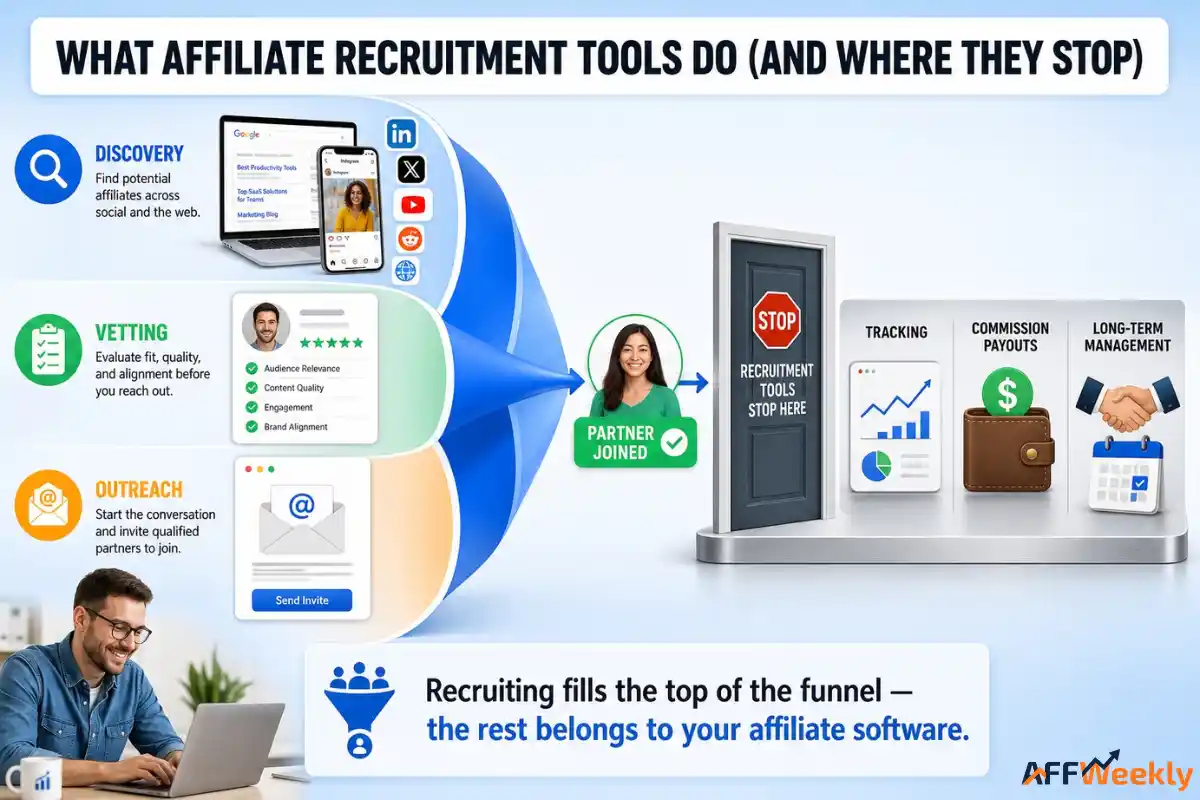
At their core, most affiliate recruitment tools do three things:
Some also add a light pipeline view, so you can track who replied and who joined.
Here's the part vendors gloss over. Recruitment tools stop once a partner says yes. They rarely handle tracking, commission payouts, or long-term affiliate management. Those tasks belong to separate affiliate software.
So a recruitment tool fills the top of the funnel. It brings partners to the door. Keeping them active and paid falls to your tracking stack.
That split matters, which leads into how these tools actually find affiliates in the first place.
How Affiliate Recruitment Tools Find Partners
Most affiliate recruitment tools look simple on the surface, but the discovery engine behind them does the heavy lifting. This section breaks down how these platforms actually surface partners, so you can judge which data sources matter.
Behind the dashboard, a recruitment tool usually pulls from a mix of signals:
From there, an AI layer scores each match on audience fit and relevance, then enriches the profile with a verified email.
Stronger tools rescan on a schedule, so fresh partners land in your list weekly. Data quality is the real difference, which is what the next part digs into.
The 8 Best Affiliate Recruitment Tools, Reviewed
| Best Affiliate Recruitment Tools | Ideal User Stage | Automation Level |
|---|---|---|
| PartnerStack | Growth to enterprise | High automation |
| AffiliateFinder.ai | Growth stage brands | Very high automation |
| impact.com | Large enterprise brands | High automation |
| Endorsely | Early-stage SaaS | Medium automation |
| Affistash | Startups and agencies | High automation |
| Cruva | TikTok Shop sellers | Very high automation |
| Publisher Discovery | Established network brands | Low automation |
| Respona | Growth stage teams | Medium automation |
1. PartnerStack
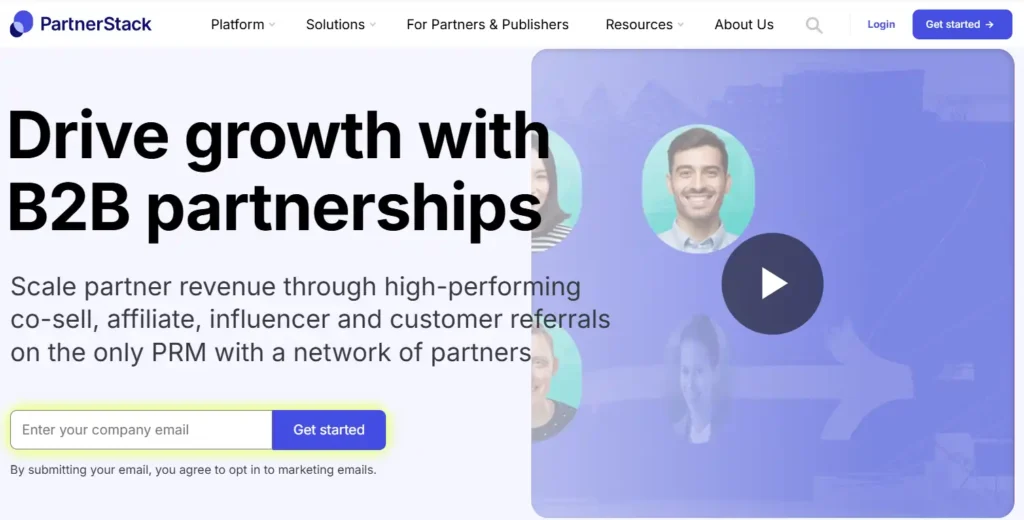
PartnerStack runs as a B2B SaaS partnership platform, built to recruit affiliates, referral partners, and resellers inside one connected system. It suits software companies that want a structured way to grow partner-driven revenue.
The platform pairs a two-sided marketplace with program management. Brands list their program, and active partners can discover and apply, which adds a steady inbound channel alongside direct outreach.
Beyond recruitment, PartnerStack manages onboarding, tracking, and automated payouts. That places it closer to a full affiliate management platform than a pure discovery tool, so SaaS teams handling several partner types tend to rely on it.
PartnerStack Pros and Cons
- Two-sided marketplace brings inbound partner applications
- Handles recruitment, tracking, and payouts together
- Strong fit for B2B SaaS programs
- Automated payouts cut manual finance work
- Geared toward SaaS, less for ecommerce
- Higher tiers suit larger partner programs
Use Cases
Best for: PartnerStack fits B2B SaaS brands wanting recruitment, tracking, and payouts in one place. Its strength is the partner marketplace, best for structured, multi-type partner programs.
2. AffiliateFinder.ai
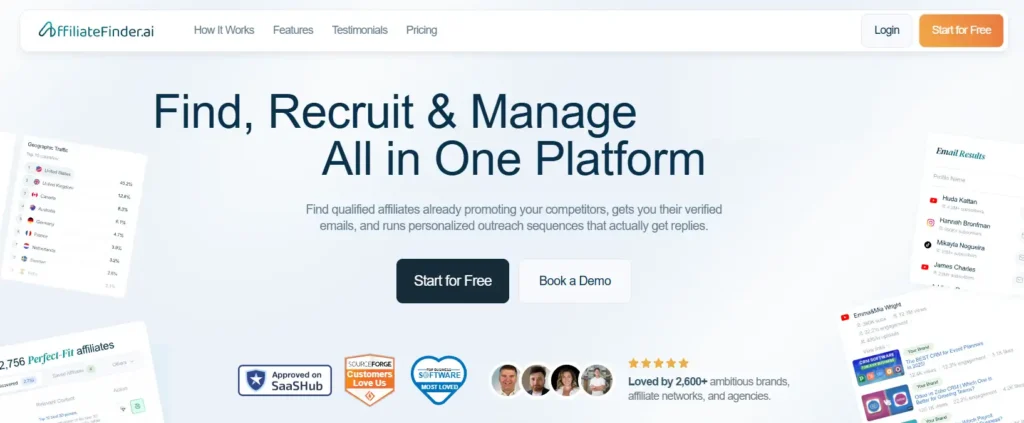
AffiliateFinder.ai focuses on one job with depth: discovering and recruiting affiliates who already promote competing brands. It scans competitor backlinks, search results, YouTube, Instagram, and TikTok to build a targeted partner list.
Each affiliate receives an AI relevance score, so you can prioritize the strongest matches instead of sifting through a static database.
The tool then finds verified emails and runs outreach inside the same platform, with a pipeline to track replies. A weekly refresh adds fresh, pre-qualified leads. It sits purely at the recruitment stage, so tracking and payouts need a separate affiliate tracking tool.
AffiliateFinder.ai Pros and Cons
- Finds affiliates across web and social channels.
- AI scoring surfaces the most relevant partners.
- Outreach and pipeline sit in one place.
- Weekly fresh leads keep recruitment consistent.
- No affiliate tracking or commission payouts
- Needs a separate platform for management
Use Cases
Best for: AffiliateFinder.ai suits brands and agencies serious about outbound affiliate recruitment. What sets it apart is competitor-based discovery, best when paired with a separate tracking platform.
3. impact.com
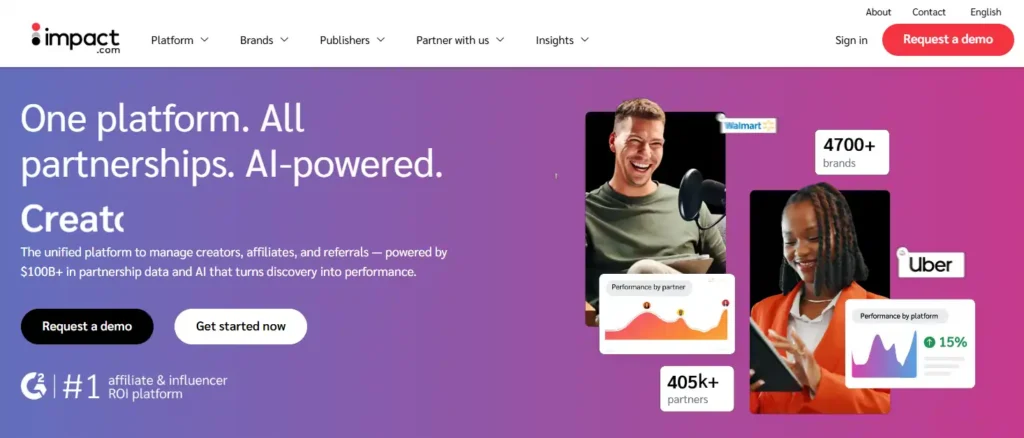
Impact.com operates as an enterprise partnership management platform, covering the full partner lifecycle from discovery through payment. Large brands use it to run affiliate, influencer, and referral programs at scale.
Its marketplace helps you find and recruit partners, while contract, tracking, and reporting tools manage them afterward. Recruitment becomes one part of a broader system rather than a standalone feature.
Impact.com also includes fraud protection and detailed attribution, which appeals to teams running high-volume programs across regions. The depth suits established companies more than early-stage brands, since it assumes a mature affiliate operation with dedicated staff.
impact.com Pros and Cons
- Covers the entire partner lifecycle end-to-end.
- Strong attribution and fraud protection built in.
- Large marketplace for partner discovery.
- Handles high-volume, multi-region affiliate programs.
- Heavy for small or early-stage brands.
- Steeper learning curve than lighter tools.
Use Cases
Best for: Impact.com fits established brands running large, multi-channel partner programs. Its edge is lifecycle depth and attribution, best for teams with dedicated affiliate managers and global reach.
4. Endorsely
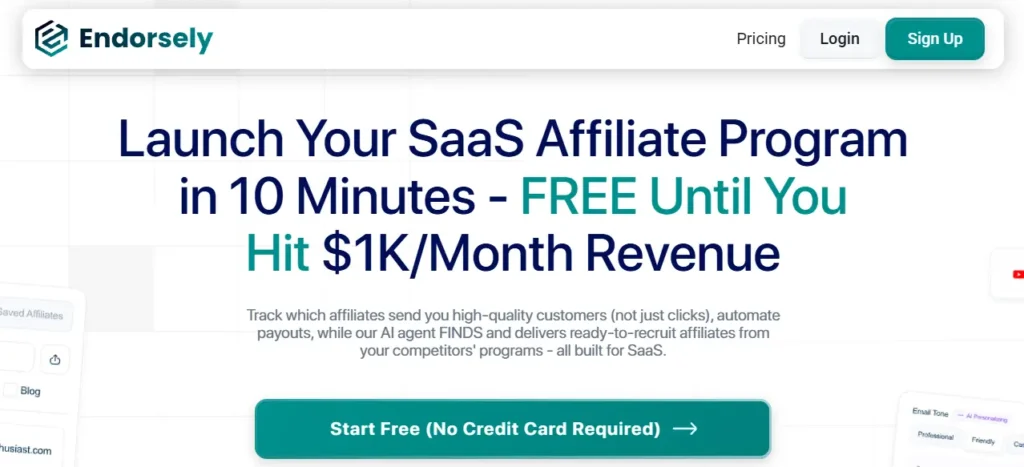
Endorsely takes a SaaS-first approach, combining affiliate recruitment with full tracking in one lightweight platform. It targets early-stage and bootstrapped software companies launching a program for the first time.
A built-in AI affiliate finder scans your domain and niche, then surfaces websites, YouTubers, and influencers creating relevant content. The recruitment side is lighter than dedicated discovery tools, though capable for a starter setup.
Where Endorsely stands out is tracking. It connects to Stripe, follows trials, upgrades, and churn, and calculates lifetime value per affiliate. Flexible commission structures fit recurring SaaS revenue, so brands see which partners send genuinely valuable customers.
Endorsely Pros and Cons
- Combines recruitment and full tracking together.
- Built for SaaS metrics like churn, LTV.
- Stripe integration sets up in minutes.
- Flexible commissions fit recurring revenue models.
- Recruitment lighter than dedicated discovery tools.
- Mainly suited to SaaS, not ecommerce.
Use Cases
Best for: Endorsely suits early-stage SaaS founders wanting recruitment and tracking together. The draw is SaaS-specific metrics like LTV, best for launching a first affiliate program.
5. Affistash
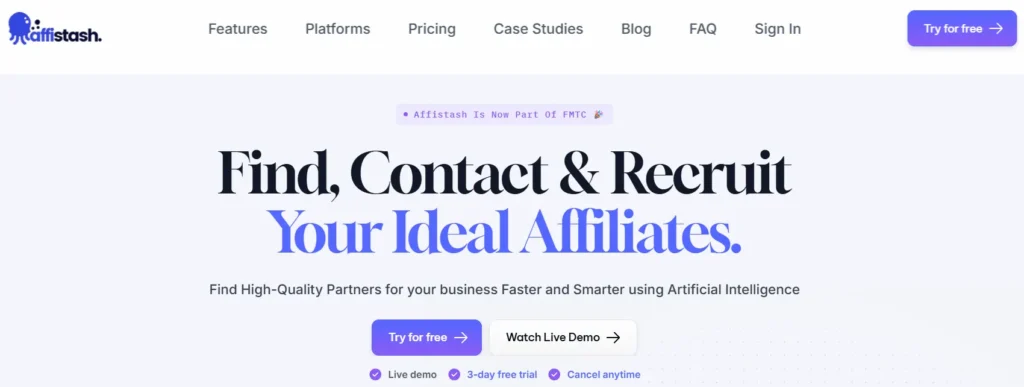
Affistash uses AI and machine learning to discover and recruit affiliates and partners matched to your brand. You provide keywords, audience details, and a company description, then it searches the wider internet for relevant matches.
The results reach beyond traditional affiliates to include influencers, newsletters, communities, and complementary businesses. Each prospect arrives with audience analytics covering traffic, engagement, interests, and geography.
A built-in CRM portal keeps recruitment organized, letting you store contact details, add notes, and run personalized outreach through an AI assistant. Agencies benefit from multiple brand slots, so partnership managers can recruit for several brands from one workspace.
Affistash Pros and Cons
- Searches the whole internet, not just networks.
- Finds varied partners beyond standard affiliates.
- Audience analytics on every prospect found.
- CRM portal keeps outreach organized centrally.
- No affiliate tracking or payout features.
- Discovery quality depends on input details.
Use Cases
Best for: Affistash suits brands and agencies wanting partner discovery beyond affiliate networks. Its appeal is internet-wide search and audience analytics, best for recruiting varied partner types quickly.
6. Cruva
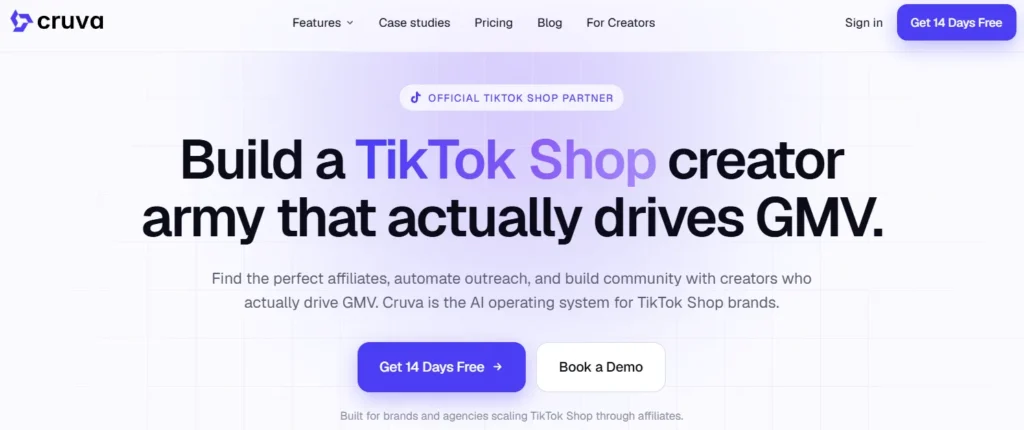
Cruva is built specifically for TikTok Shop, giving brands an AI system to discover, recruit, and manage creators in that ecosystem. It fits sellers scaling affiliate sales through short-form video rather than traditional websites.
Its AI Magic Search analyzes your niche and competitors to surface creators already succeeding with similar products. From there, automated outreach sends messages across TikTok and email, with AI auto-replies and follow-ups.
Cruva reaches past recruitment into retention. Sample management tracks who received product and nudges anyone who has not posted, while private creator communities use contests and rewards to keep affiliates active and posting consistently.
Cruva Pros and Cons
- Purpose-built for TikTok Shop creator recruitment.
- Large database of verified TikTok affiliates.
- Automated outreach and follow-ups at scale.
- Community tools keep creators posting consistently.
- Focused only on TikTok Shop channel.
- Limited use outside short-form video selling.
Use Cases
Best for: Cruva suits TikTok Shop sellers and agencies scaling creator-driven sales. Its standout is competitor-based sourcing and retention tools, best for high-volume affiliate recruitment on TikTok.
7. Publisher Discovery
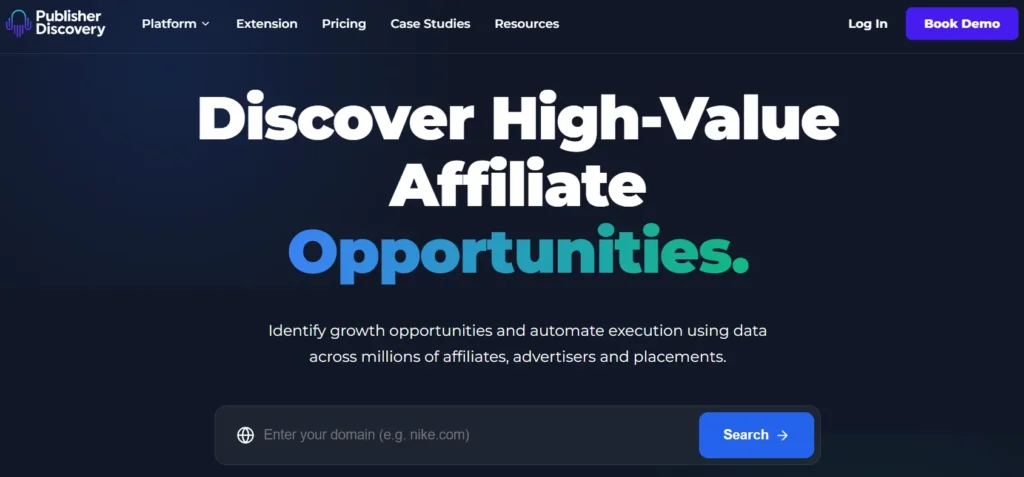
Publisher Discovery works as an affiliate network intelligence tool, showing which publishers are active across major networks. Brands running programs through CJ, Awin, ShareASale, or Impact use it to recruit proven performers.
The platform reveals which affiliates promote your competitors, which brands they work with, and how they perform across different networks. This competitive view helps you target publishers with a track record rather than untested contacts.
Its focus stays on traditional network publishers and content sites. Independent YouTubers, Instagram creators, and TikTok influencers who operate outside networks fall outside its scope, so it fits network-heavy programs more than social-first recruitment.
Publisher Discovery Pros and Cons
- Reveals competitor publishers across major networks.
- Cross-network data shows partner performance clearly.
- Targets proven, established affiliate publishers.
- Strong for network-based recruitment intelligence.
- Skips social creators outside affiliate networks.
- Built for larger, network-heavy programs.
Use Cases
Best for: Publisher Discovery suits larger brands running programs through major affiliate networks. Its value is cross-network intelligence, best for recruiting proven publishers over social-first creators.
8. Respona
Respona began as a link building and digital PR platform, and it doubles as a recruitment tool for website publishers and bloggers. Brands targeting content sites use it to find relevant pages and pitch at scale.
The workflow centers on outreach. Respona locates listicles, product reviews, comparison posts, and alternative pages, then builds automated email sequences with personalization to reach those owners.
Its email finder and verification keep bounce rates low, and campaign reporting tracks open and reply rates. Respona covers websites only, with no creator discovery for YouTube, Instagram, or TikTok, so it works best for publisher-focused affiliate recruitment rather than social outreach.
Respona Pros and Cons
- Strong automated outreach for publisher recruitment.
- Finds relevant content pages to target.
- Reliable email finder and verification built in.
- Detailed reporting on campaign reply rates.
- Covers websites only, no social creators.
- Lacks affiliate-specific scoring or pipeline features.
Use Cases
Best for: Respona suits programs recruiting website publishers and bloggers at scale. It's strongest at automated outreach and content discovery, best for listicle and review placements.
What Separates a Strong Affiliate Recruitment Tool From a Weak One
Two affiliate recruitment tools can promise the same thing and deliver very different results. This section covers the traits that tell a capable platform apart from one that just looks busy.
A weak tool leans on a static database. It shows you a long list of affiliates, many of them outdated or a poor match for your product. Volume feels impressive until reply rates stay flat.
A strong tool works from live data and filters hard. Look for these signals:
The refresh rate matters too. A tool that adds fresh, qualified leads each week keeps your pipeline from drying up.
Once you know what a good tool offers, the next step is using it efficiently.
How to Recruit Affiliates Faster Using These Tools (5-Step Workflow)
The right tool speeds things up, but only with a clear process behind it. This section lays out a simple five-step workflow to recruit affiliates faster and waste less time on bad-fit leads.
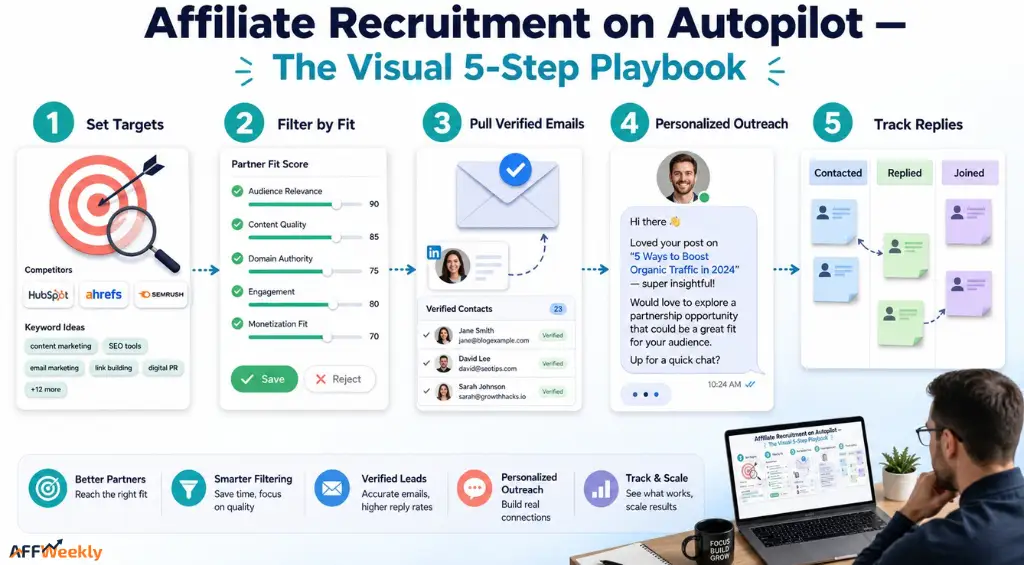
Run this loop weekly and recruitment becomes a habit, not a scramble. Twenty to thirty new conversations a month is a realistic target for most programs.
With the workflow set, pricing is usually the next question on the table.
The Real Work Starts After Recruitment
The right affiliate recruitment tools save you hours of manual outreach, but they don't run the program for you. Each one solves a slightly different problem. Some go deep on discovery, others handle tracking, a few focus on one channel like TikTok or website publishers.
What matters most is matching the tool to your stage and where your ideal partners actually spend time. Get that right, and recruitment stops feeling like guesswork.
The tools bring partners to the door. Building real relationships with them is still the part that pays off.