
6 Top Weight Loss Affiliate Programs Built to Convert
January arrives and diet searches spike overnight. Every publisher in the health space knows that wave is coming. Most still watch it pass by. Why does so much of that traffic end up earning nothing?
Weight loss sits in one of the oldest, most crowded corners of affiliate marketing. Payouts vary wildly. Some brands pay a few dollars per signup, others pay three figures per enrollment. That gap is why weight loss affiliate programs keep coming up in publisher chats.
What AFFWeekly Says: The part that catches our eye is the refund side. Diet products come back more often than most, and reversals can quietly swallow a good month. Keep that in mind as you read through the six below.
How AFFWeekly Scored These Weight Loss Affiliate Programs
We looked at real payout data, publisher feedback and program terms before ranking anything on this list. The goal was simple: surface weight loss affiliate programs where affiliates actually keep the money they earn.
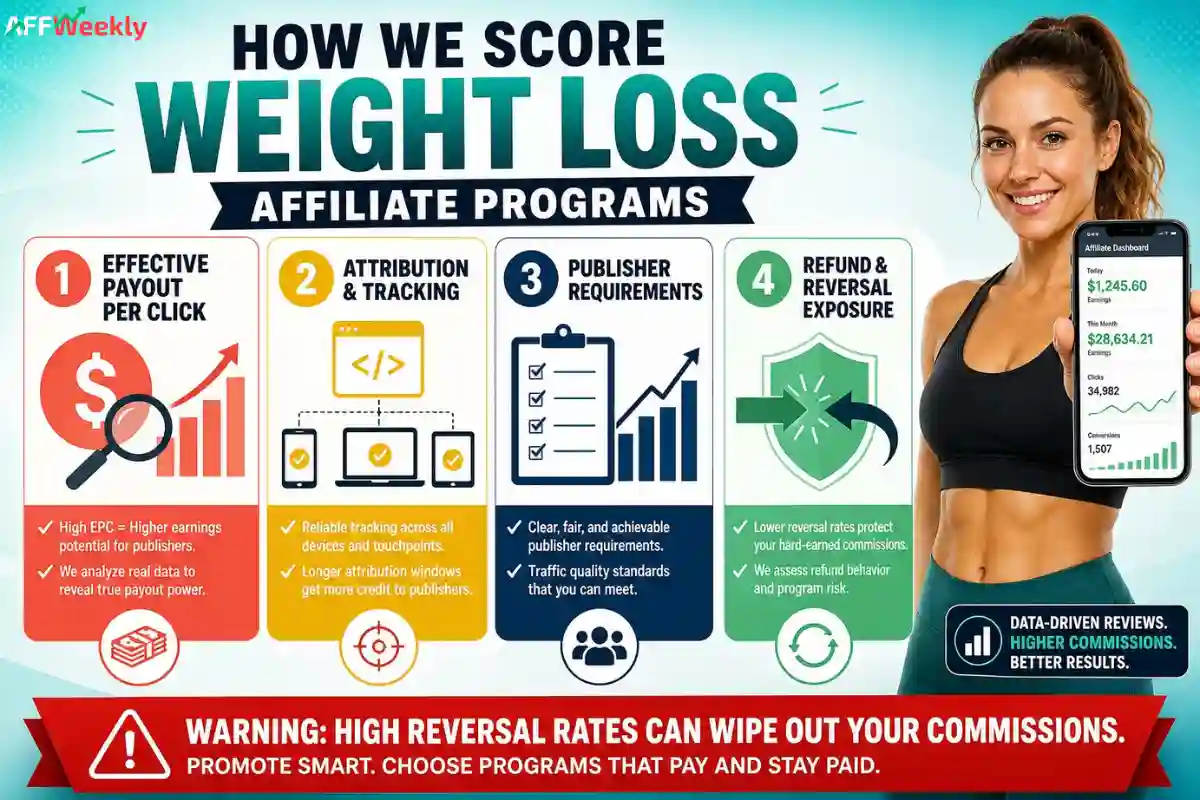
Each program went through four checks before making the cut:
Programs that looked strong on paper but carried high reversal rates dropped in our scoring. A $50 CPA means little when 30% of conversions get clawed back after 60 days.
6 Top Weight Loss Affiliate Programs Reviewed
| Top Weight Loss Affiliate Programs | Product Format | Seasonal Search Peak |
|---|---|---|
| Mayo Clinic Diet | Digital meal subscription | January surge |
| bistroMD | Prepared meal delivery | January and June |
| Metabolic Renewal | Digital program bundle | Steady year-round |
| WeightWatchers (WW) | App plus workshops | Strong January peak |
| Noom | Mobile coaching app | January and September |
| HealthyWage | Cash challenge platform | New Year spike |
1. Mayo Clinic Diet Affiliate Program
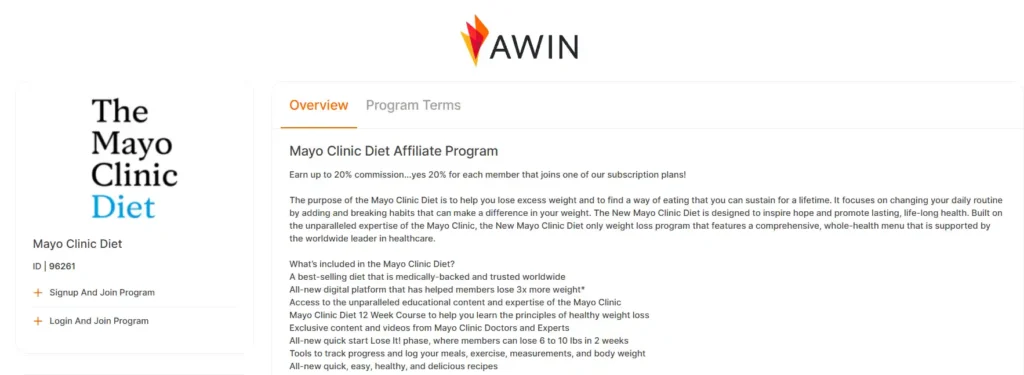
Mayo Clinic Diet is a structured online weight loss program developed by the physicians and dietitians at Mayo Clinic, one of the most recognized medical institutions in the world. It focuses on building long-term healthy eating habits rather than short-term calorie restriction.
The program offers personalized meal plans, food tracking tools and guided lifestyle modules based on peer-reviewed clinical research. Users follow a two-phase system: an initial rapid-results phase and a longer habit-building phase.
For publishers promoting weight loss affiliate programs in the health and wellness space, Mayo Clinic Diet carries a level of medical credibility that most diet brands simply cannot match. That trust translates directly into higher conversion rates from search traffic.
| Program Detail | Specification |
|---|---|
| Commission | CPA per subscription |
| Cookie Window | 30 days |
| Affiliate Network | CJ Affiliate |
| Payout Model | Per completed sale |
Best for: Health publishers and medical content creators who want a high-trust, research-backed weight loss affiliate program that converts cold search traffic with minimal objection handling.
2. bistroMD Affiliate Program
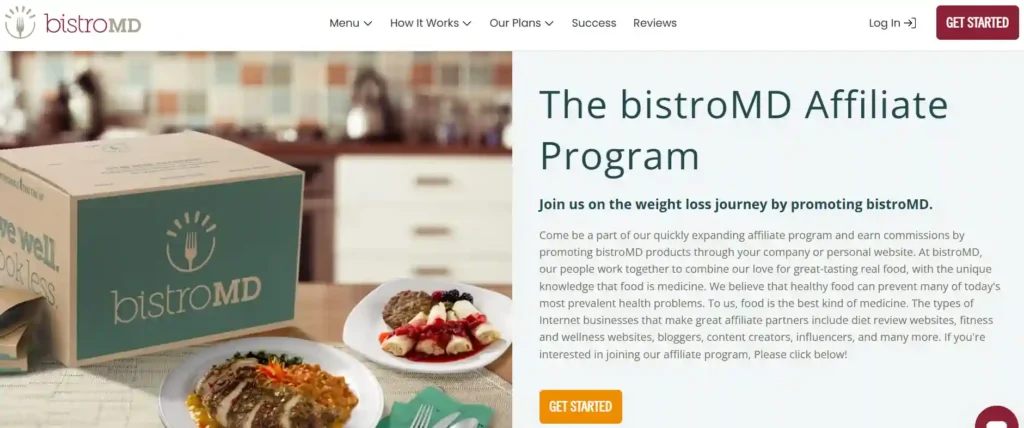
Promoting meal delivery inside weight loss affiliate programs gets easier when the product removes the biggest friction point: cooking. bistroMD ships fully prepared, portion-controlled meals designed by bariatric physician Dr. Caroline Cederquist. Every dish is built around a specific macronutrient ratio meant to support fat loss without hunger.
Customers pick from weekly plans covering breakfast, lunch and dinner, with menus rotating to prevent diet fatigue. The subscription model means publishers can benefit from repeat orders beyond the first conversion.
bistroMD sits in a sweet spot for affiliates targeting busy professionals or older adults searching for doctor-designed diet meal delivery. The $36 flat CPA and 30-day cookie make it one of the more straightforward programs to calculate earnings on.
| Program Detail | Specification |
|---|---|
| Commission | $36 flat per sale |
| Cookie Window | 30 days |
| Affiliate Network | CJ / FlexOffers |
| Payout Model | One-time CPA |
Best for: Publishers running comparison or review content around diet meal delivery services who want a clean, predictable flat-rate commission from a medically positioned brand.
3. Metabolic Renewal Affiliate Program

Unlike most entries on this weight loss affiliate programs list, Metabolic Renewal targets a specific audience: women over 35 dealing with hormonal shifts that affect metabolism. Created by naturopathic physician Dr. Jade Teta, the program pairs exercise routines with nutrition strategies tailored to female hormone cycles.
The product is sold as a digital program through ClickBank, which means affiliates get access to high percentage-based commissions and real-time tracking. Average order values tend to run higher because of bundled upsells in the checkout flow.
Metabolic Renewal fills a gap most generic diet affiliate offers ignore. Publishers with audiences in the women's health, perimenopause or hormone balance space will find this program converts well against broad competitors.
| Program Detail | Specification |
|---|---|
| Commission | Up to 75% per sale |
| Cookie Window | 60 days |
| Affiliate Network | ClickBank |
| Payout Model | Percentage revshare |
Best for: Women's health bloggers and hormone-focused content creators looking for a high-commission weight loss affiliate program with strong niche targeting and above-average order values.
4. WeightWatchers (WW) Affiliate Program
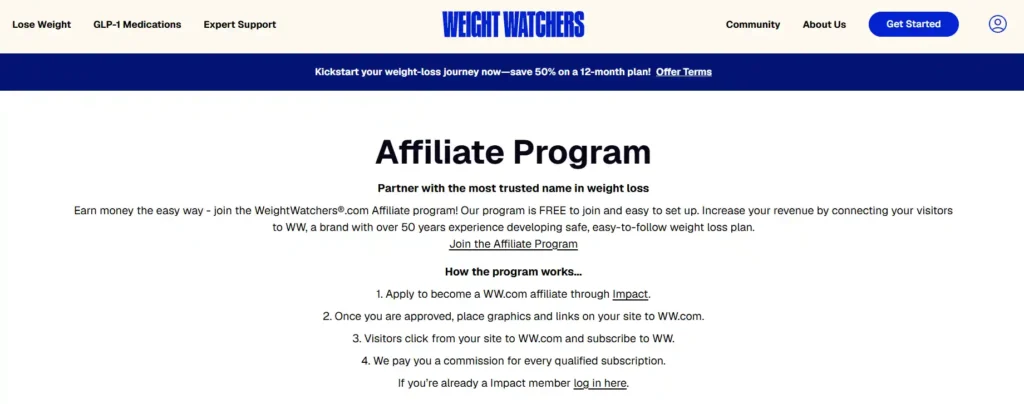
Brand recognition does a lot of heavy lifting in affiliate marketing, and few names carry as much weight in the diet space as WeightWatchers. The WW points-based system has been around for decades, and millions of users already understand how it works before they ever land on a publisher's page.
WW offers digital memberships, in-person workshops and a mobile app with food logging, recipes and community support. The program recently expanded into GLP-1 medication support, adding a clinical layer to its traditional behavioral approach.
For affiliates, the upside is low friction at the point of conversion. The downside is a modest per-signup payout compared to higher-ticket weight loss affiliate programs on this list.
| Program Detail | Specification |
|---|---|
| Commission | $10 per signup |
| Cookie Window | 14 days |
| Affiliate Network | CJ Affiliate / Impact |
| Payout Model | CPA per registration |
Best for: Publishers with high-traffic diet and wellness pages who can generate volume. WW converts on brand trust alone, making it a reliable baseline earner across weight loss affiliate programs.
5. Noom Affiliate Program
Noom took a different route into weight loss by building its entire product around cognitive behavioral psychology rather than meal plans or calorie limits. The app assigns users a personal coach, delivers daily micro-lessons on eating behavior and tracks food with a color-coded system that teaches portion awareness over time.
That psychology-first angle gives publishers a distinct content hook. Articles about sustainable weight loss, emotional eating and habit change naturally funnel readers toward a Noom trial signup.
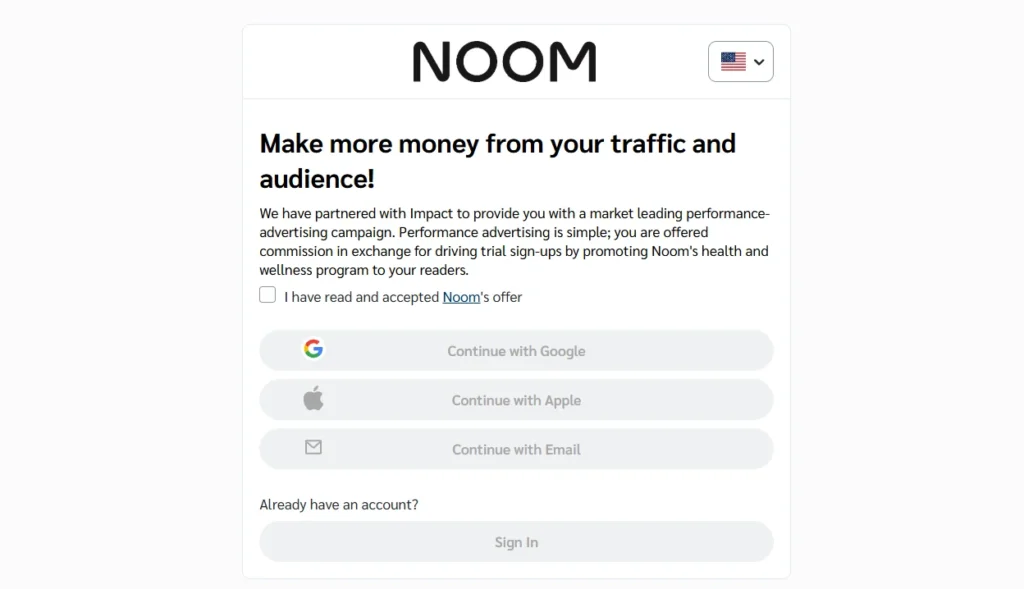
The affiliate payout is structured around free trial conversions, which lowers the barrier for clicks but also means publishers need volume to hit meaningful earnings. Noom sits on Impact and pays per qualified trial.
| Program Detail | Specification |
|---|---|
| Commission | $15 to $20 per trial |
| Cookie Window | 30 days |
| Affiliate Network | Impact |
| Payout Model | CPL per trial signup |
Best for: Content creators producing educational material around eating psychology and behavior change who want a low-friction trial offer inside their weight loss affiliate programs stack.
6. HealthyWage Affiliate Program
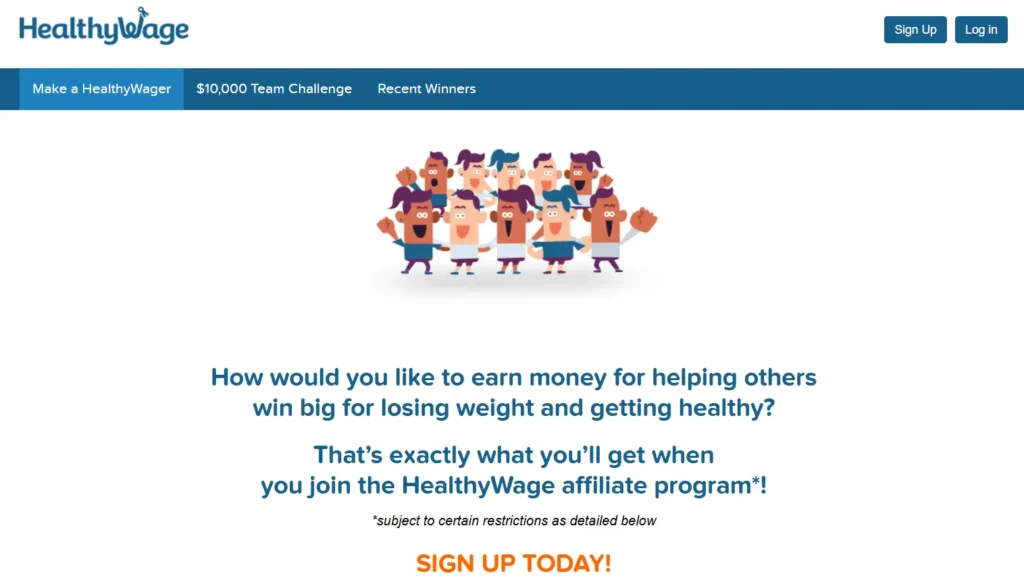
Most weight loss affiliate programs promote a product. HealthyWage promotes a bet. Users wager money on their own weight loss goal, and if they hit the target within a set timeframe, they win a cash prize. That gamified structure creates a conversion hook unlike anything else in this vertical.
The model works because it taps into loss aversion and financial motivation, two psychological triggers that outperform generic diet marketing. Publishers can frame it as a challenge rather than a purchase, which changes the entire tone of the content.
HealthyWage pays a $50 flat CPA per qualified lead through CJ Affiliate. No product shipment, no subscription churn, no reversal from returns.
| Program Detail | Specification |
|---|---|
| Commission | $50 per lead |
| Cookie Window | 30 days |
| Affiliate Network | CJ Affiliate |
| Payout Model | CPL per qualified lead |
Best for: Publishers who write motivational or challenge-style content and want a lead-based weight loss affiliate program with zero return risk and a clean $50 per conversion.
Common Mistakes That Cut Publisher Revenue
Most publishers lose money on weight loss affiliate programs because of avoidable setup errors, poor offer selection or mismatched traffic. These slip-ups compound over time and quietly eat into margins that looked promising at signup.
Here are the patterns we see repeat across publisher accounts in this vertical:
Fixing even two of these will change what your weight loss affiliate programs actually pay out at month end.
How to Build Content Around Weight Loss Offers
A single listicle will rank for a handful of terms. A content cluster built around weight loss affiliate programs captures search traffic at multiple intent stages and feeds link equity back to your main page.
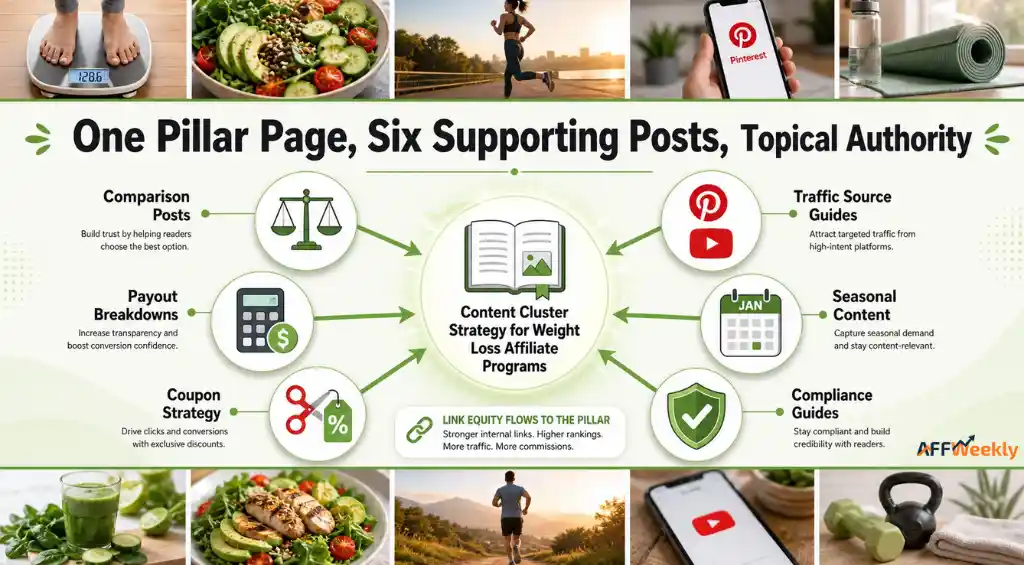
Start with your pillar article (this page) and branch into supporting posts that target longer queries your competitors skip.
Each supporting article links back to your main weight loss affiliate programs page, building topical authority Google can measure.
Final Take on These Weight Loss Affiliate Programs
The six programs above sit at different points on the payout-to-effort spectrum. Some pay more per conversion but carry higher reversal risk. Others pay less but convert so consistently that monthly earnings stay predictable.
What matters more than any single commission figure is how well an offer fits the content you already publish and the audience you already have. A mismatched program with a high CPA will always underperform a lower-paying one that lines up with your reader's actual buying intent.
Test two or three at a time. Track real EPC, not dashboard estimates. Let the data shape your stack over the first 90 days.